
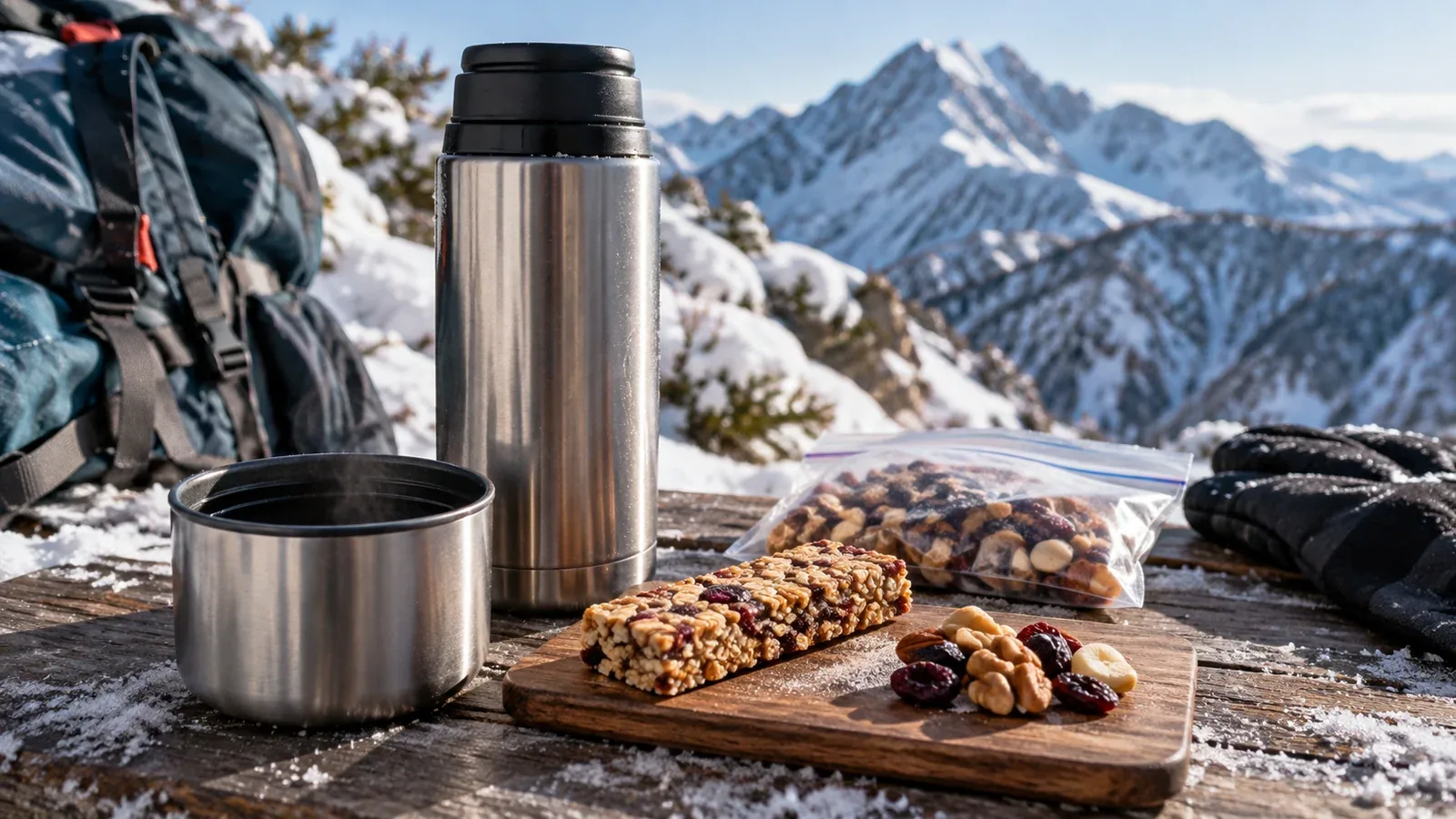
A frozen bottle cap or a rock-hard snack can leave you without water or food when you need it. In winter, staying fed and hydrated helps you keep going. Choose what you carry, where you pack it and how you’ll get to it with gloves on.
Use this guide to plan your water and food before your first hike in the snow, from what to carry on the move to how to get drinking water on an overnight trip.
Why water and food freeze on winter hikes
A bottle in an outside pack pocket cools faster than one insulated inside the pack. The neck or cap can ice up while the contents are still liquid. How soon this happens depends on the weather, the bottle and where it sits.
Chocolate and some bars become hard enough in the cold that they’re difficult to bite. Try your snacks in the cold before relying on them, and carry some that you can eat without waiting for them to soften.
Three ways to keep water from freezing
1. Use a vacuum-insulated flask
A stainless-steel vacuum flask with a secure cap is a good choice for hot drinks. It weighs more than a plain plastic bottle or soft flask. Check how long your flask keeps liquid warm, and let drinks cool to a safe temperature before sipping.
Ice can still form around the cap. Wipe moisture from the threads, close the flask straight after drinking and put it back in an insulated part of the pack.
2. Pack the bottle inside the pack or close to your body
An outside pocket makes the bottle easy to reach, but leaves it exposed to the cold. Pack it among insulating layers inside the pack, near enough to the top that you can retrieve it without unpacking at every stop.
For small sips on the move, try a securely closed soft flask in a jacket’s inner pocket. Keep it from leaking onto your layers, and carry the rest of your water in the pack.
3. Carry a bottle if you use a drinking tube
Water in a reservoir’s exposed hose or bite valve can freeze while the water in the reservoir is still liquid. An insulated sleeve can slow freezing. Carry an accessible bottle as a backup if you rely on a reservoir in freezing conditions.
Choosing and packing snacks
Which foods stay easy to eat in the cold?
Recipes vary, and low-moisture foods can still harden. Try the portions you plan to bring at the temperature you expect.
Options to try for cold days
- Yōkan, a Japanese sweet bean jelly, cut into bite-sized portions
- Dried sweet potato, persimmons or other dried fruit that stays chewable
- Walnuts or almonds in small portions if they stay easy to chew
- Bite-sized cheese, kept according to its storage instructions
- Crackers or cereal bars that stay easy to eat
Foods that can freeze or harden
- Chocolate, which can become hard to bite
- Fruit jelly drinks, which can freeze in their pouches
- Rice balls and moist bread, which can become hard to eat
- Energy gels, which can thicken or freeze and become difficult to squeeze out
Keep a portion you plan to eat soon in an inner pocket or insulated pouch if the food’s storage instructions allow it. Allow time for firm food to soften, and carry something else you can eat straight away.
Pack snacks you can reach with gloves on
At home, test the zip, pouch and wrapper while wearing the gloves you’ll hike in. Portion snacks into easy-open containers or put a pull tab on a stiff zip so you can eat during a short stop.
Getting and storing water at camp or a hut
Check ahead whether a hut supplies drinking water in winter. Carry enough to reach a reliable supply, along with a way to treat water and enough fuel if you plan to melt snow.
Start with a little liquid water in the pot, then add snow gradually. Melted snow can carry germs. Treat it before drinking or cooking if you aren’t sure it’s safe. The CDC advises boiling clear water vigorously for one minute, or for three minutes above 6,500 feet (about 1,980 m). Use a different source if you suspect chemical contamination.
Keep treated water in a clean, tightly closed container. Pack it in an insulated place overnight and check that you can open it and pour in the morning.
Use a fuel-burning stove outdoors, clear of tents, vestibules and enclosed spaces. Carbon monoxide can build up inside. Use the stove and fuel combination specified by the manufacturer for the conditions and never improvise ways to heat a fuel canister.
When and how much to drink
You can lose water through breathing and sweating even when the air is cold. Take opportunities to drink at stops and keep some water within reach between stops.
Small drinks at intervals can be easier to manage than waiting until a long break. A warm drink in a vacuum flask is often easier to sip in the cold. Pause somewhere sheltered if you need to unpack it.
How much you need varies with the length and effort of the hike, the conditions and your own needs. Plan enough for the route and possible delays, and know when you can refill.
Before you go
Test your flask, your packing setup and whether you can open snacks with gloves on. If you’re new to winter hiking, go with an experienced companion or a certified guide. Nordwand’s Base Camp and guide request tools can help you find someone to go with.