
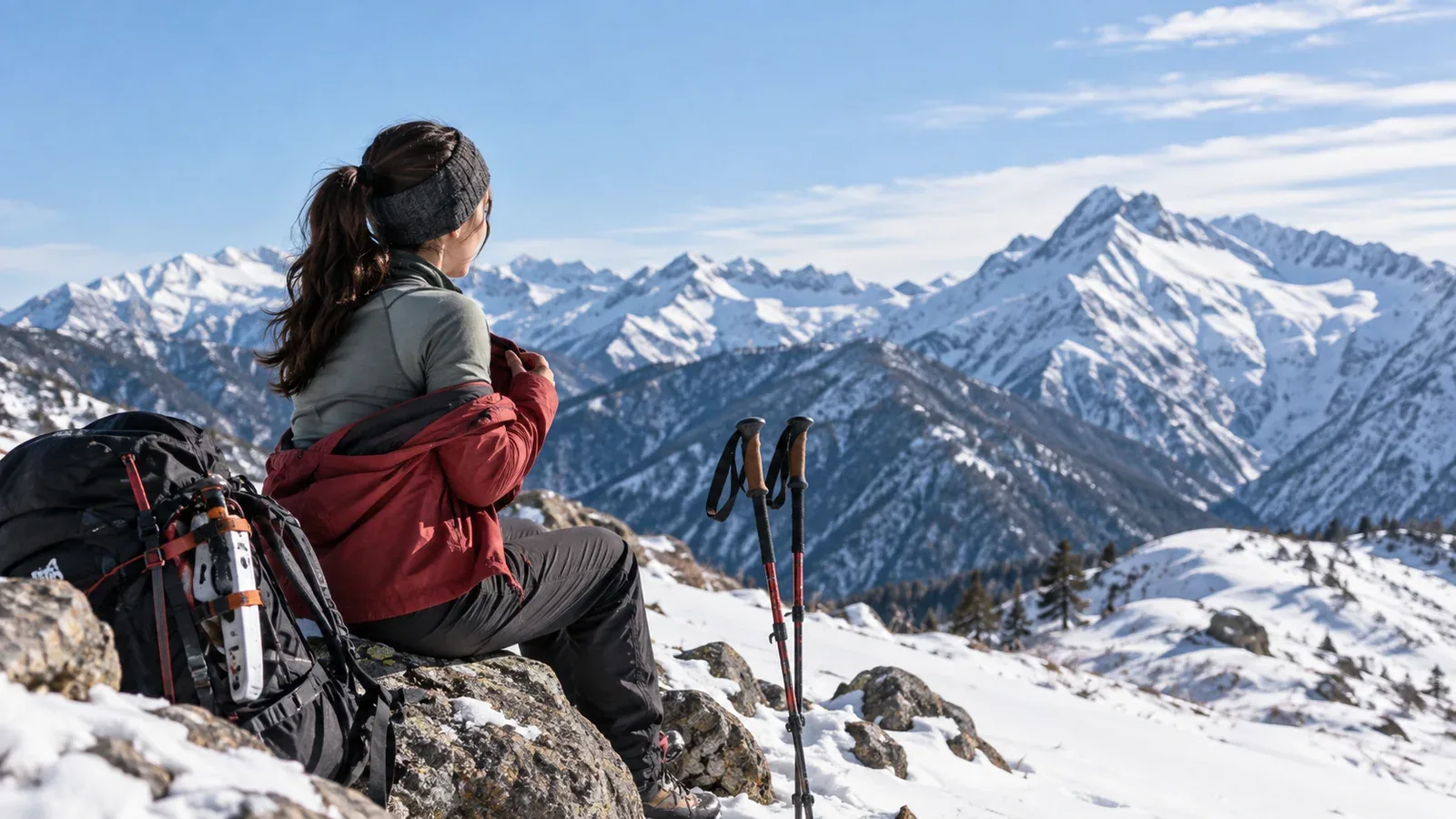
It’s easy to get hot on a climb and cold as soon as you stop. Sweat trapped in clothing can increase heat loss, especially in wind. Adjust layers and pace before your clothes get soaked, and keep something dry to put on at stops.
This guide covers what to wear, how to adjust it on the move and what to do if someone starts cooling down. Plan for the exposed parts of the route and for stops.
Why sweat can make you dangerously cold
Hypothermia is a drop in core temperature below 35°C (95°F). It can happen above freezing when someone is wet and exposed to wind or cold. In the field, take symptoms and the circumstances seriously without waiting for a temperature reading.
Wet clothing can keep drawing heat from the body as you slow down. Cotton next to the skin tends to hold moisture and dry slowly. Choose a base layer that moves moisture away from the skin and keep a dry spare when conditions warrant.
Layers start with what you wear next to the skin
Choose a base layer for the effort, conditions and layers you’ll wear over it.
Wool, including merino. It can stay comfortable when damp, and the thickness and knit affect insulation and drying time. Try it in the conditions you expect.
Synthetic fabrics, such as polyester. Many dry quickly and work well for sustained effort. Warmth and moisture handling vary with the fabric and construction.
Either can work. Pick a weight suited to the pace and weather, check how it fits with the other layers, and avoid cotton next to the skin for cold, wet conditions.
Use a breathable midlayer when you need insulation while moving and carry a warmer layer for stops. Add a windproof, waterproof shell as conditions require, and use its vents where appropriate.
Adjust layers early while you’re moving
A useful rule is to vent or remove a layer before you overheat and add warmth before you cool down.
As you warm up, use vents, ease the pace or stop in a sheltered spot to adjust. Base the timing on your effort, exposure and layers. Keep enough protection to stay warm and dry.
Put insulation on before or as you stop, and add wind protection before exposed ground. Keep these layers close to the top of the pack so they’re easy to reach.
An example: from a sheltered climb to a ridge
- Start in layers you can adjust easily for the weather at the trailhead.
- As you warm up on the climb, ventilate or remove an extra layer from a sheltered position.
- Manage your pace and layers to limit sweating while keeping the protection the conditions require.
- Add your windproof shell before you step onto the exposed ridge.
- Add dry insulation at a stop, even a short one if you’re cooling.
Open jacket or underarm vents when conditions allow. Close them or add protection before you move into wind, snow or rain.
Managing heat when you stop
On an exposed ridge or summit, wet clothing can cool you quickly when you stop. Pick a sheltered place for breaks and layer changes when possible.
Aim to adjust your pace and layers before reaching exposed ground. Stop somewhere sheltered to add wind protection and check how the group is doing.
If someone is cooling or their clothing is soaked, get out of the wind and insulate them from the ground. Replace wet layers with dry ones when you have shelter and can do so without further cooling. Keep the head and neck protected.
Keep a spare base layer and gloves dry in a waterproof bag. Change promptly in shelter when needed. If you suspect hypothermia, call for help in Japan at 119 or 110, handle the person gently, insulate the whole body and follow the dispatcher’s instructions.
What to check during a stop
- Whether gloves, socks and headwear are damp, and whether dry replacements are available
- Whether the group is eating and drinking regularly. Give food or drink only to someone who is fully alert and can swallow normally.
- Whether you are sheltered from wind and insulated from the ground. Confusion, slurred speech, clumsiness or unusual drowsiness are emergency signs in a cold person.
- How far it is to a safe exit and whether to shorten the route or call for help now
Common mistakes and what to do instead
Waiting because the summit looks close. Stop somewhere sheltered to adjust clothing before exposure. Turn back early if you can’t keep the group warm.
Sweating into your down jacket on the climb. Down can lose loft when wet. Use a layer suited to your effort and keep dry insulation for stops.
Keeping the shell closed on a hard climb. Use vents or remove a layer in shelter if weather permits. Put wind and precipitation protection back on before you need it.
Leaving gloves wet. Carry dry spare gloves in a waterproof bag and change in shelter. Act early if your fingers feel numb or you lose dexterity.
Before you go
Check your base layer and pack a dry spare, wind protection and stop insulation where you can reach them. Agree where you’ll stop to adjust before the ridge, and how you’ll respond if anyone starts getting cold. Nordwand’s Base Camp and groups can help you find partners with winter experience.
Further reading
- Japan Meteorological Agency forecasts and warnings
- National Police Agency mountain incident reports
- Japan Mountain Guides Association guide qualifications
References and sources
- Japan Meteorological Agency · Forecasts
- Japan Meteorological Agency · Warnings and advisories
- National Police Agency · 2025 mountain incident report
- Japan Mountain Guides Association · Qualification scope
- CDC · Recognising and responding to hypothermia
- CDC · Preventing heat loss in cold conditions
- Wilderness Medical Society · Accidental hypothermia guideline overview
- NIOSH · Clothing and cold-related illness prevention
- Japan National Tourism Organization · Emergency numbers