
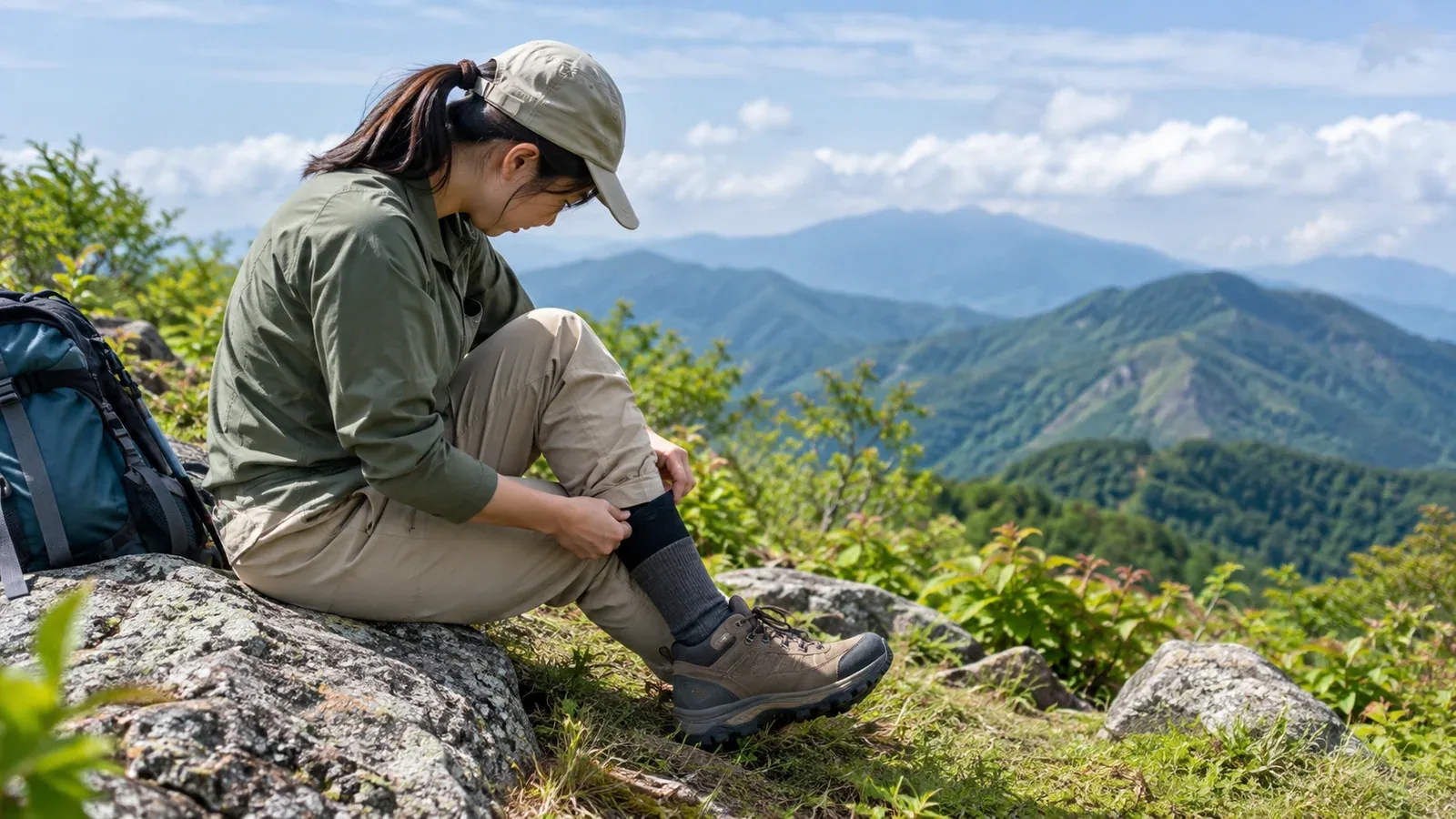
An attached tick can look like a small dark spot or a raised bump. A bite often goes unnoticed, and the tick may stay attached for several days. Check your skin after hiking through grass, brush or forest.
Ticks can carry infections including severe fever with thrombocytopenia syndrome (SFTS), Japanese spotted fever and Lyme disease. A bite does not always cause illness. Keep track of where and when you may have been bitten and watch for symptoms in the following weeks.
This guide covers clothing and repellent, how to check your skin and what to do if you find a tick in Japan.
Where ticks are found
Ticks live in grass, brush and wooded areas. Exposure is more likely when vegetation brushes against your clothing or skin. Many ticks are active from spring through autumn, but activity depends on region and conditions.
A tick can attach to clothing or skin and crawl to a hidden area. Check the armpits, groin, behind the knees, neck, ears and scalp soon after leaving the trail.
Clothing and habits that help prevent bites
Wear long sleeves, long trousers, socks and closed footwear in vegetation. Tuck trouser cuffs into socks or use suitable gaiters to cover gaps. A hat can help cover your hair and scalp.
Light-colored clothing makes a crawling tick easier to see. Check cuffs and seams during breaks, especially after brushing through vegetation.
Choose a repellent labeled for ticks. Products may contain DEET or icaridin, also called picaridin. Follow the label for where, how often and on whom to use it, including instructions for clothing.
Stay on marked trails and avoid brushing against tall grass or shrubs where possible. For breaks, choose a clear area or a bench away from thick vegetation.
Check after the hike
Check your skin and gear as soon as you can, and again after changing clothes. If you are staying at a hut, check each day after walking.
Use a mirror or ask someone you trust to help check places you cannot see.
- Armpits, groin, backs of knees and ankles. Look under clothing edges and socks.
- Behind the ears, neck and scalp. Check your hairline and remove your hat.
- Back, waist and buttocks. Check around waistbands and places covered by the pack.
Ticks can be very small, and some swell as they feed. A tick can resemble a skin mark. Avoid tugging at an uncertain spot. A clinician can check it.
If you find an attached tick
Japan’s health ministry and the Japan Institute for Health Security advise getting prompt help from a clinician, such as a dermatologist, to remove an attached tick. Avoid forcing it out or squeezing the body.
What to avoid
- Squeezing or crushing it with bare fingers. Avoid pressing the body or handling it unnecessarily.
- Using flame or heat. Do not try to make it detach by burning it.
- Applying soap, alcohol, petroleum jelly or other substances to detach it. Clean the area after removal.
- Twisting or jerking with tweezers. The mouthparts can break off in the skin.
How to get it removed
If professional care cannot be reached promptly and you need to remove it yourself, the US CDC describes a method with clean fine-tipped tweezers. Grasp it as close to the skin as possible and pull upward with steady, even pressure. Do not squeeze the body. Follow the instructions for any dedicated tool.
If you are unsure, cannot remove it easily or suspect a part remains, contact a healthcare provider. Avoid digging into the skin. In Japan, arrange prompt assessment and tell the clinic you have an attached tick.
After removal, wash the bite and your hands with soap and water. Note the date, the body site and where you were hiking. Check the rest of your body and your gear for more ticks.
Symptoms and when to seek medical care
Watch for changes for several weeks. Get medical advice promptly if you develop fever, a rash or feel unwell. Mention the possible tick exposure, even if you never saw the tick.
- Fever, chills, fatigue or headache.
- A spreading rash or changing skin around the bite. A ring-shaped rash can occur with Lyme disease, but may be absent.
- Nausea, vomiting or diarrhea.
- Severe muscle pain, confusion or unusual drowsiness. For severe symptoms or altered consciousness, seek emergency help.
SFTS can be serious. Japan approved favipiravir for the treatment of SFTS in June 2024. Diagnosis and treatment are for clinicians to decide. If you develop symptoms, tell them when and where you may have been exposed and where you found the tick.
Use the health ministry, the Japan Institute for Health Security or your local public health office for current guidance. Follow the clinician’s advice for any testing and treatment.
Make tick checks part of every hike
Cover exposed skin in vegetation, use labeled repellent and check yourself when you finish. These steps make it easier to find a tick and act promptly.
Transmission depends on the pathogen and other factors. There is no universal attachment time below which all tick-borne infections can be ruled out. Check soon after exposure and seek prompt care if you find a tick attached.
Before your next hike
Pack suitable clothing and repellent and plan how you will check your skin after walking. For a remote outing, know how to reach medical care and learn the recommended removal technique before leaving.
References
- Japan Ministry of Health — Tick-borne infections and prevention
- Japan Institute for Health Security — SFTS information
- Public health guidance on avoiding and removing ticks after outdoor activity