
An abundant beech crop is one piece of information for an autumn hike. Japan’s Environment Ministry counted more reports of bears from April through July 2026 than over the same months of 2025. The totals come from local reports and can be revised. Here is what the crop and bear data can tell you, along with the performance recommendations Japan issued for bear spray in August 2026.
The Beech Crop Was Abundant, and Bear Reports Were Higher
Akita’s forecast for 2026 rated Hachimori, Mount Moriyoshi, Higashinaruse and Chōkai as abundant and Lake Tazawa as average. On November 4, the prefecture reported abundant seed fall at all five monitoring sites. Niigata’s final September 28 survey of 232 sites rated the beech crop abundant overall. Three regions were abundant and Kaetsu was average. A separate Forestry Agency survey rated its 51 Akita sites average overall in October. The two surveys cover different sites and use different methods. Check the local data for the trail you plan to walk.
In its November 10 revision, the Environment Ministry recorded 17,423 bear reports for April–July 2026, up about 37% from 12,716 over the same months of 2025. The table omits Hokkaido, which does not publish a count in this series, and does not survey Kyushu or Okinawa. The count includes information compiled differently by each prefecture.
The numbers depend on what people report and how agencies count it. Public attention and reporting practices can change. The count shows the reported activity, with no direct estimate of how many bears there are or how often individual hikers encounter them.
The ministry’s November figures for April–August 2026 show 58 incidents involving 62 people, including six deaths. The same months in 2025 saw 62 incidents involving 69 people, including five deaths. These are separate measures from sighting reports. The period totals alone do not explain the causes or establish a trend.
The Reported Peak Fell in Different Months in 2024 and 2025
All five Akita sites recorded a crop failure in 2025. The national reporting table shows 15,998 reports in October that year, and September through November accounted for about six in ten of the 50,801 reports in the fiscal year. In 2024, Akita recorded three abundant sites and two average sites. That year the reporting total was 20,513 and the peak was 4,459 in June.
Food availability is one possible influence on when bears move. An abundant autumn crop can give bears more food in the forest, while early summer movements can include young animals dispersing. The two years of totals show when the reporting peaks occurred, without isolating the effect of the crop.
The crop observations cover five sites in one prefecture, while the reports combine data from many areas. The comparison cannot predict a month or a trail in 2026. Even by July 2026, the revised April–July reports exceeded the same period of 2025.
The Akita forecast uses winter buds to estimate flowering, and flowering does not by itself establish seed production. Monitoring of Mongolian oak was interrupted by oak wilt at Chōkai from 2016, Higashinaruse from 2021 and Hachimori from 2023. A beech survey covers one food source. Akita’s November update forecasts a poor beech crop in 2027 based on winter buds; the actual crop will need monitoring.
Check Local Reports and Precautions in Autumn
In fiscal 2025, the ministry counted 238 people injured or killed by bears. September accounted for 39 people, October 89 and November 33. That is 161 people, about 68% of the year’s total. Eight of the 13 deaths fell in those three months.
Niigata recommends hiking in a group, carrying something audible such as a bell or radio, and avoiding dawn and dusk in bear habitat. The idea is to give an animal a chance to notice you before a close encounter. Follow the local authority’s advice and stay away from areas where bears have been reported or access is restricted.
Before leaving, check for sightings and restrictions in the exact area. For example, Hachiōji received a report of an Asian black bear near the castle ruins on May 30, 2026, posted a notice at the trail entrance and checked the area with Takao Police. Check current notices even for lower mountains near a city.
What Japan’s August 2026 Bear Spray Recommendations Cover
In August 2026, the Environment Ministry issued recommended performance criteria for bear spray. On August 25, the Consumer Affairs Agency, Environment Ministry and National Consumer Affairs Center jointly issued advice on choosing and handling it. Use spray as one part of your preparation alongside avoiding close encounters.
The August document describes voluntary recommendations for product performance. It says Japan had no official domestic standard or labeling rules for these products at the time. It warns that some products marketed for bears are sprays intended for use against people, and that other products imitate labels of U.S. Environmental Protection Agency registrations. Check the maker and the specifications.
The recommendations call for about 1.0–2.0% capsaicin and related capsaicinoids (CRC), a spray range of about 7.5 m or more, and continuous discharge of about six seconds or more under the specified test conditions. The ministry recommends a cone-shaped mist rather than a narrow stream. Check these points before buying. The ministry cites North American reports in which proper use often stopped unwanted behavior. Outcomes depend on the situation, and range can change with wind and temperature.
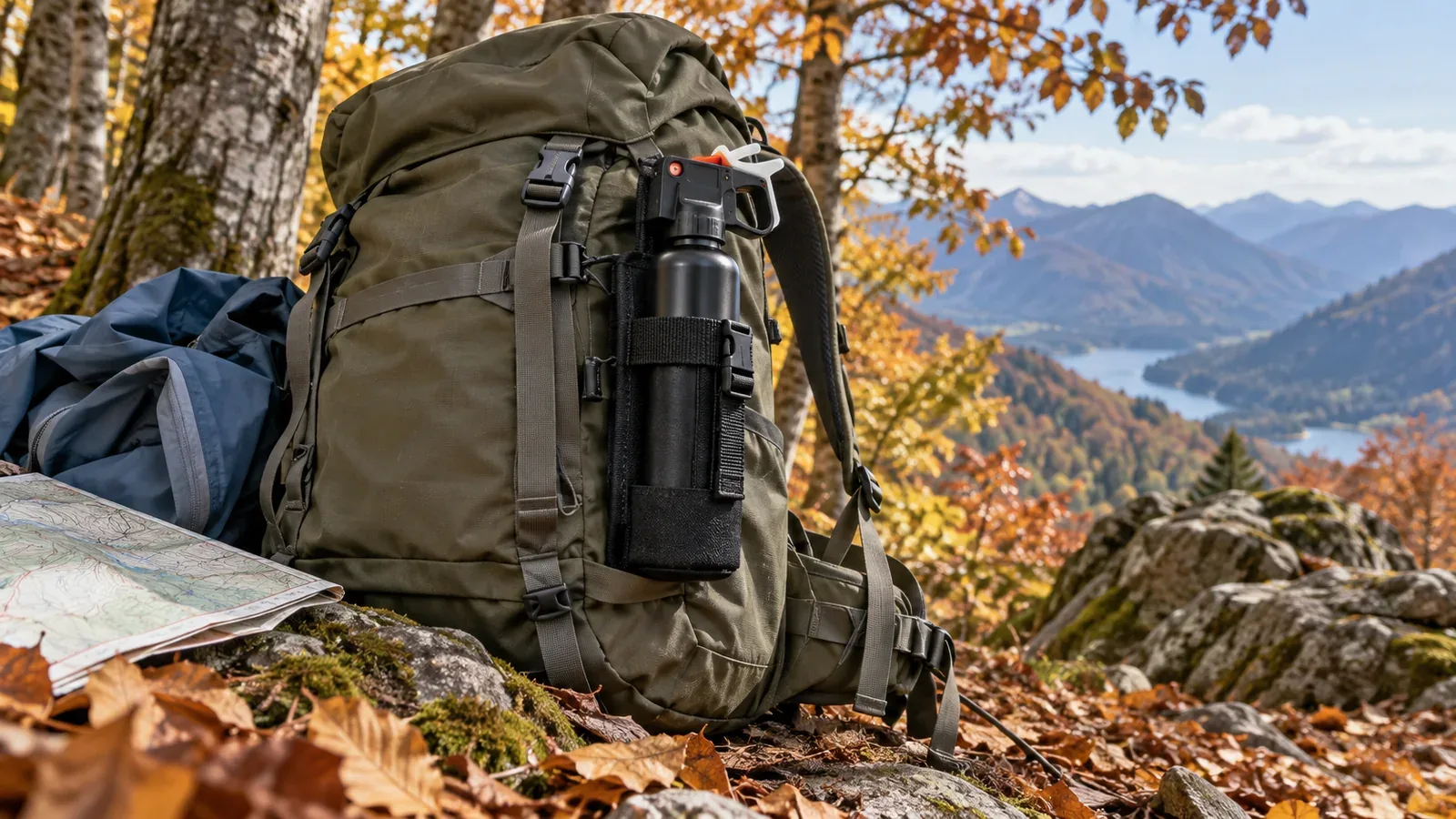
A charging bear can close the distance in seconds. The ministry illustrates this with a bear running at 11 m per second or more. Carry the spray in its purpose-made holster where you can reach it quickly. The recommendations call for a belt or shoulder-strap attachment and a safety mechanism you can operate by touch. Practice with an inert trainer or in an appropriate course, and follow the manufacturer’s instructions.
The ministry advises against pre-spraying around a tent: residue can attract bears. Do not approach a stationary bear to spray it. The product is for emergency defense when a bear approaches or charges. Japan’s Consumer Affairs Agency says bear spray cannot be taken on an aircraft. Check the expiry date, how the holster is secured and the product’s handling instructions before each trip.
Use the Information for Your Own Route
The 2026 surveys showed an abundant beech crop at Akita’s sites and across Niigata overall. The timing of bear reports differed in 2024 and 2025, and April–July 2026 reports still exceeded the same period of 2025. Check local sightings, restrictions and precautions for the exact trail before setting out.
Municipal and visitor center notices are the place to check access and recent reports. Posts from other hikers on Nordwand can alert you to a change. Check the time, place and source before acting, and prepare for a possible encounter even if you find no recent post.
References and sources
- Ministry of the Environment, provisional reports of bear activity
- Ministry of the Environment, monthly bear-related injuries and deaths for fiscal year 2026
- Ministry of the Environment, monthly bear-related injuries and deaths for fiscal year 2025
- Ministry of the Environment, provisional bear-related injuries and deaths
- Ministry of the Environment, recommended performance for bear spray, August 2026
- Consumer Affairs Agency, preparing to carry and use bear spray
- Akita Forestry Research and Training Center, beech and Mongolian oak results, 2002–2025
- Akita Forestry Research and Training Center, beech and Mongolian oak monitoring
- Niigata Prefecture, final nut crop survey and bear precautions, 2026
- Ministry of the Environment, bear information and measures
- Akita Sakigake Shimpo, reporting on the alternate-year beech crop cycle
- Hachiōji City, Asian black bear sightings near the Hachiōji Castle ruins
- Tōhoku Regional Forest Office, October 2026 beech crop survey