
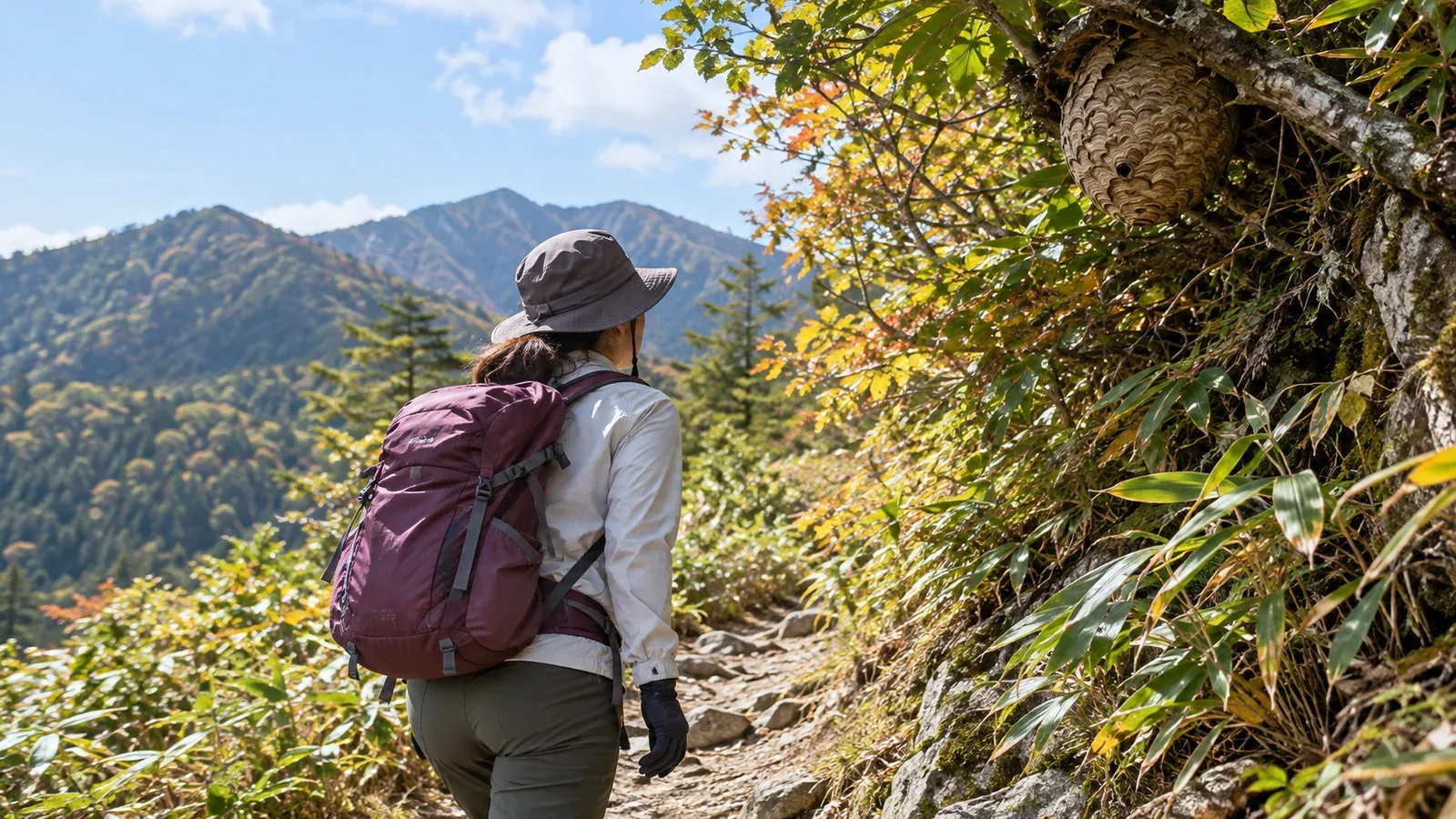
Hornet colonies can be large in late summer and autumn. A nest near a trail can be hard to see, and insects may defend it if disturbed. Pay attention to the surroundings and give nests a wide berth.
This guide covers clothing, what to do near a nest and first aid after a sting. If you have had a severe allergic reaction, discuss an emergency plan with your healthcare provider before hiking.
Why hornets are a concern in autumn
A queen starts a colony in spring, and worker numbers can increase through summer and into autumn. The season and colony size vary by species and area. Hornets may defend the nest when they sense disturbance nearby.
Depending on the species, a nest can be in a branch, in a tree cavity, among rocks or underground. Watch for repeated insect traffic from a single point. Avoid searching for or approaching the nest.
Disturbing a nest can draw out more insects. Avoid swatting or trying to move the nest. Back away and let the trail manager know from a safe place.
Clothing that may help
Local health authorities advise light-colored clothing, covering your skin and avoiding strong fragrances. Give a nest distance regardless of what you are wearing.
Choose a light-colored top and hat.
A white or light-colored outer layer and hat are practical choices. Clothing color does not make it safe to pass close to a nest.
Cover exposed skin.
Wear long sleeves and trousers, closed shoes and socks. Choose clothing suitable for the temperature. Gloves can reduce exposed skin, but check where you place your hands.
Avoid strong fragrances.
Skip strongly scented perfume and hair products. Keep sweet drinks and food covered, and check cans or bottles before drinking. Use insect repellent according to its label for the insects it is meant to repel.
What to do when you encounter hornets
How you move depends on whether an insect is passing by, you are near a nest or several insects are already attacking.
One insect is flying near you
Stay calm. Let it fly away or leave quietly without swatting. Keep your eyes open and check your footing. If you see a nest, move away without disturbing it.
Several insects are nearby or attacking
If several insects are gathering around a nest, withdraw without disturbing it. If they are actively attacking, leave the area quickly by a safe path, protecting your face and head as best you can. Go inside a building or vehicle if safely reachable. Avoid jumping into water.
After a sting
Leave the area first if insects are still attacking. Hornets can sting more than once. Once you are safe, check the person’s condition and the number and location of stings.
For a mild local sting, wash with soap and water and apply a cold pack wrapped in cloth for discomfort. If a stinger is visible, remove it promptly. Avoid suction or cutting. Seek urgent medical advice after multiple stings. Call 119 immediately for a sting inside the mouth or throat or signs of a severe allergic reaction.
Trouble breathing, throat or tongue swelling, faintness or a rapid widespread reaction can mean anaphylaxis. Call 119 immediately in Japan. Use a prescribed epinephrine auto-injector promptly as directed if available. Keep the person resting, avoid making them stand or walk down and follow the dispatcher’s instructions. They still need urgent care if they feel better.
Prepare before the hike
Check the season and local notices.
Hornet activity may be higher from late summer into autumn, with variation by area. Check notices from the municipality, park or hut before leaving, and read the signs at the trailhead.
Watch for signs on the trail.
- Notice repeated hornet traffic near the ground, shrubs or a tree cavity.
- If you hear persistent buzzing, avoid getting closer to locate the source and move away safely.
- If hikers are turning back, ask what they saw from a safe place and follow any closure.
Carry first-aid supplies you know how to use.
Carry soap or clean water for rinsing and a dressing or cold pack if practical. If you have a prescribed epinephrine auto-injector, keep it accessible and tell companions where it is. Do not rely on a venom suction device.
Before your next hike
Check local notices, choose long light-colored clothing where practical and agree on how to back away if you find a nest. If you have had a serious reaction to a sting, ask your healthcare provider what to carry and how to use it.
References
- Japan Fire and Disaster Management Agency first-aid guidance
- Tokyo Metropolitan Government hornet information
- Municipal public-health advice on avoiding hornet stings
- American Heart Association and American Red Cross first-aid guidance for stings and anaphylaxis