
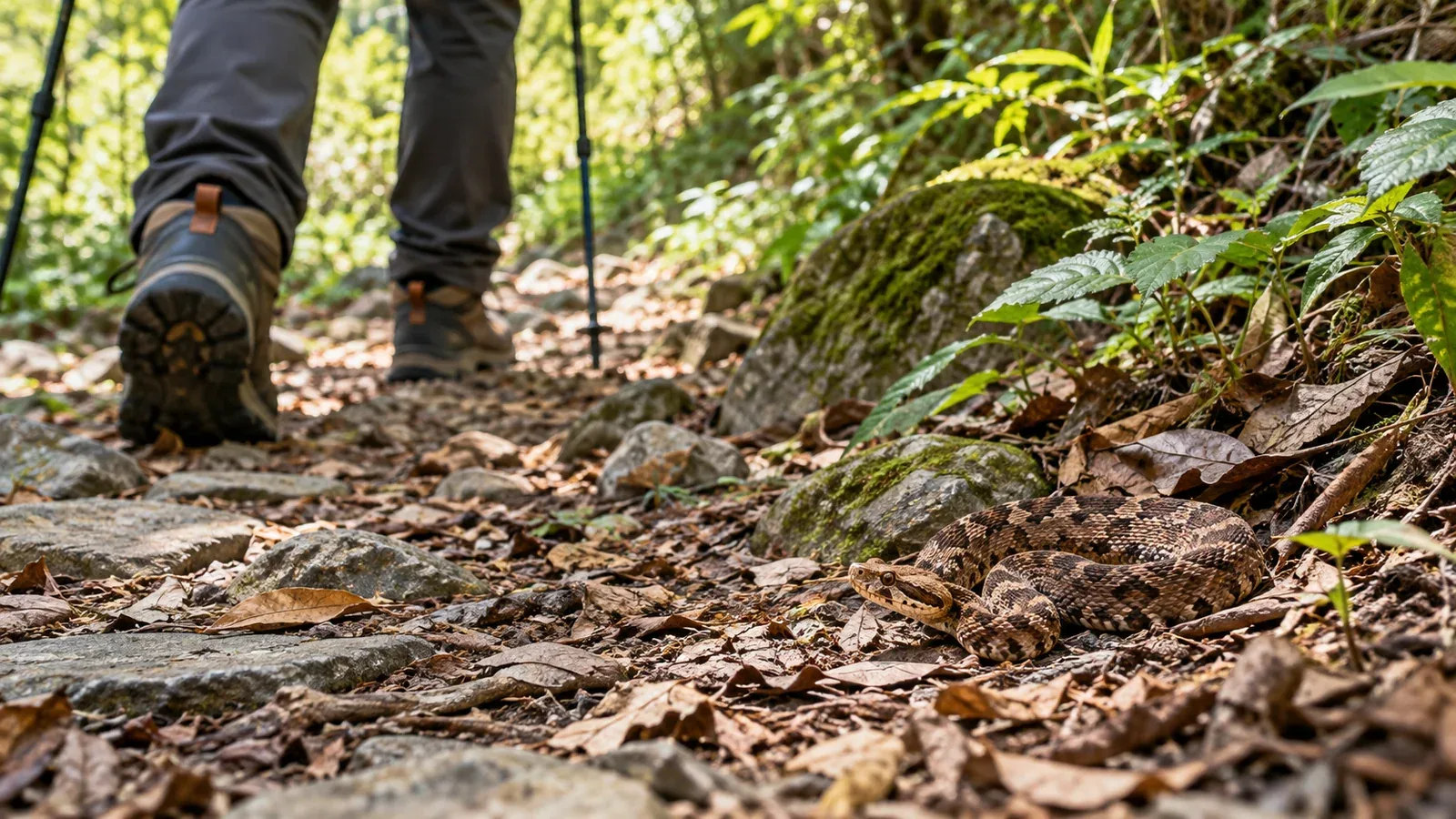
When a snake crosses the trail, give it room before trying to identify it. Two venomous snakes hikers may encounter on Honshu, Shikoku and Kyushu are the mamushi and yamakagashi. Mamushi also occur in Hokkaido, and habu are a separate concern in Okinawa and the Amami Islands. Habitat, weather and the route matter more than a single elevation cutoff.
Here’s how to recognize common habitats, avoid disturbing snakes and respond quickly to a bite.
Mamushi and yamakagashi: appearance and venom
Mamushi (Gloydius blomhoffii)
Kobe’s guidance puts adults at around 40–60 cm long. Many have dark brown oval markings along the sides. Mamushi inject venom through front fangs, and a bite can cause substantial swelling and pain. A severe bite can affect the rest of the body and requires hospital care.
Yamakagashi (Rhabdophis tigrinus)
Adults are commonly around 60–120 cm long. Color and markings vary by region. Some have red and dark markings and a yellow or orange band near the neck. Venom from the rear fangs can interfere with blood clotting, even when early pain is slight. The snake also has defensive glands at the back of its neck. Handling or squeezing it can expose the eyes to their secretions.
Appearance varies, and you may only catch a glimpse. Give any unidentified snake space and leave identification to people who can do it safely.
Seasons and times to pay attention
Temperature affects snake activity. In much of Japan, encounters are more likely from spring through autumn, with timing varying by region and weather.
- Spring: On mild days, pay attention around sunny rocks, low vegetation and trail margins.
- Summer: Check shaded cover and damp places during hot weather, as well as the trail at cooler times of day.
- Autumn: Stay alert on warm days, including on low-elevation trails during foliage season.
A sunny patch after a shaded stretch is an easy place to miss a basking snake. Look down when you reach exposed rocks or roots.
Habitats where encounters are more likely
Watch where you put your feet and hands, especially where the trail edge is hard to see.
Grass and brush edges: Stay on the visible trail and look before stepping into vegetation.
Stone walls and rock crevices: Check where you intend to put your hand before leaning on a rock or sitting down.
Streams and wetlands: Yamakagashi are often found near water where frogs live. Check the ground and vegetation before stepping off a clear surface.
Sunny patches of trail: Snakes sometimes bask on exposed rocks or beside roots.
Local conditions: Check advice from the municipality, park or hut for the route you’re taking. A fixed elevation tells you little about a particular stretch of trail.
What to do when you see a snake
Stop and give it room. Bites can happen when a snake is stepped on, picked up or disturbed. Leave its escape route clear.
- Pause and step back: Move away slowly while keeping an eye on your own footing.
- If it blocks the trail: Wait at a distance or turn back. Leave it undisturbed.
- If you take a photo: Use zoom from a place you can safely stand and leave.
What to do if you’re bitten
Treat a possible venomous bite as urgent. In Japan, call 119 and say where you are and that it may be a snakebite.
While you wait for help
- Move only as far as needed to get out of immediate danger, then rest and keep the affected limb still. Remove rings, watches or other tight items before swelling increases.
- If you have a companion, ask them to call 119 immediately. If alone, call yourself as soon as you can and follow the dispatcher’s advice about staying put or moving.
- Share the color or pattern if you already saw it. A photo from a safe distance can help when it takes no time away from calling.
- Tell responders the time of the bite and any change in swelling or other symptoms.
Actions to avoid
- Sucking the wound with your mouth or a device.
- Cutting the skin.
- Tying a tourniquet or applying ice.
- Drinking alcohol.
Even a small mark or mild early pain warrants urgent medical assessment. Symptoms can develop later. Let the dispatcher and hospital determine the appropriate treatment.
Clothing and habits that reduce exposure
A few choices can help when you’re walking through thick vegetation or beside rocks.
Gaiters and long trousers: Cover exposed skin when the trail passes through low vegetation.
Sturdy hiking footwear: Choose closed footwear that covers the foot and ankle well.
Trekking poles: Use them for balance while you look for a clear place to step. Keep them away from snakes and places where a snake may be hidden.
Visible footing: Stay on open trail where possible and look before stepping over logs or onto the far side of rocks.
Take particular care when tall or flattened grass hides the trail edge after rain.
Before your next hike
Check local reports, choose suitable footwear and charge your phone. Share the route and emergency procedure with your group. Nordwand’s guides and local communities can help you find the relevant local notices.
Sources
- Kobe City guidance on mamushi and yamakagashi
- Japanese Red Cross Society on animal bites
- Mie Prefecture snakebite response
- CDC/NIOSH guidance on venomous snakes