
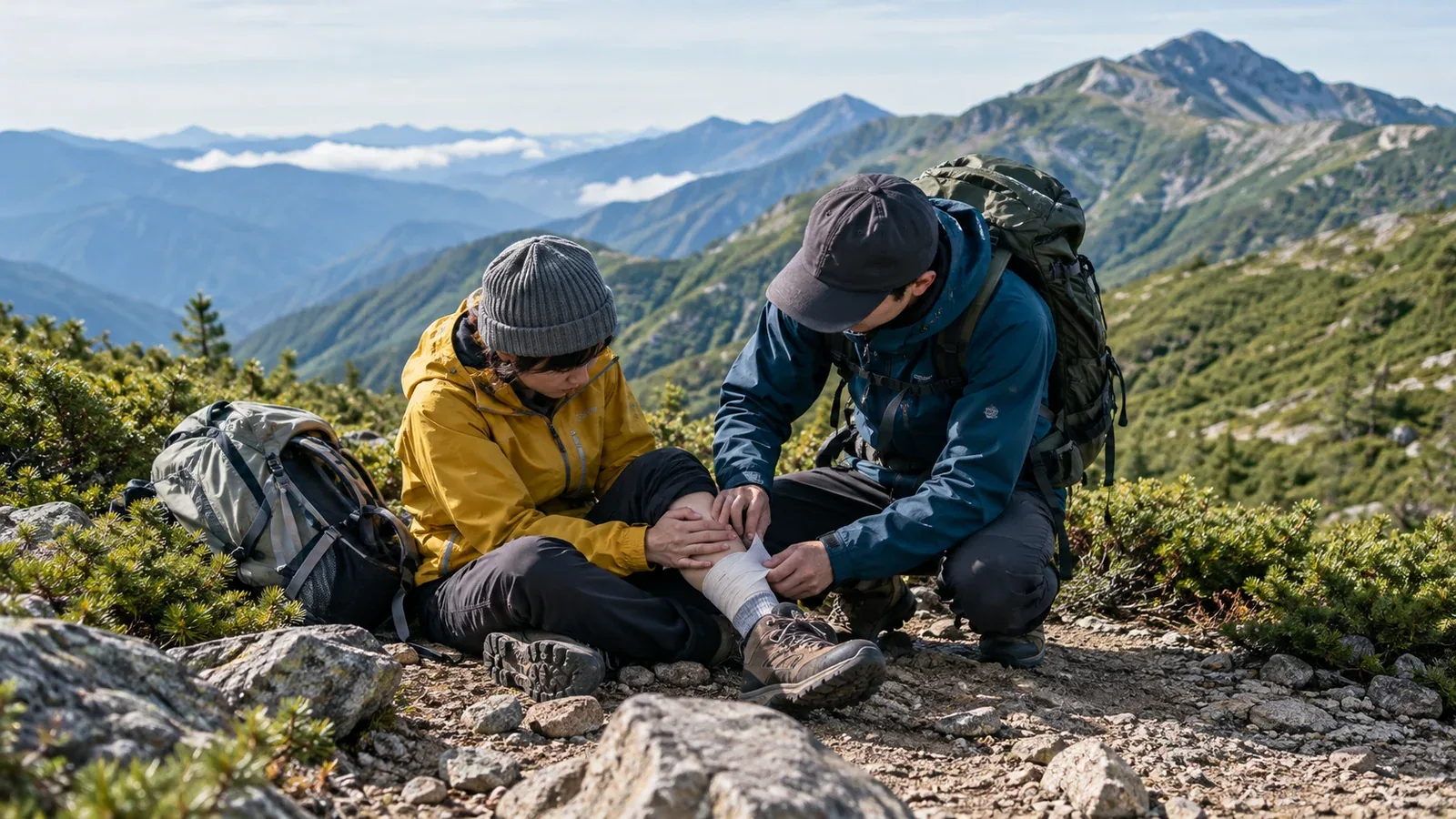
If someone is injured in the mountains, the first decisions matter. Walking on a serious injury can make it worse. Delaying a call can also leave you with less daylight and a harder rescue.
This guide covers when to call for help, what first aid you can give while you wait and when a short walk out may be reasonable. Follow the instructions of the emergency dispatcher and medical professionals.
Check whether it is safe to move
First check the scene for hazards, then look at the person’s response, breathing and any severe bleeding. An injury can be serious even if the person feels able to walk. Avoid asking them to test weight-bearing if you suspect a fracture or significant injury.
Check for these warning signs.
- Severe limb pain, deformity or loss of sensation. If the person reports they cannot put weight on it or you see an abnormal position, protect the limb. Avoid asking them to try standing or walking.
- Possible head, neck or back injury. Consider how they fell, what they struck and any confusion, neck pain, numbness or weakness. Symptoms can develop later.
- Heavy or uncontrolled bleeding. Apply direct pressure and call immediately if bleeding is severe. Do not wait for a set number of minutes.
If any of these are present, call before attempting to walk out. If the person does not respond and is not breathing normally, call 119, start CPR and use an AED if available, following the dispatcher’s instructions.
When to call for rescue
Call promptly if the injury, the terrain or worsening conditions make a safe descent unlikely. The following situations can require rescue.
- Severe pain, deformity or inability to walk after a leg or joint injury.
- A hard impact to the head, neck or back, especially with confusion, vomiting, numbness or weakness.
- Heavy bleeding or bleeding that firm direct pressure does not control.
- Worsening signs of cold illness, heat illness or altitude illness.
- No safe way to reach the trailhead or shelter with the remaining daylight.
- Being unable to move safely while hiking alone.
In Japan, call 119 or 110 and describe the emergency. The dispatcher can tell you what to do next. Call as soon as you realize the person may need rescue.
How to call for rescue
Information to have ready
Call immediately if time matters. While talking, give the information you have and answer the dispatcher’s questions.
- Location. Give the mountain, route, a trail sign or nearby landmark and GPS coordinates if available.
- Injury. Explain what happened, where they are hurt, whether they respond and breathe normally, and whether they are bleeding.
- People. Say how many are there, how many are injured and whether you have help.
- Weather and gear. Describe conditions, shelter, warm clothing and a number where you can be reached.
Which number to use
Call 119 for fire and medical emergencies or 110 for police in Japan. Both can connect you with mountain rescue. If your call fails, try another phone if one is available. Move only to a nearby spot you can reach safely if it might let you call.
If the device and service support satellite SOS at your location, follow its instructions when a mobile call cannot connect. Availability depends on the device, region and conditions.
If you still cannot make contact, signal with a whistle or headlamp, use visible gear from a safe position, and ask a companion or passing hiker to relay your location if they can do so safely. Stay with the injured person when possible.
First aid while waiting
Start with what you can do safely and follow the dispatcher’s instructions. Keep checking the person’s breathing and condition.
Bleeding
Use gloves if available and press firmly on the wound with clean gauze or cloth. Keep pressure on it without lifting the pad to check repeatedly. Severe bleeding calls for urgent help while pressure continues. Rinse minor wounds with clean drinking water only after bleeding is controlled.
Suspected fracture or sprain
Support the limb in the position you found it and avoid straightening it or asking the person to bear weight. If trained or directed by the dispatcher, use suitable padding and support. Check that any wrap leaves fingers or toes warm and sensitive.
Preventing heat loss
Someone who cannot move can cool quickly. Insulate them from the ground, add dry layers and use a shelter or waterproof cover. Replace wet clothes when sheltered. Give food or drink only if they are fully alert and able to swallow safely.
Possible head or spinal injury
Ask the person to stay still and avoid unnecessary movement. Move only for immediate danger or to provide lifesaving care as directed. If they do not respond and do not breathe normally, call 119, begin CPR and use an AED if available. The dispatcher can guide you.
If you decide it is safe to walk out
Consider walking out only for a minor, stable injury when serious signs are absent, bleeding is controlled and the person can walk safely on the terrain ahead. If you are unsure, ask for help first.
- Check the exit. Use the map to identify a known, marked route or nearby hut. Choose the safest available way, taking the injury and daylight into account.
- Slow down. Allow for extra time and breaks. Avoid steep or unstable ground and stop if walking worsens the injury.
- Tell someone your plan. Share your location, condition, intended route and expected arrival. Follow any directions already given by responders.
- Reassess on the way. If pain, balance or conditions worsen, stop in a safe place and call for help.
Before your next hike
Check your first-aid kit and practice with dressings, bandages and a sling. Look for a practical course from the Japanese Red Cross Society or a local mountain organization. A qualified guide can help you prepare for an unfamiliar route.
References
- National Police Agency mountain incident statistics
- Fire and Disaster Management Agency rescue and first-aid information
- Japan Mountain Guides Association
- Japanese Red Cross Society first-aid resources
References and sources
- National Police Agency — Japan’s 2025 mountain incident figures
- Government of Japan — Mountain safety and rescue numbers
- Nagano Prefecture — Mountain emergency calls and helicopter safety
- Apple Support — Emergency SOS via satellite requirements
- Fire and Disaster Management Agency — Basic life support videos
- American Heart Association and American Red Cross — 2024 first-aid guidance
- Japanese Red Cross Society — Severe bleeding
- Japanese Red Cross Society — First-aid training materials
- Wilderness Medical Society — Clinical guidance on accidental hypothermia
- Japan Mountain Guides Association — Guide qualifications