
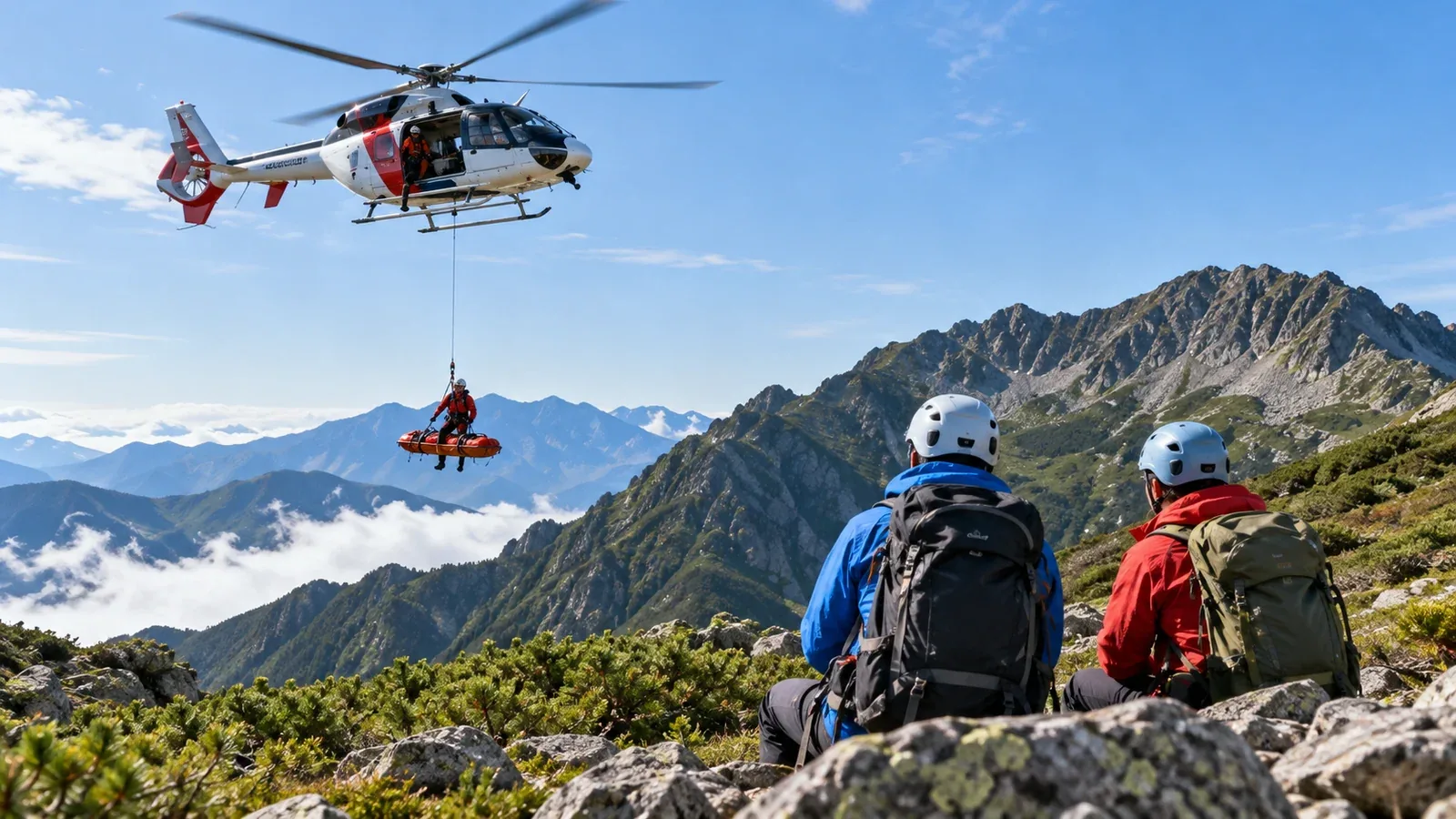
A mountain emergency can bring separate bills for private search, transport and medical care. Public police and fire rescue in Japan generally does not bill the rescued person, with exceptions such as designated areas in Saitama. Private teams or aircraft may charge separately. Call 110 or 119 promptly if you need help. Review coverage before the trip.
This guide explains the benefits to compare and the questions to ask for your own routes. Use the insurer’s current policy wording, coverage summary and claim instructions to confirm what applies.
What different benefits cover
A policy may bundle several benefits. Read the conditions and limits for each one.
Search and rescue costs. Depending on the policy, this can reimburse eligible private search teams, aircraft or transport. In designated areas, Saitama’s public disaster-response helicopter charge is ¥8,000 per five minutes of flight, with exemptions. A Nagano notice for the southern Northern Alps says private aircraft charges are billed separately. Check whether the policy covers the type of bill you could receive.
Medical expenses or injury benefits. A policy may reimburse specified treatment costs, pay a fixed amount for hospital stays or cover accidents only. Check illness separately, including whether conditions such as altitude illness or hypothermia qualify.
Death and permanent disability benefits. These can pay a stated amount for covered events. Check the definitions, beneficiaries and limits.
Personal liability. This can cover legal liability for injuring someone or damaging their property, within the policy terms. For example, ask how the policy treats an accidental rockfall you cause.
Some policies combine these benefits and others offer separate options. Identify which expenses you need covered and which benefits you already have.
Where to get cover
Cover is available through groups, insurers and some travel or credit-card policies. An online service is another way to enrol, and its terms still govern the cover.
Group or membership cover. Nissankyo Sangaku Kyōsaikai offers a group accident policy to eligible members and accepts individual membership applications. Check whether the organization requires separate enrolment in the insurance, and which activities and benefits are included.
Individual or specialist cover. Insurers offer contracts for a day, several days or longer periods. Check whether residents and visitors are eligible, and whether technical mountaineering requires separate cover.
Travel insurance linked to a credit card. Some cards provide benefits when you meet conditions such as paying for the trip with the card. Read the exclusions for hazardous sports or technical mountaineering. Verify search and rescue separately.
Online enrolment and apps. Some insurers allow you to buy a policy before departure on the same day. Check when coverage starts and whether it applies to the entire trip. Saving a plan in an app does not by itself confirm insurance.
What to check in each policy
Use the same route and equipment list to compare offers. Ask for clarification in writing if a clause is unclear.
Rescue costs and limits
Check the maximum per incident and per policy period, deductibles, and which expenses count. Ask how private teams, aircraft, evacuation and transport to hospital are treated.
Activities and terrain
Read the definitions of hiking and technical mountaineering. The insurer may distinguish marked trails, off-trail ridges, winter travel, canyoning or climbing with equipment. Give the insurer specific routes and gear when checking.
Age and eligibility
Check eligible ages, residence requirements, how the premium is calculated and whether eligibility changes at renewal. If you are travelling from abroad, confirm that the plan is available to you.
Overlap with existing cover
Compare your health, accident, travel and card policies. Check which benefits pay actual costs, which pay fixed amounts and how multiple policies handle the same claim.
Payment and claims
Ask whether you pay first or whether the insurer can arrange direct payment, which receipts or medical records it needs and when you must report an incident. Keep the policy number and assistance contact accessible offline.
Annual or short-term cover
Compare your actual number of outings, trip lengths and activities. Include any membership fee when comparing the total price.
For frequent hikes, compare an annual policy’s cost and limits with separate trip cover. For occasional trips, compare short-term options. The better fit depends on the terms and what you already have.
Check the exact start date and time. Montbell’s short domestic travel policy, for example, allows applications before departure on the day of the trip, while its longer accident cover generally requires applying by the previous day. Read the current terms for the policy you select.
For longer trips, check any limit on continuous days, activity or location, even if the policy lasts a full year.
Before you enrol
Write down your plans and compare them with your existing cover.
- How many outings you take and how many days each usually lasts
- What terrain and activities you plan, including snow, climbing and off-trail routes
- What your existing policies cover for accidents, illness and rescue
- Who in the group is actually named or eligible on each policy
Ask each companion to check their own coverage. If the group shares one policy, confirm each person’s eligibility and what to do if someone needs rescue.
Before your next hike
Read your current policy and note any gaps for search and rescue. Ask the insurer to confirm the activities, expenses and conditions you are unsure about. Save the policy documents and emergency contact before departure. For unfamiliar terrain, Nordwand can help you discuss the route with other hikers or find a qualified guide.
References
- National Police Agency mountain incident statistics
- Financial Services Agency consumer information on insurance
- Japan Mountaineering and Sport Climbing Association
- Nissankyo Sangaku Kyōsaikai group insurance information
References and sources
- National Police Agency — Japan’s 2025 mountain incident figures
- Financial Services Agency — Guide to choosing and entering an insurance contract
- Japan Mountaineering and Sport Climbing Association — Mountain safety
- Nissankyo Sangaku Kyōsaikai — Individual membership and group insurance
- Montbell — Application dates and insurance products
- Montbell — Summary of short-term cover
- Saitama Prefecture — Rescue helicopter charges in designated areas
- Nagano Prefecture — June 2026 notice on private rescue costs
- Gifu Prefectural Police — Mountain rescue and charges