
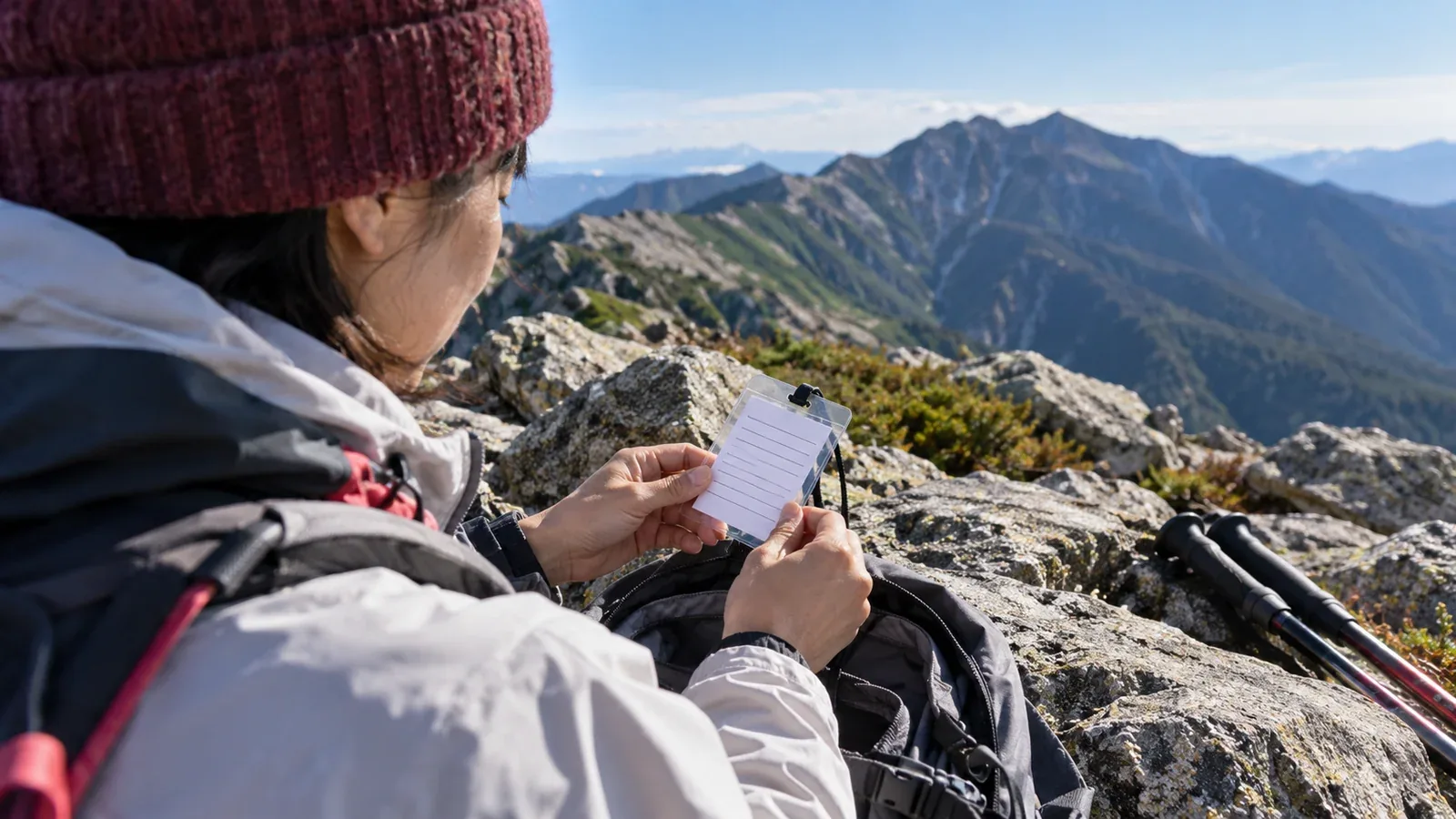
If you’re injured and cannot speak, a small card can tell responders your name, whom to call and which allergies, conditions or medications matter. Keep it with you in case your phone is damaged, locked or out of power.
File your hiking plan where required and leave a copy with a trusted contact. The card travels with you and gives people already on scene the most important details at a glance.
Use the checklist below to decide what to include, how to protect the card and what to update before each hike.
When the card helps
A card can help in three common situations.
For rescue or search, a dated route note helps a companion or responder understand where you were heading and how the group may have become separated.
For medical care, note serious allergies, relevant conditions and current medicines. This gives responders information to assess. Clinicians use clinical records and compatibility testing for transfusions, so a self-reported blood type is optional.
For contacting someone who knows your plans, provide a reachable emergency contact who knows your route and can give authorities more details.
A card works best when these details are easy to find and current.
What to write, in order of priority
Keep the wording short and the headings easy to scan. If you hike in Japan and your card is in another language, consider adding key terms in Japanese where you can verify the wording.
Core details
- Name and date of birth: Write them legibly. List an optional blood type only if you know it.
- Emergency contact and phone number: List one or two people who have agreed to be contacted. Add an international country code if relevant.
- Today’s trailhead, destination and planned exit: Include the date and local time. For an overnight trip, include the huts and expected return date.
- A clinician’s contact, if useful: Add it if it would help clarify a relevant medical condition or treatment.
Details to add when relevant
- Medical conditions: Include only conditions that could affect emergency care.
- Current medications: Write the actual names and list relevant doses if you know them. Note where an up-to-date medication list is carried.
- Serious allergies: Identify relevant food, medication and insect-venom allergies. If you carry prescribed emergency medicine, say where it is.
- Hiking companions: Include contacts if everyone agrees.
- Vehicle and parking location: Keep this with the route note if it would help locate the group.
What to leave off
Use only information needed for identification, contact or care. A full address, insurance login, identity number or other private details can stay off the card.
Make it readable and water-resistant
Prioritize protection from water and legibility. Use high-contrast lettering and a simple layout.
Place a paper card in a small waterproof sleeve or laminate the stable details. A separate protected slip can carry the current route.
Use lettering large enough to read quickly and keep the headings clear. Ask a companion to check the phone numbers and readability before you leave.
If a local hiking organization offers a template, adapt it to fit the information relevant to you and your route.
An iPhone can display Medical ID when you enable “Show When Locked.” A Pixel can display selected emergency information through Personal Safety. Menu names and options depend on the device and software. Anyone with the phone may be able to see what you choose to display, so select only what you want visible. Keep the paper card for when the phone is unavailable.
Where to carry it
Keep the card on your person where it can be found. Tell your companions where it is, especially if you change layers or take your pack off.
Choose a place you can still reach when your pack is off.
- A zippered jacket or trouser pocket: Choose an accessible pocket on a layer that will stay with you.
- A secured small sleeve: Keep it in a pocket or attach it to a safe location where it will not snag.
- A backup copy in the pack: Store it in a clearly identified waterproof pouch.
Keep stable details on the card and replace the route note for every outing. Include the date so it is clear which note is current.
Update the card after changes in medication, allergies, health conditions or emergency contacts. Remove old copies.
Share the route with your contact and companions
Before leaving, share the itinerary with a trusted contact and your companions. A copy at home gives your contact the information to act if you miss a check-in.
Tell your contact the trailhead, planned exit, expected check-in time and when to call. In Japan, 110 can take reports of a missing hiker, and 119 handles urgent medical or rescue emergencies.
Use an accepted hiking-plan method for the mountain area and give your contact a copy or the filing reference. Check the prefectural police or park’s current guidance.
Before your next hike
Check whether your card has a readable name, current contact number, relevant health information and a dated route. Tell a companion where you carry it. Ask your clinician which details to include if you have a condition or medication that could affect emergency care.
Sources
- Japan Government Public Relations: hiking plans and rescue
- Japanese Red Cross Society: blood type testing and transfusion
- Apple Support: Medical ID
- Google Pixel Help: emergency information