
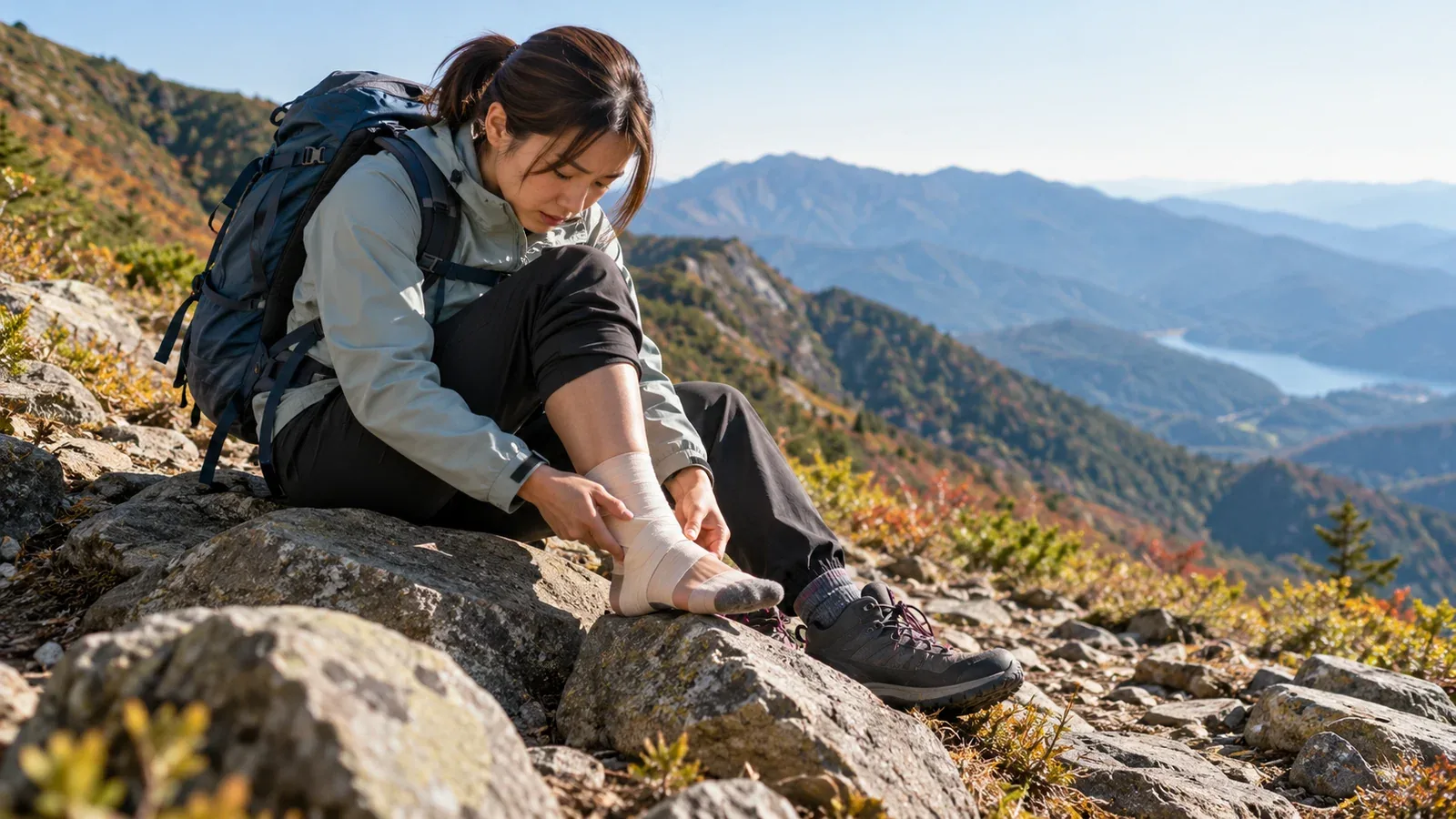
A twisted ankle can put an end to a descent in one step. Stop where you can safely rest. Look for signs that you need urgent help and consider the terrain still ahead before making any decision about walking.
A sprain injures a ligament, the tissue connecting bones at a joint. When the sole rolls inward, the ligaments on the outside of the ankle are commonly affected. A fracture and a sprain can feel similar, especially at first.
Stop and take weight off the ankle
Rest the ankle and protect it from further injury. A cold pack wrapped in cloth can ease pain and swelling if available and you can keep the rest of the body warm. Gentle compression can help comfort if circulation is normal. Elevate the ankle if you can do so comfortably.
Sit somewhere stable, move as little as possible and check how the foot looks and feels. There is no need to stand to test it. If you cannot move to safety without risking another injury, ask for help.
How to decide whether to keep descending
Before applying tape, consider what the injury looks like, how it affects movement and what it would take to get off the mountain.
1. Look for signs of a possible fracture or serious injury
Obvious deformity, an open wound over a possible fracture, a cold, pale or numb foot, or severe pain are reasons to seek urgent help. Keep the ankle in the position you found it and avoid putting weight on it. In Japan, call 119 if an injury makes safe evacuation impossible or there are urgent signs. Tenderness over the ankle bones or certain foot bones may also warrant imaging. A fracture can be present even when you can move the foot.
2. Pay attention if you could not put weight on it
The Ottawa Ankle Rules help trained clinicians decide when X-rays may be needed. They consider specific points of bony tenderness and whether a person was able to bear weight for four steps. Use inability to bear weight as a warning and avoid deliberately trying four steps on the trail. Tell the dispatcher what you already observed.
3. Assess the terrain, distance and conditions
Short, stable terrain and a companion can make an assisted exit possible in some mild cases. Steep slopes, wet rock, chains, darkness or worsening pain can make even a short route unsafe. If you cannot leave safely, call for help. There is no fixed time or distance that makes walking safe.
Using a wrap or ankle support
If the injury appears mild and there are no signs of a fracture or poor circulation, a light compression wrap or familiar ankle brace may make it more comfortable. Follow the instructions for the support you carry. Use rigid athletic taping only if you have learned how to apply it.
The steps below are for gentle support of a mild injury while you arrange to get out. Avoid trying to straighten or bind a visibly deformed ankle.
- Check the skin and toes first: Look at the color and warmth and ask about sensation.
- Apply a light, even wrap: Follow the bandage or brace instructions and leave the toes visible. Avoid pulling tight.
- Support the heel and ankle: Keep the foot in a comfortable position without forcing movement.
- Secure the wrap smoothly: Avoid folds and concentrated pressure.
- Recheck regularly: Loosen the wrap if the toes become numb, cold or discolored or the pain increases. Seek urgent help if these signs persist.
If a safe assisted exit is possible, take short steps on stable ground. A companion can help with balance or carry your pack. Stop and reassess if the ankle gives way or pain or swelling increases.
After getting off the trail
Arrange a medical assessment as soon as practical, especially if bearing weight is painful, swelling is substantial or symptoms persist. A clinician can determine whether X-rays or other tests are needed. Proper care and rehabilitation can reduce the chance of repeated sprains and lasting instability.
Tell the clinician how the foot twisted, whether you could bear weight afterward and where it hurts most.
Footwear and walking habits
Wear footwear that fits securely and has traction suited to the terrain. If you have had ankle injuries before, ask a clinician about balance and strengthening exercises and whether a brace may help on your hikes.
As you tire, slow down and choose stable footholds. Shorter steps can make it easier to stay balanced on uneven ground.
Before your next hike
Carry a compression wrap or support you know how to use. Learn to recognize the signs that call for rescue and check where you can reach help on your route. Nordwand’s route notes and local guides can help you plan for difficult sections and exits.
Sources
- Japanese Orthopaedic Association: ankle sprains
- Japanese Red Cross Society: first aid for fractures
- American Heart Association and American Red Cross: first aid for sprains and suspected fractures
- American College of Radiology: acute ankle trauma and the Ottawa Ankle Rules