
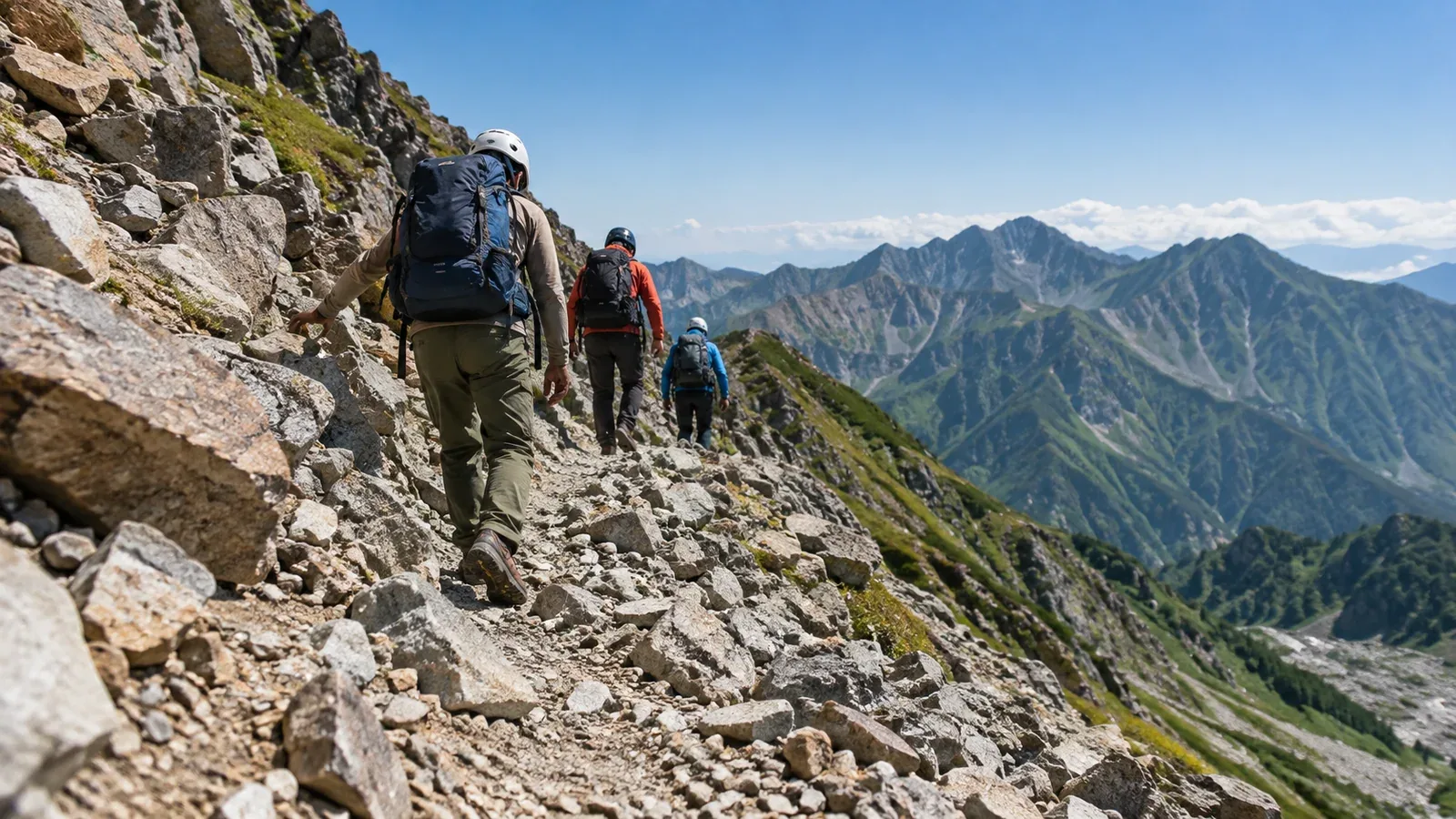
A stone can gather speed and bounce across a trail within seconds. A warning may give hikers below only a moment to react. In Japan’s mountain incident figures, falling rocks are one of the recorded causes of injury and death.
The best place to make a decision is before entering an exposed section. Once on it, take care with each step, keep other hikers out of the fall line where possible and warn them immediately if a stone starts moving.
How rockfall starts
Weathering and freezing and thawing can loosen material from a rock face. Hikers and animals can also dislodge stones, especially on steep slopes covered in loose debris or on damaged trail.
Rain and snowmelt can loosen soil and rock. Repeated freezing and thawing can widen cracks. On exposed terrain, one stone set in motion by a boot or handhold can knock others loose on the way down.
Even if the foothold you stepped on stays in place, smaller pieces around it may move. Be alert for scraping or bouncing sounds and look for a safe place to stand before stopping.
Foot placement and group spacing
Finding secure footholds
A large stone can shift under load. Look for firm ground or a solid hold before transferring your weight.
- Look for a solid footing: Avoid loose slabs and rocks resting on top of scree where you have a firmer option.
- Keep your balance as you test an uncertain foothold: Apply pressure gradually while maintaining a secure stance. If it shifts, choose another place.
- Transfer weight one step at a time: Avoid rushing or kicking loose stones, especially on a descent.
On a steep grassy slope, turf and the stones under it can pull away. Avoid using tufts of grass as load-bearing handholds. Turn back if you cannot find secure holds on terrain within your skills.
Keeping people out of the fall line
Where the trail climbs steeply, a person directly below you may be in the path of anything you dislodge. Agree on who moves and where the others wait.
- Space the group according to the terrain: Where practical, let one person pass through an exposed stretch while others wait clear of the fall line. Stay within communication range.
- Avoid crowding or passing in narrow spots: Agree where to wait and pass safely.
- Take extra care going down: Slow down and place each foot deliberately.
The warning call: “Raku!” or “Rock!”
If a stone starts falling, shout immediately to warn people below. In Japan, you may hear “Raku!” or “Rakuseki!” Both signal falling rock.
Agree on a call before you set off. If your group uses several languages, make sure everyone knows what “Raku!” and “Rock!” mean.
Give the warning as soon as you notice a stone moving toward others. It takes little time for it to pick up speed.
When a rock is coming
React according to where you are standing, what you can safely see and whether you have cover nearby.
When there is a safe way out of the path
If you can move safely out of the likely fall line, move to firm footing and take solid cover if immediately available. Avoid a jump toward a drop, a gully or loose ground.
Rocks may bounce and change direction. Avoid relying on a prediction of where one will stop. Once clear, stay out of the exposed area and check whether the route remains passable.
When you cannot move safely
If you have no safe move, steady yourself and shield your head and neck as best you can. Keep a handhold or secure stance if you need it. A climbing helmet offers some protection, but a large impact can still injure you.
Look up local helmet recommendations and restrictions before you leave. Nagano Prefecture, for example, publishes its list of mountain areas where helmets are recommended.
Actions that can make things worse
- Running on uncertain footing: A slip or fall can add a second emergency.
- Jumping toward a drop or into a gully: Gullies can channel rocks and debris and make escape difficult.
- Gathering beneath the affected slope: Wait clear of the fall line and check the route before anyone moves back into it.
Weather and terrain that increase exposure
Conditions can change the rockfall risk. Check weather, local reports and trail closures together.
- Rain or recent rain: Water can loosen material on a slope. Follow local closures and choose a different route when necessary.
- Snowmelt and freeze–thaw cycles: A slope that looks quiet in the morning can still release stones.
- Severe weather, earthquakes or fresh damage: Look for official updates and fresh debris, and avoid any stretch where rockfall is ongoing or the trail is closed.
Plan a different route when you cannot safely avoid the exposed section. Consult official forecasts and the trail manager, visitor center or mountain hut for recent conditions. Conditions on the ground take priority over a planned crossing time.
Before your next hike
Mark steep scree, gullies and rock faces on the map. Agree on the warning call and safe waiting points. Check which routes call for helmets and where closures apply. For a route beyond your experience, Nordwand can help you find a guide familiar with the terrain.
Sources
- Japan Sport Council: Safe Mountaineering Handbook
- Japan Forestry Agency: safety on mountain trails
- Nagano Prefecture: mountain areas where helmets are recommended