
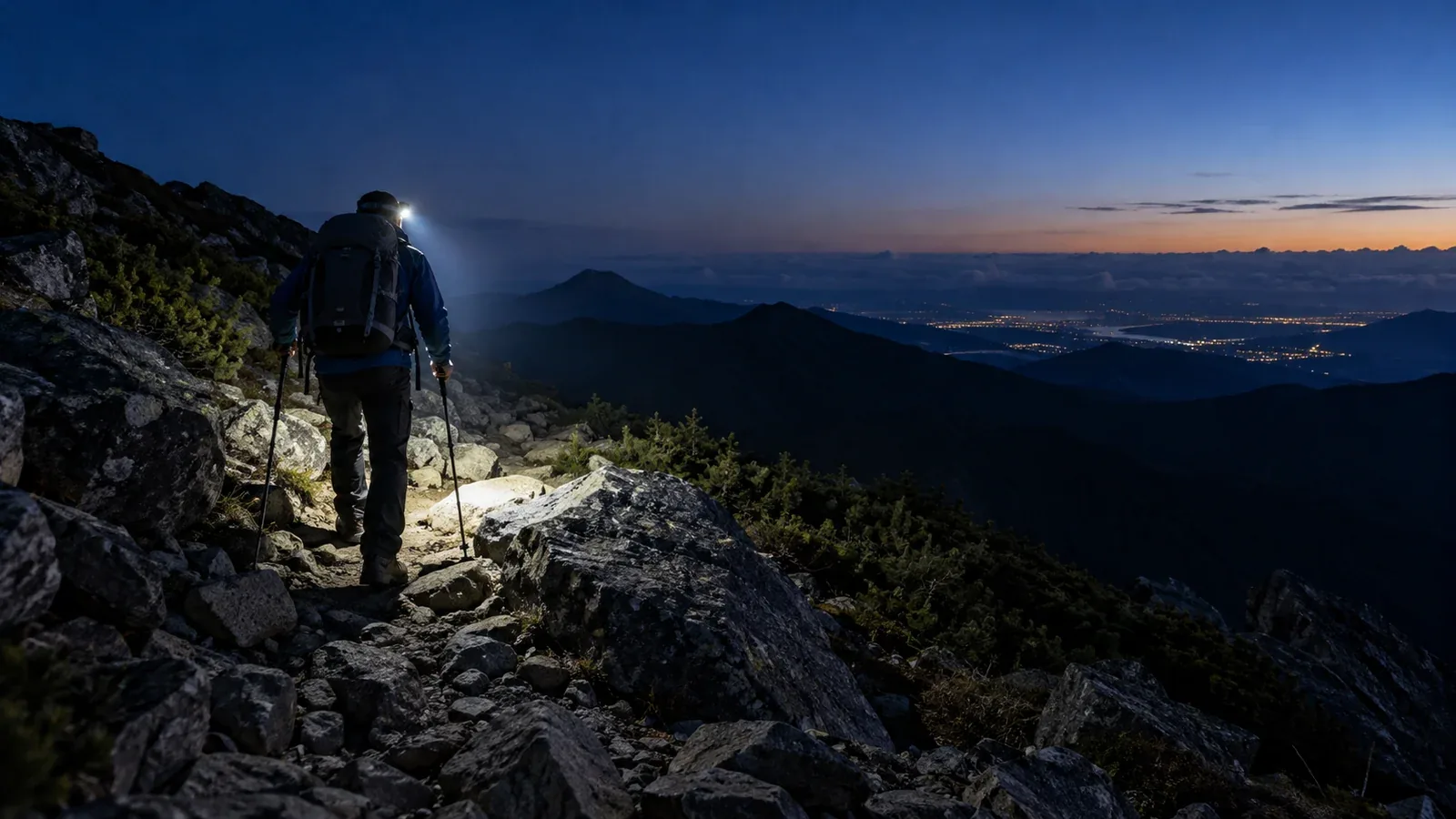
A headlamp lights the ground ahead, while the side of the trail and the shape of the terrain may stay in shadow. Add fatigue or poor weather and even a familiar route can become hard to follow. Plan for that loss of information before deciding to walk in the dark.
You might be caught out by a slower descent or deliberately set off early to see sunrise. In both cases, check the terrain, available daylight and ways to stop or turn around.
What the beam leaves out
Beam width varies by headlamp. A narrow beam can show the next foothold clearly while leaving slopes, drop-offs and junctions outside the beam.
A light mounted near your eyes can make some shadows less obvious. That can make it harder to judge whether a patch of trail is flat or drops away. Slow down and check the next surface from a stable stance before shifting your weight.
Paint marks, cairns and signs can be easy to miss while you look down at your feet. Stop at junctions and confirm your direction with your map before proceeding.
Dark adaptation, fatigue and cold
Eyes adjust gradually to lower light, and bright light can reduce your ability to see in the dark for a time. If the lamp goes out, stop somewhere stable and switch to an independent backup before moving.
Fatigue or lack of sleep can make it harder to concentrate and keep your balance. Set a turnaround time while planning the trip and reassess if your pace or attention drops.
Temperatures can fall overnight. A wet layer and wind can cool you quickly when you stop. Keep insulation and wind or rain protection accessible, and change out of a wet layer if you can do so under shelter.
How to assess a planned walk in darkness
Check the route, the equipment each person carries and the weather for the entire period. Set an alternative in advance.
The route
- Choose a maintained trail with little exposure: Avoid chains, unstable scree and exposed ridges in darkness.
- Check junctions and exits in advance: Know how to confirm the route and where you can safely turn back.
- Use a familiar route: Walk it in daylight first and check current restrictions and changes.
Equipment
- Carry a headlamp and an independent backup: Test both before departure and carry compatible spare batteries or power. Keep your phone available for navigation and calls.
- Carry extra food and water: Allow for a slower pace, delays and the chance of waiting for daylight.
- Pack dry insulation and emergency shelter: Check the forecast low and prepare to remain warm even when you stop.
Weather and local information
Check the Japan Meteorological Agency forecast, official trail notices and hut information. Allow for rain, fog and wind as well as temperature. Check whether the trail or hut permits the hours you’re planning.
If darkness catches you unexpectedly
Stop and reassess from a stable spot. Choose the option that minimizes exposure, including a safe wait, retreat or a short move on a confirmed route.
- Find your location: Use a map, compass, known landmark or offline map. Download it before the hike. Avoid guessing your way through a junction.
- Check what’s ahead: Consider exposed rock, river crossings, chains and the actual conditions. Remaining time alone does not determine whether moving is safe.
- Check the group and equipment: Find the backup lights and add dry layers. Confusion, loss of coordination or severe cold symptoms need urgent attention.
- Consider shelter: If moving is unsafe, look for a stable sheltered spot out of gullies and away from edges. Insulate yourself from the ground.
- Tell someone where you are: Update your contact if you have signal. If you are lost, injured or unable to get to safety, call 110 or 119 in Japan and follow instructions.
Give rescuers the trail name, coordinates if available, group size and any immediate danger. If you lose the route or cannot walk safely, avoid moving into unfamiliar ground in search of a shortcut.
If your plan includes walking before sunrise
Keep the dark section as short as possible. Check sunrise and local hours, and consider a hut stay or a lower viewpoint if that lets you walk in daylight.
Familiarize yourself with the route during the day. If you want to practice using your headlamp, choose a short, easy, permitted route with a clear exit.
Everyone in the group should have their own light and backup, access to the route and a way to signal for help. Agree on where you’ll regroup if you lose sight of one another.
Before your next hike
Check sunset, the route, forecast and turnaround time. Test your lights, pack dry layers and tell a contact if the plan includes walking in the dark. Nordwand can help you find a local guide if you need route-specific advice.
Sources
- Japan Government Public Relations: hiking safety and rescue
- Japan Meteorological Agency: weather forecasts and warnings
- U.S. National Park Service: hiking after dark and trip planning