
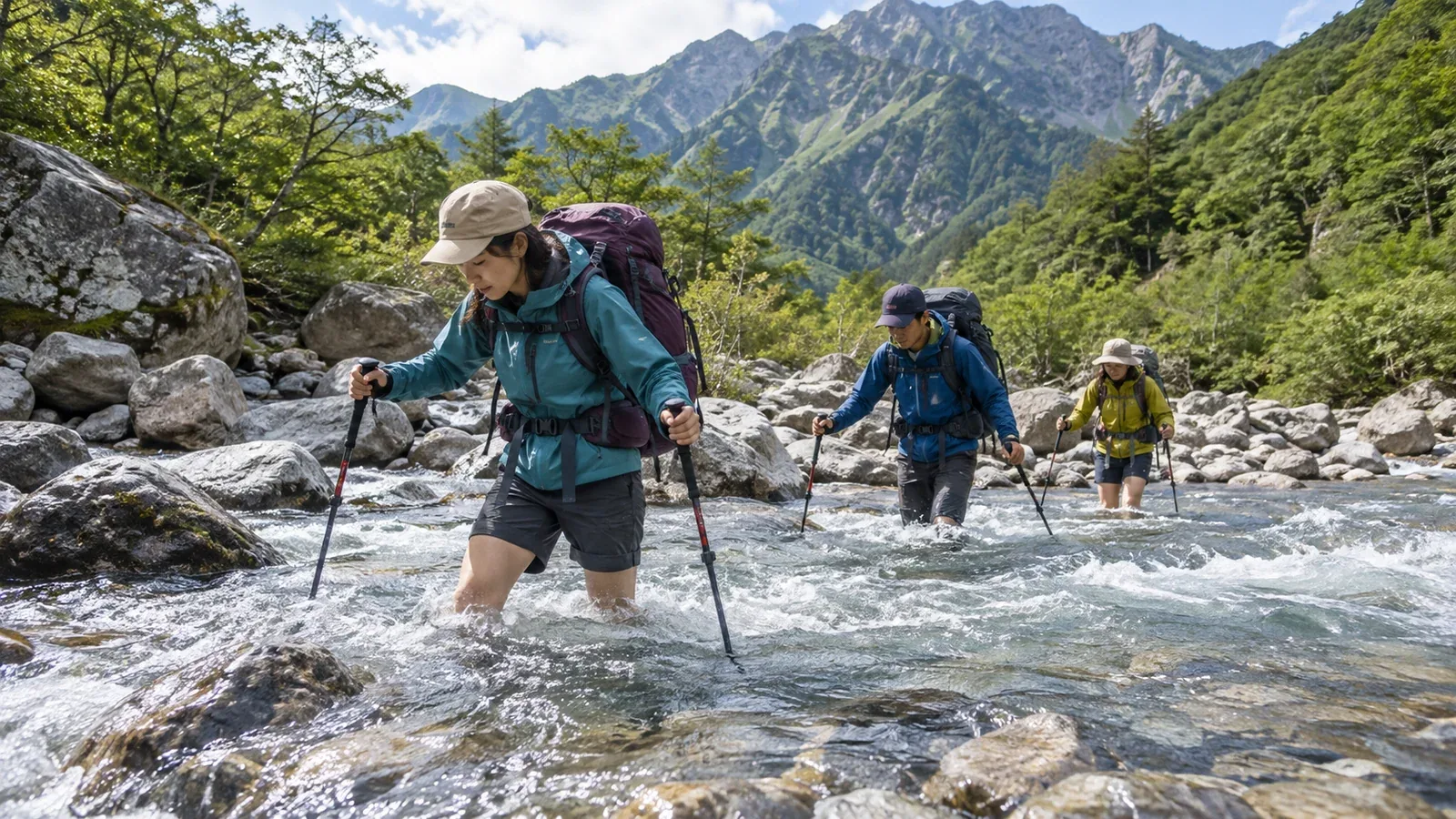
Some routes along streams and in headwaters have unbridged crossings. Even water that looks shallow can knock a hiker off balance. The decision to stay on the bank, wait or turn back matters more than any equipment or technique.
Assess the crossing before entering. Check whether the whole group has the skills to get across and whether you have another way back if the river rises.
Three things to assess from the bank
Look at depth, current and footing together. You also need a clear way to exit and a safe place to turn back.
Depth can vary abruptly within one channel. Reflections, murky water and hidden pools make depth difficult to judge. Shallow-looking water is enough to sweep someone away in a fast current. Stay out if you cannot assess the full route from the bank.
Current can change with local terrain, upstream rain and snowmelt. Strong flow, standing waves, debris, discoloration or the sound of rocks moving are signs to stay out. A measured speed or visible bottom cannot establish that the crossing is safe.
Footing can be unstable or slippery under water. Look for submerged rocks, loose gravel and slick rock. If you cannot see reliable footing or a safe way out, choose another option.
A checklist for turning back
A long approach can make it tempting to cross. If you see a warning sign or are unsure of anyone’s ability, wait in a safe place, turn back or use another route.
- The water is deep, the depth is uncertain or there are hidden pools.
- There are standing waves, a strong current, floating debris or the sound of moving stones.
- Rain or snowmelt upstream could cause the water to rise.
- The water is brown, cloudy or rising.
- The entry, exit or downstream area is unsafe.
- Someone lacks the skills or confidence to cross safely.
- There is no safe way back if the water rises.
A rise after rain can reach you even under a clear sky. Check the forecast for the whole catchment and recent route reports. Turn back before the water cuts off your exit.
What to look for in a crossing location
Choose an intact, open bridge or an established alternate route whenever possible. Assess an unbridged crossing only when conditions and the group’s experience allow.
Look for calm, shallow-looking water across the whole section. A wider stretch may have a gentler flow, but each channel and the footing still need checking.
Confirm that both banks are accessible. Look for a safe entry and a stable exit on the far bank. Make sure you can retreat if the approach changes.
Avoid tight bends, constrictions and abrupt drops. Look for an even channel with visible footing. Turn back if any part of the crossing is unclear.
Check hazards both upstream and downstream. A fallen tree, strainer, boulder, waterfall or deep pool downstream can turn a slip into an emergency. Stay out if you could be swept into one.
Equipment and technique for trained hikers
Use techniques you have practiced in suitable conditions. Equipment cannot make a strong or rising current safe to cross.
Using a pole
On a shallow, slow crossing that you have already assessed, a sturdy pole can help with balance. Use the technique you have practiced, keeping a stable stance as you move one foot at a time. If the current starts pushing you off balance, retreat to the bank if you can safely do so.
Backpack straps
A loaded pack can be hard to remove in the current. For the individual wading technique described by the U.S. National Park Service, unbuckle the hip and chest straps before entering so you can shed the pack if it traps you. Plan separately for suitable flotation and keep essential communication gear accessible.
Footwear
Wear secure footwear with traction and foot protection. Keep it on in the water and carry dry socks. Avoid a crossing if cold water or wet clothing would leave your group unable to continue safely.
Crossing as a group
Learn mutual support techniques and group positioning in an in-person course before relying on them. Everyone needs to know the plan and be able to take part. If anyone cannot cross safely, take another route or turn back. Leave rope systems to trained teams.
If someone is swept away
Call 119 for inland water rescue in Japan. From a safe position on the bank, keep the person in sight and give rescuers the location and direction of travel. Throw something buoyant if you can do so safely. Keep untrained bystanders out of the water.
If the current takes you, keep your airway above water and your feet up and downstream as you try to reach calm water or a bank. Avoid standing in fast current where a foot could get trapped. Release the pack if it is trapping you and you can remove it safely.
Once out of the water, move to shelter and replace wet clothing with dry insulation. Call 119 for breathing difficulty, confusion, injury or an inability to warm up, and follow the dispatcher’s instructions.
Before your next hike
Use the map, forecast and trail reports to identify unbridged streams and alternatives before departure. Check upstream rain as well as conditions at the trailhead. Nordwand can help you look for a guide who teaches river crossings in person.
Sources
- Japan Ministry of Land, Infrastructure, Transport and Tourism: river safety
- New Zealand Department of Conservation: river crossing safety
- U.S. National Park Service: river crossings
References and sources
- Japan Ministry of Land, Infrastructure, Transport and Tourism — River safety
- Japan Ministry of Land, Infrastructure, Transport and Tourism — What to do if swept away
- Japan Coast Guard — Inland and coastal emergency numbers
- New Zealand Department of Conservation — River crossing safety
- U.S. National Park Service — River crossings