
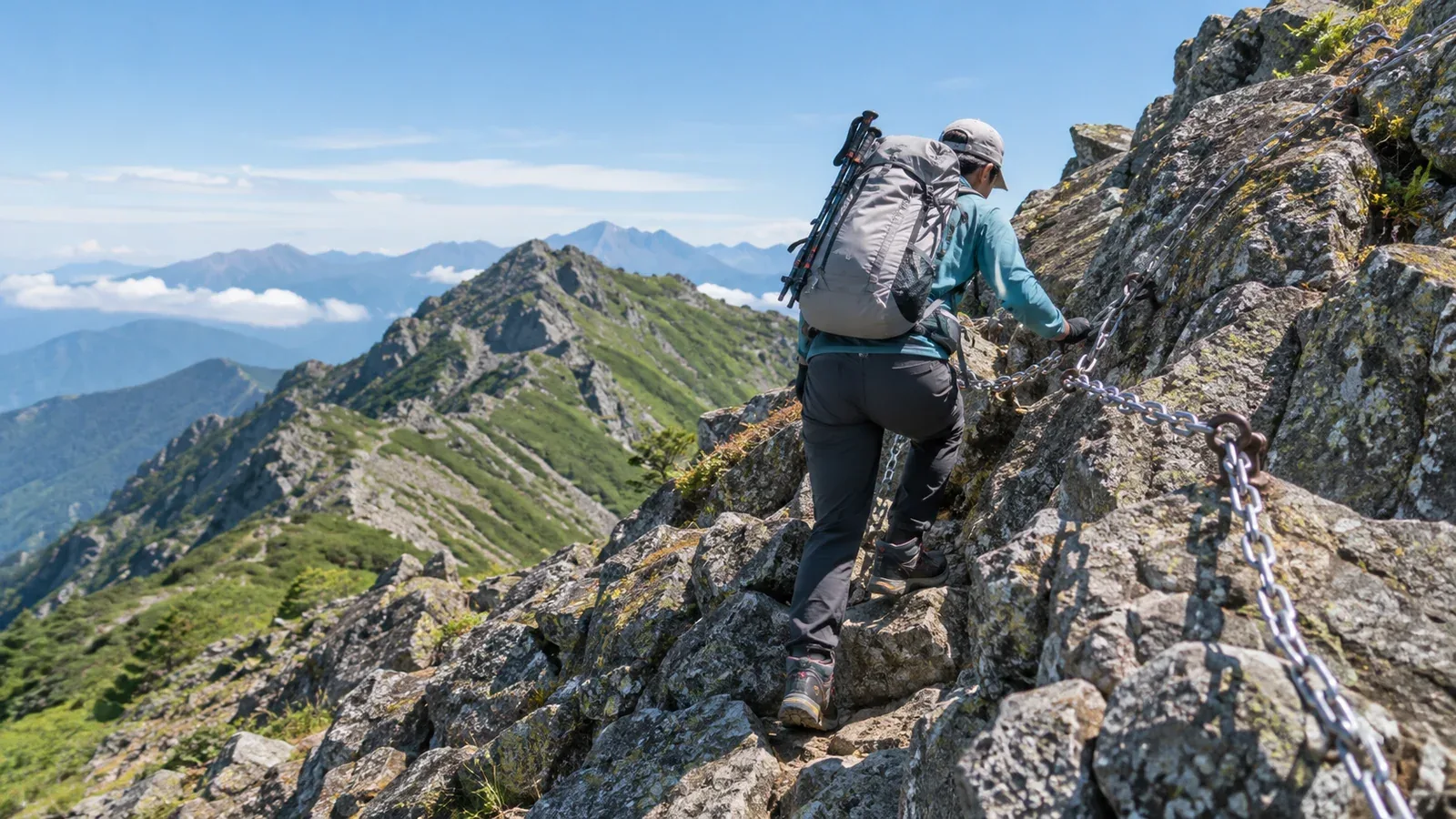
Trekking poles can help on suitable walking terrain. On rock, their tips can slip or snag, and carrying them leaves less room to use a handhold. Put them away before the trail becomes steep or exposed enough to need your hands.
Look for the change in terrain and choose a secure place to stop before it. This is especially useful on long routes where ordinary walking and hands-on sections alternate.
Why carrying poles through rocky terrain is risky
Before a rocky step, check whether both hands will be free to use reliable holds.
A pole in your hand makes it harder to grip a chain, hold the rock or place your palm securely. The tip can touch down before your hand and slip or catch. Nagano’s mountain patrol advises stowing poles and using three secure points of contact on steep rock.
Shortening the poles does not free your hands. Take your hands out of the wrist loops and secure the poles to or inside your pack before you need to touch the rock or chain.
Three signs that it is time to stow the poles
Look ahead for the parts of the trail where you will need your hands or will be unable to stop safely.
1. You may need your hands on the rock
If the trail turns into steep steps, hands-on rock or narrow footholds, stop on stable ground before them. Decide early enough to avoid adjusting your equipment after you are committed.
2. You can see a chain, fixed rope or ladder ahead
Put the poles away on a wide, stable part of the trail before the start. Keep clear of the likely path of rockfall and leave room for other hikers to pass.
3. Loose stones, ledges or rock steps interrupt the trail
Even without a fixed aid, an uneven or exposed section may require both hands for balance or holds. Look for a stable stopping place before you reach the difficult ground.
Where and how to stow them
Use a short routine you can repeat on safe ground.
Choose a wide, level and stable place on the trail away from a drop and rockfall. Return to the last secure spot if that is the safest option. Wait until you can stand securely before handling your pack.
Remove the wrist loops and fold or collapse the poles according to the instructions. Handle one at a time if that helps. Keep hold of the poles or secure them so they cannot slide, roll or get in anyone’s way.
Use the pack’s attachment points or carry the poles inside if they fit. Secure them at more than one point if the pack’s system calls for it. Orient or cover the tips so they cannot reach your face, snag on rock or catch another hiker. Check that the poles do not move or project into the route.
Use the stop to check straps and any gloves. If you use gloves, choose a fit that lets you grip and feel holds, and test them on safe ground.
When to take them out again
A short stretch of easy ground can sit between two difficult steps. Look at what follows before you unpack the poles.
Check the route map and terrain. If another hands-on or exposed section is close, leave the poles stowed until you reach a longer stretch of walking trail with a secure place to stop.
Use a simple rule in the group: if you expect to need your hands again soon, keep the poles packed. This reduces delays and keeps your hands free when the terrain changes.
Check topographic maps, notices from the trail manager or hut and the latest Japan Meteorological Agency forecast. Allow for wet or icy rock. Use tip protectors where the trail manager asks for them and follow signs.
Long ridges and overnight trips
A heavier pack can make balance and equipment changes more demanding. Plan where you will use the poles on suitable walking terrain and where you will stow them before rocky ridges, chains or ladders.
Practise stowing your poles with a lighter pack in an easy setting. On a group hike, agree where to pause, give each person room to finish, and wait in secure places so nobody rushes into the rocky section.
Before your next rocky hike
Mark hands-on sections and safe stops on the map. At the trailhead, check conditions and agree where to stow the poles. If the rock is wet or icy, allow more room and time to reassess the route before entering. You can ask hikers in Nordwand’s Base Camp where terrain changes on a route they know.
Further reading
- Geospatial Information Authority of Japan map guide
- Japan Meteorological Agency timed regional forecasts
- National Police Agency mountain incident reports
References and sources
- Geospatial Information Authority of Japan · How to use GSI Maps
- Japan Meteorological Agency · Timed regional forecasts
- National Police Agency · Mountain incident reports
- Nagano Prefecture · Mountain patrol advice on trekking poles
- Montbell · Trekking pole guide
- Sinano · Using trekking poles
- Nagano Prefecture · Natural park advice and tip protectors