
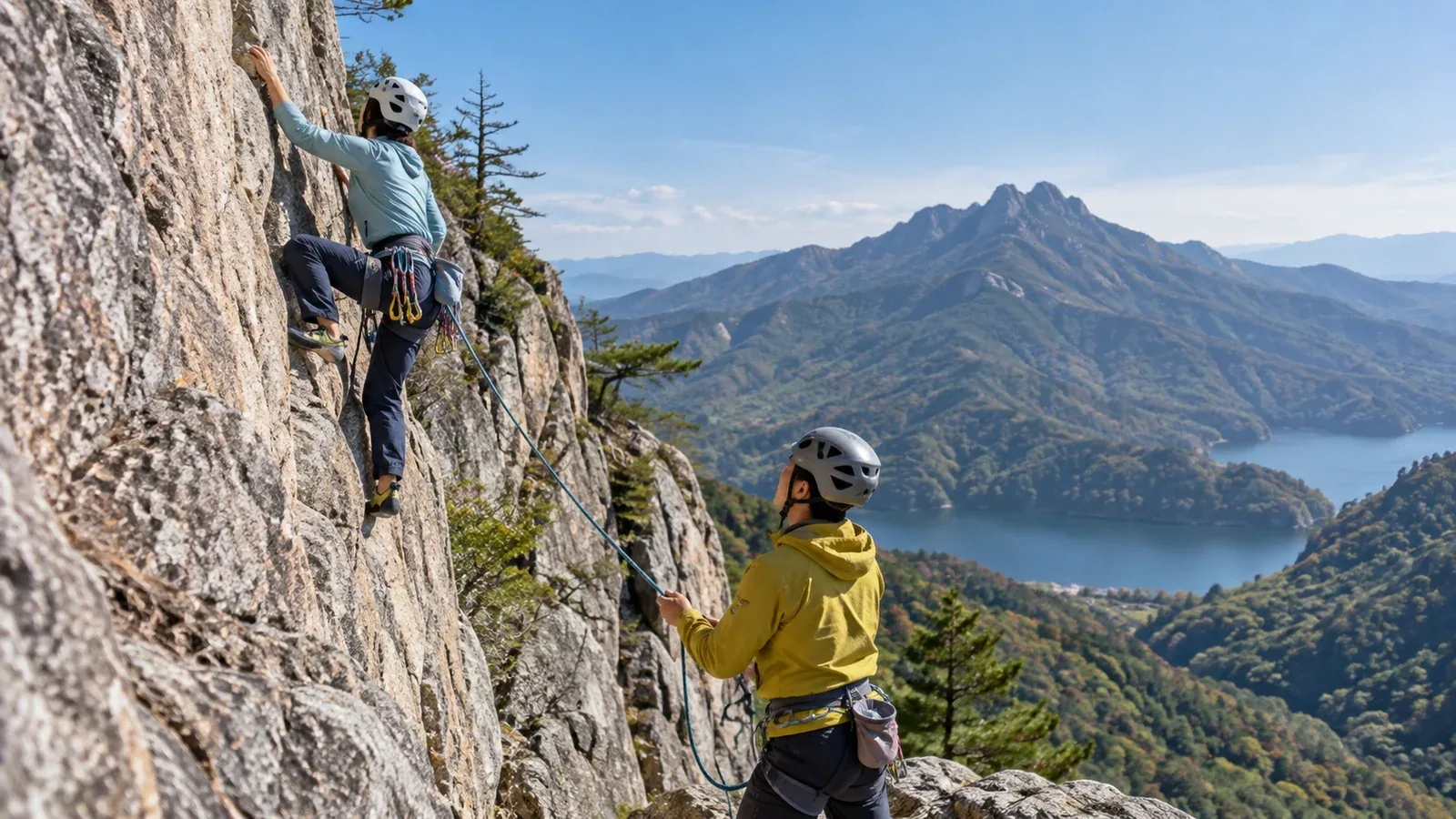
Rocky ridges and chain sections can make you curious about foot placement, balance and climbing. Those skills can be practised in a suitable setting before you take them into the mountains.
Start by deciding what you want to learn. Indoor bouldering, roped climbing and supervised outdoor instruction cover different skills. Choose the setting and instructor that match your goal.
Why hikers learn to climb
Hikers commonly come to climbing for three reasons.
1. Move with more control on rocky ridges and chain sections. Practising footholds, weight transfer and stable contacts can help on suitable terrain. Learn those movements on low, manageable ground before trying them on exposed rock.
2. Learn belaying and rope skills. Roped climbing is one place to learn partner checks and device use under instruction. Snow, alpine routes and ravines can require separate training specific to the terrain and conditions.
3. Climb for its own sake. You may want to explore how different holds and routes feel. Try a suitable introduction to bouldering or roped climbing and develop the skills each discipline needs.
Use your main goal to choose the first session. Try movement coaching for footwork, a supervised belay course for ropes, or a qualified instructor for a first outdoor experience. An introductory climbing course alone does not qualify you for alpine or winter rope work.
Should you start indoors or outside?
For many beginners, a staffed climbing gym is a practical place to start. A supervised outdoor introductory course is another option.
Indoor bouldering uses low walls and padded landing areas. A fall can still injure you. Learn the facility’s rules, keep landing zones clear and practise stepping down or landing under instruction before trying higher moves.
Top-rope and lead climbing use different belay skills. Learn the system in a supervised class and follow the gym’s access rules. Practise each role with a qualified instructor before climbing or belaying independently.
Outdoors, holds, weather, rock quality, anchors and descents all need separate assessment. For a first outing on rock, choose a qualified instructor or an appropriately supervised course that covers local access and retreat.
Three skills to learn first
1. Footwork
Choose a foothold and place your shoe deliberately before transferring weight. Practise at low height on easy, supervised terrain so you can focus on your feet and balance.
Smearing uses sole friction on a surface without a distinct edge. Edging uses the edge of a shoe on a small foothold. Practise both in a suitable setting. Rock, footwear and terrain on hiking routes may feel different from gym holds.
2. Weight transfer
On easier angles, practise moving your weight onto a reliable foothold before releasing another hold. Use the body position that suits the wall and keep your movements controlled.
3. Belaying with a partner
In conventional roped climbing with a partner, the belayer manages the rope and can arrest a fall when the system is used correctly. Learn the specific device and rope compatibility with an instructor, follow the maker’s instructions and perform a mutual partner check before each climb or pitch. Keep control of the brake strand as instructed.
Decisions for a first outdoor climb
Check these factors before you leave and again at the site.
Choose a grade you can climb with a margin. Japan uses various systems, including Yosemite Decimal System grades such as 5.9 and 5.10a, and Roman numeral scales on some routes. An onsight is a first-attempt ascent without prior route information or practice. Use any grade as a rough guide and consider exposure, protection, the descent and unfamiliar rock when choosing.
Check weather and rock conditions. Wet rock can change grip and some rock types can be damaged by climbing when wet. Follow local rules and closures. Check the Japan Meteorological Agency forecast and conditions at the crag. Choose another plan if you are uncertain about safe passage.
Go with the right support. For your first outdoor climb, go with a qualified instructor or experienced partners able to manage the route, belay and retreat. Check who will lead, what equipment is required and how you will descend before you start.
What carries over to hiking
Climbing practice can help you notice how you use your feet, move together and assess exposed terrain.
- More deliberate movement on chains. Practise choosing stable footholds and keeping balance while using the chain as a movement aid.
- Better descent planning. Check the way down before going up. A rappel requires specific instruction, compatible equipment and verified anchors, and should never be assumed from the presence of a fixed rope or chain.
- Clearer decisions as a group. Agree how to communicate, check equipment and choose when to stop or turn back. Learn separate methods for snow, ravines or other technical terrain.
Apply each skill only where the terrain, conditions and equipment match your training. Use supervised practice for unfamiliar tasks and choose a safer route if you cannot assess the moves or the protection.
Before your first session
Ask a local gym or qualified instructor which introductory session fits your goal and what equipment and skills it requires. Before going outdoors, check local access and choose an appropriate supervised session. You can find other hikers interested in rock skills through Nordwand’s Base Camp and communities.
Further reading
- Japan Mountaineering and Sport Climbing Association safe hiking resources
- Japan Meteorological Agency forecasts and warnings
- National Police Agency mountain incident reports
References and sources
- Japan Mountaineering and Sport Climbing Association · Safety resources
- Japan Meteorological Agency · Warnings and advisories
- National Police Agency · Mountain incident reports
- Mountaineering Scotland · Supervised introductions to outdoor climbing
- American Alpine Club · The transition from gym to crag
- Mountaineering Scotland · Getting started indoors
- UIAA · Rock climbing grades
- UIAA · Equipment compatibility and checks
- Petzl · Mutual partner check before climbing
- Access Fund · Wet sandstone and rock protection