
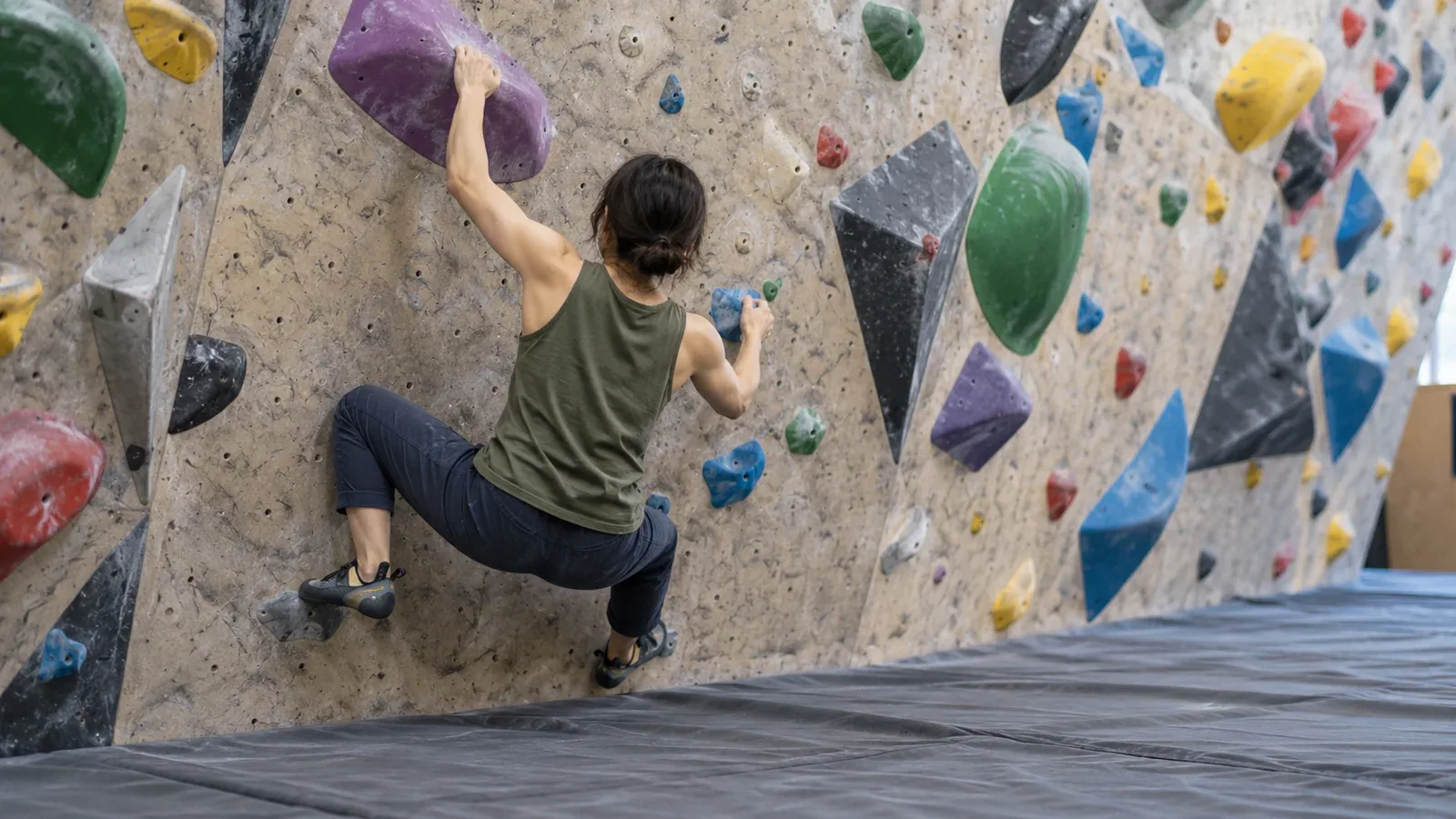
Bouldering can give you a place to practise foot placement and balance, which also matter on rocky trails. A gym lets you repeat movements on low problems and learn from an instructor.
Use gym practice to learn specific movements. On a mountain, judge the terrain, weather, consequences of a slip and the way back separately before applying those skills.
Stand securely on your feet
On easier wall angles, place your feet deliberately and practise transferring your weight before reaching. The position of your body changes with the holds and wall angle. Start low and choose moves you can control.
On a rocky trail, put your weight on stable footholds and use a fixed chain for balance where appropriate. A trail chain is a movement aid and cannot be relied on to arrest a fall. If your feet cannot support the movement safely, stop or choose an established alternative.
In climbing, smearing uses sole friction on a surface without a distinct foothold edge. Practise it low under instruction. The grip on outdoor rock changes with texture, wetness, loose material and footwear. Choose reliable footholds on the trail and test them from secure supports.
Using three secure points while you move
On steep hiking terrain where you need your hands, keep three secure points of contact while moving the other hand or foot. Before you move, decide where that limb will go and how you will keep the other supports stable.
In the gym you can practise reading the next few moves: where to place your feet, where your hands can hold and how to shift your body. On the trail, take time to confirm each hold and avoid rushing because a move looks familiar.
Artificial holds can help you learn how direction affects grip. Natural rock can also be loose, wet or uneven. Inspect the next hold and use it only if you can load it while staying balanced.
How your torso helps you stay balanced
Low, controlled bouldering lets you notice how your torso steadies your body as you reach or move a foot. Try easy movements where you can stay balanced and come back down with control.
A pack changes how your body feels on a rocky trail. Check the fit and load with your own equipment on low, stable ground. If you start to lose control as you tire, pause in a safe place and reassess.
Gym practice can help you become more aware of posture. What carries over depends on the movements, load and terrain. Practise walking and descending with your hiking equipment separately.
How the risks differ
Compare the setting, footwear and decisions you will face before using gym movements outside.
Falls have different consequences. Indoor bouldering uses low walls and padded landing zones, where falls can still injure you. In exposed mountain terrain, a slip can lead to a long fall. Choose footholds and terrain conservatively and stay clear of exposed moves beyond your skills.
Footwear changes the feel. Climbing shoes are designed for climbing holds. Hiking shoes and boots are designed for different terrain and walking. Practise with the footwear you will use on the trail and choose holds it can grip securely.
Natural terrain requires route decisions. A gym problem has selected holds. On a mountain, you need to check rock quality, route markings, weather and the descent. Choose an established route or turn back if you cannot assess the way safely.
What to practise first
Pick low, easy problems and use an instructor or staff guidance to learn the facility’s rules and practise controlled movement.
Look at the foothold before loading it
Find the foothold, place the foot precisely and check that it is stable before shifting your weight. On the trail, look for loose rock and keep your other supports secure.
Choose control before difficulty
Choose easier problems where you can move slowly and deliberately. Practise placing your feet, transferring weight and pausing in a stable position. Gym grades give little guidance about an exposed hiking route.
Practise coming down with control
Use designated downclimb holds and step down where possible. Keep the landing zone clear and learn the facility’s landing guidance with an instructor. On a hiking trail, find and use secure footholds for the descent.
Leave time to recover before a hike
Bouldering can tire your fingers, forearms and shoulders. Start with a warm-up, increase the workload gradually and give yourself time to recover before a rocky hike. If soreness or fatigue affects your grip or movement, adjust your plans.
Before your next rocky hike
Use a gym session to practise deliberate foot placement and controlled weight transfer. For your first exposed rocky route, check access, weather and the descent, and consider going with an experienced companion or qualified guide. You can find others interested in these skills through Nordwand’s communities.
References and sources
- Petzl · Indoor and outdoor bouldering
- Mountaineering Scotland · Getting started indoors
- Mountaineering Scotland · Supervised outdoor instruction
- Nagano Prefecture · Guidelines for safe hiking
- Nagano Prefectural Mountain Center · Group hiking handbook
- American Alpine Club · The transition from gym to crag
- Japan Mountaineering and Sport Climbing Association · Safety resources