
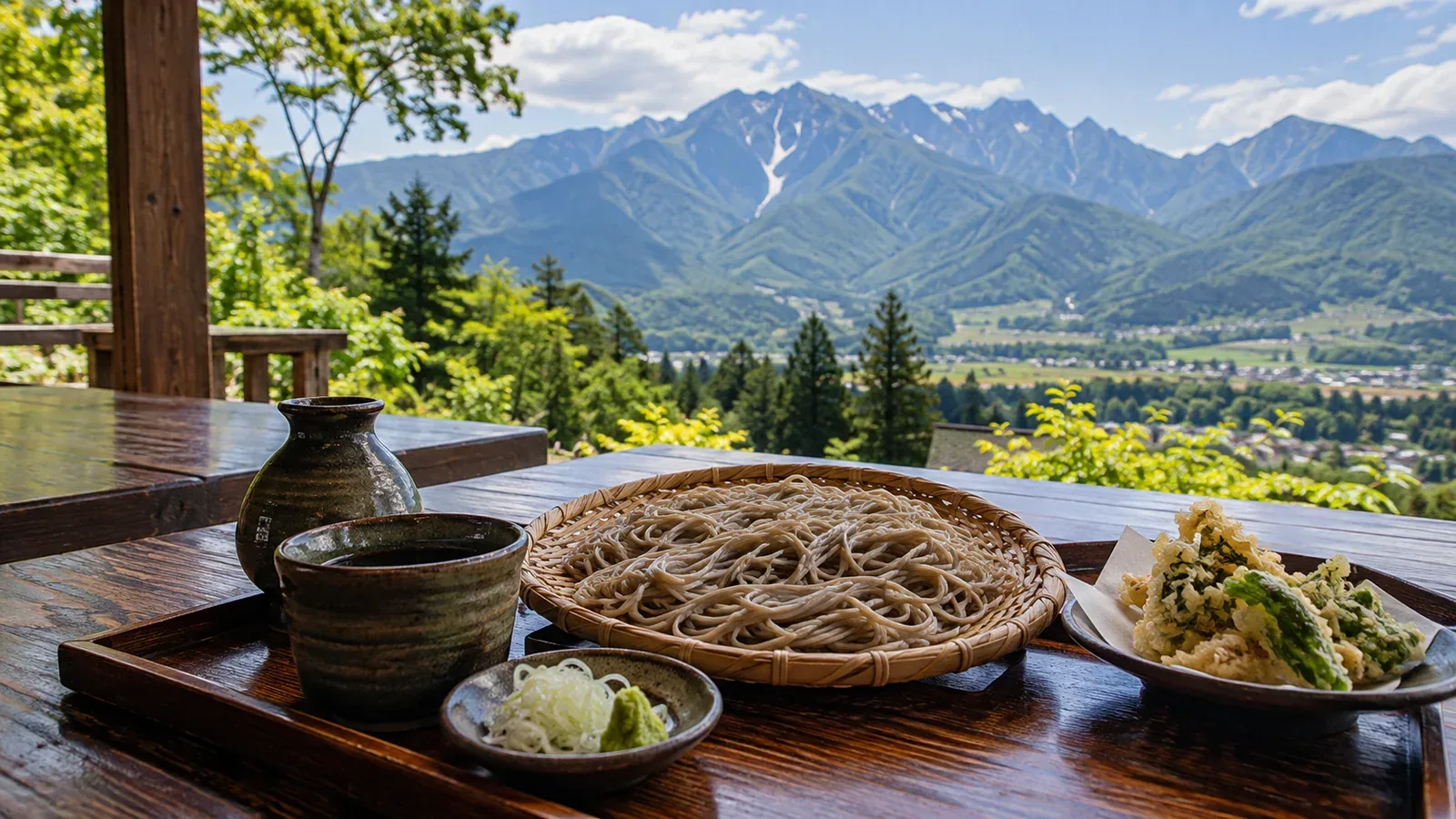
A meal of local soba, or buckwheat noodles, is one of the pleasures of finishing a hike. Some mountain restaurants open only at lunch or close when they run out of noodles. Choose a few places that fit where your hike ends and when you need to head home.
Shinshū, another name for Nagano Prefecture, and Yamagata Prefecture are known both for soba and for their mountains. The terrain and history helped shape the way both regions grow and eat buckwheat. A stop for soba can be a way to explore that connection after your hike.
This guide looks at why buckwheat is grown in the two regions, which dishes to look for near different mountains and what to check before you go to a soba restaurant.
Why buckwheat is grown in the mountains
Buckwheat can grow on relatively poor soils and has long been cultivated in cool mountain areas. In Nagano, it was one of the foods grown where rice was hard to cultivate. Togakushi, Kaida and other parts of the prefecture developed different ways of serving it.
In Yamagata, Murayama, Okitama, Shōnai and Mogami each have their own soba traditions. Ita soba in inland areas comes from the practice of serving noodles on a long wooden board or in a wooden box so several people could eat together, for example after farm work.
When you choose soba near your hiking area, look at what grows there and how people have traditionally eaten it. Those details can help you see what makes each restaurant different.
Mountains and soba in Nagano
Northern Japanese Alps and Matsumoto
Many hikers going to Kamikochi, the Hotaka range or Mount Jōnen pass through Matsumoto. You can find Shinshū soba restaurants near the station and elsewhere in the city.
Private cars are restricted in Kamikochi year-round. If you drive, change to a bus or taxi at a designated car park. If you travel through Matsumoto Station, look for a restaurant nearby that fits your bus or train connection.
Check the break between lunch and dinner service. Some restaurants serve lunch only, and others close in the afternoon before reopening for dinner. You may find places closed between around 2 and 5 p.m. Check before you go, especially if you expect to finish the hike late in the afternoon.
Togakushi
Togakushi is known for its own style of soba, which local people keep alive. Mount Togakushi is a rugged ridge with chains and exposed, uneven terrain that requires experience and fitness. Soba restaurants along the approaches to Togakushi Shrine make a convenient stop after coming down.
Togakushi soba is served in bocchi-mori style. Each small bundle of noodles is shaped like a horseshoe, and five or six are arranged on a bamboo tray. Togakushi Shrine explains how the dish has been passed down as an offering and a way to welcome guests.
Yatsugatake and Tateshina
The Yatsugatake mountains straddle Nagano and Yamanashi. Where you go afterward depends on your trailhead. If you come down toward Tateshina or Hara Village, you can find soba restaurants on the plateau at around 1,000–1,500 m. Many are easiest to reach by car, so check whether the stop fits if you are using public transport.
Southern and Central Japanese Alps and the Ina Valley
Ina is a base for reaching the Nagano side of the Southern Japanese Alps, while Komagane gives access to the Central Japanese Alps. Ina’s rōmen noodles come in a broth version and a stir-fried version. Takatō soba is served with karatsuyu, a dipping sauce made with pressed juice from pungent daikon and grilled miso.
Mountains and soba in Yamagata
Mount Gassan and the Three Mountains of Dewa
Gassan, Haguro and Yudono form the Three Mountains of Dewa, sacred mountains with a long pilgrimage tradition. Nishikawa, at the foot of Gassan, is known for Gassan sansai soba, rustic local noodles eaten with a broth of wild greens and mushrooms.
Small restaurants in and around Nishikawa may have few seats or open only on certain days. Ask whether you need a car, whether they serve outside lunchtime and whether you can reserve.
Zaō
The Zaō range straddles Yamagata and Miyagi, and the route home depends on which side you descend. If you head toward Yamagata City, look for soba dishes popular across the prefecture. Cold niku soba with chicken and chicken broth is a specialty of Kahoku. Gesoten soba, served with fried squid tentacles, is especially popular around Yamagata City.
Asahi Mountains
The Asahi range stretches from western Yamagata into Niigata. Some traverses use emergency huts. Depending on where you enter or leave, such as Higurashizawa or Kodera, the nearest village can be some distance away. If you are considering a restaurant around Nishikawa or Asahi, check where your particular trail ends and where the restaurant is on a map.
Choosing a soba restaurant after a hike
Check the following details before planning a stop.
Hours and closing days. Some restaurants serve lunch only or shut when the noodles sell out. If you expect to descend after 2 p.m., check for dinner service on the official website or by phone.
Parking and access. Many mountain restaurants are easier to reach by car. If you are using public transport, check whether you can walk from a station or bus stop.
Reservations. Farmhouse soba restaurants and other small places can be full on weekends or during busy periods. Check early for long weekends and autumn foliage season.
Appetite and food allergies. Choose cold zaru soba or warm kake soba according to how you feel and what you want to eat. If you have a buckwheat allergy, avoid soba and consider accidental contact through shared utensils, cooking water or airborne flour. Ask whether the restaurant can prepare your food safely. Choose another place if it cannot confirm that.
Fit a soba stop into your hiking plan
Think through what you will do after the descent when you plan the hike.
- Put the trail exit and restaurants on the same map. Pick one or two places within about 10–20 km of the trail exit that are likely to be open when you arrive.
- Set a safe descent time first. Decide your hiking schedule based on sunset, weather and transport, then compare it with the restaurant’s last seating. If the descent runs late, skip the stop and keep a safe walking pace.
- Decide where a hot spring fits. You can eat before or after bathing. Think about changing out of sweaty clothes before going into a restaurant and avoiding a long drive when you are tired.
- Have a fallback. In case a restaurant runs out of noodles or closes unexpectedly, note another place to eat, such as a convenience store or roadside station.
Plan your stop
For your next hike, check the tourism site for the area around the trail exit or the local roadside station’s listings, and pick one or two soba restaurants. Call or check online for hours, days off and whether you need to book. Nordwand’s partner directory can also help you find places to eat or stay near the mountains.
Further reading
- Japan Ministry of Agriculture, Forestry and Fisheries | Buckwheat information
- Nagano Prefecture agriculture department | Shinshū soba growing areas
- Yamagata Prefecture agriculture department | Buckwheat statistics and growing areas
- National Police Agency | Mountain incident reports for hiking safety
References and sources
- Japan Ministry of Agriculture, Forestry and Fisheries | Buckwheat growing and food traditions
- Japan Ministry of Agriculture, Forestry and Fisheries | Yamagata soba
- Togakushi Shrine | Togakushi Soba Mini Museum
- Kamikochi official site | Vehicle restrictions
- Ina City | Takatō soba
- Ina City | Rōmen noodles
- Consumer Affairs Agency of Japan | Food allergies when eating out or buying prepared food