
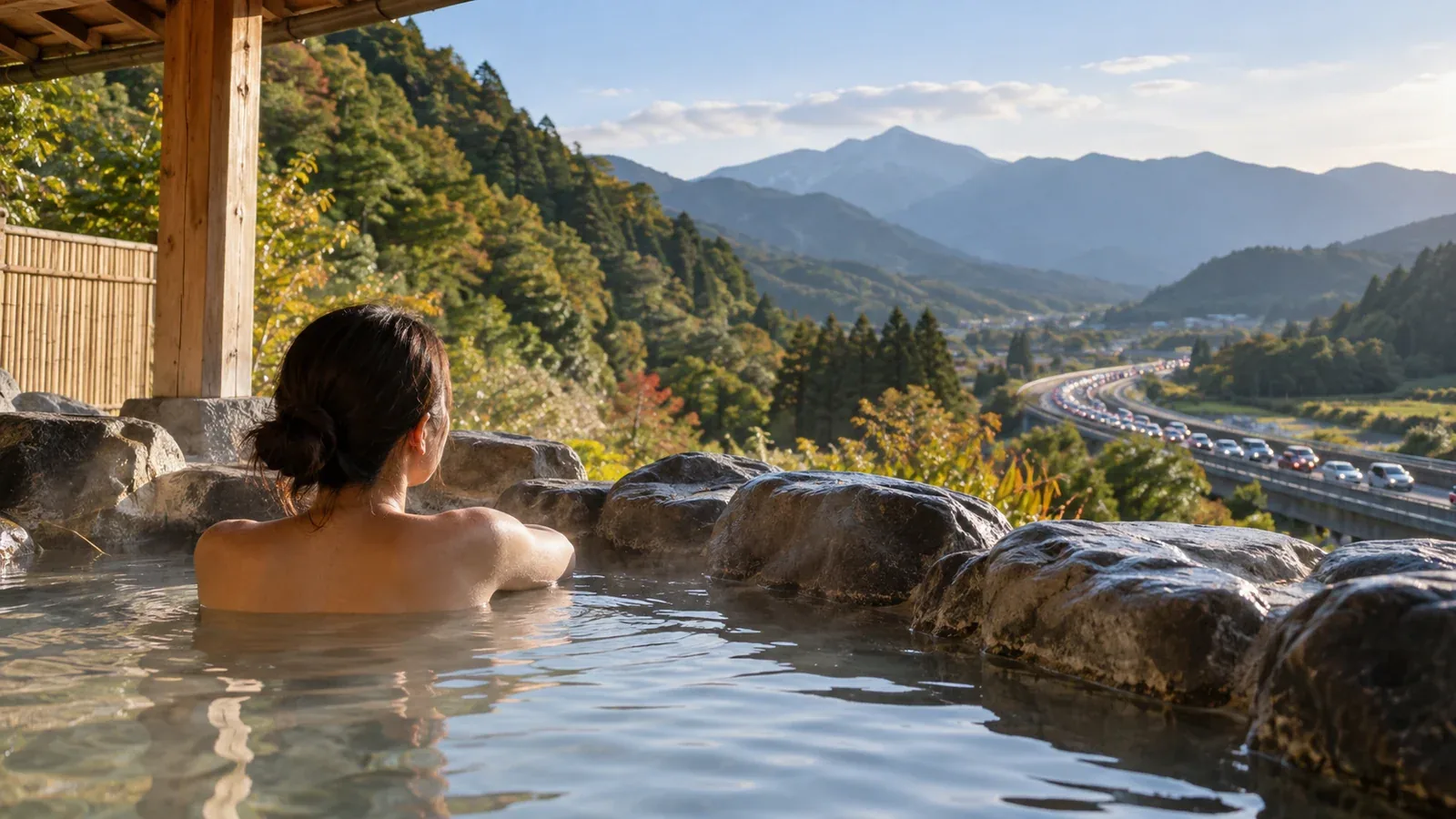
Getting stuck on a main road or expressway after a safe descent adds to the day’s fatigue. Find out which stretches are expected to be busy and when. Check again after the hike so you can choose your route and where to rest.
This guide covers how to find busy periods, compare routes and plan before you leave, including how to fit in a hot spring or a meal.
Why traffic builds after a hike
On weekends and holidays, people returning from day hikes can share the road with visitors leaving other attractions. Check when city-bound expressways are expected to be busy by road, segment, direction and date.
Many trailheads are at the end of a single mountain road. If there is no parallel route, everyone must use the same main or prefectural road. With only one way out, even a modest increase in traffic can cause delays.
Traffic can differ from the forecast when rain or thunder prompts people to finish early, or when a crash or roadworks narrow the road. If the weather deteriorates, focus on the descent first and check road conditions once parked.
Check busy periods for each route
Peak hours vary across Japan. Before leaving, check the date of your return, the direction of travel and the junctions you will use.
Roads toward cities can be busy from afternoon into evening on holidays. Look for forecast bottlenecks around junctions, merges or tunnels and see which ones are on your route.
Congestion can last into the night. On the last day of a long weekend, roads may stay busy after the evening rush. Check restrictions and incidents that day, and compare current travel times.
When choosing when to leave, compare setting off earlier with leaving later after a rest near the trailhead. If you travel later, consider visibility in the dark and your fatigue. Avoid driving when you are sleepy.
Check date- and direction-specific forecasts from the Japan Road Traffic Information Center (JARTIC) and expressway operators. Just before leaving the car park, check current congestion and closures.
How to choose a detour
A detour can save time or make the trip harder. Compare these three things.
1. Can you turn off before the back of the queue?
Once you reach the queue, you may be unable to get as far as the turn. Check live traffic and where the road branches before setting off. If you need an update on the road, ask a passenger or pull over somewhere safe.
2. How wide is the road and how many signals are there?
A mountain shortcut may be a prefectural or forest road so narrow that two vehicles struggle to pass. A large truck or tour bus can create another blockage. Before trying an unfamiliar road, check the road type, width and bends on a map.
3. How much time would it save, and what are the road conditions?
A detour may add distance, traffic lights or stop signs. If the estimated saving is small or you are unsure about road conditions, a familiar main road may be easier to drive. If you are tired, take a break first.
Rest over a meal or a hot spring before driving home
If traffic is expected to ease, you can take a break for a bath or meal after the hike. Check traffic again before leaving and make sure the timing suits the driver’s condition and your plans for getting home.
Popular hot springs have their own busy times. Check opening hours and the last admission for day visitors. Ask the facility about waits if you are concerned.
It can be easier to stop at a restaurant before you join the main road. Restaurants along the main road may be hard to reach while traffic is still backed up outside.
Five checks before leaving
Plan the drive home when you plan the hike.
- Estimate when you will finish the hike. Work out when you are likely to leave the car park and compare it with the forecast for your road and direction.
- Look for a usable alternative route. Save the main route and any viable option that branches off before the queue. Check restrictions, road width and winter closures, and avoid a difficult detour.
- Decide when to check live traffic. Check after the hike and again before you leave the car park, while parked.
- Find somewhere to rest near the trailhead. Look up baths or places to eat and their opening hours so you can choose based on traffic and how you feel.
- Avoid relying on driving at night. Keep a delay for traffic from pushing your departure too late. If you are sleepy or very tired, stop somewhere safe to rest or switch drivers.
Plan the drive home
For your next hike, check the roads and direction you will use, plus turns and places to rest before forecast bottlenecks. Check the hours of any hot spring or restaurant you may visit. If you are hiking with others, use the Nordwand community to share the route home and meeting and departure plans before you set off.
Further reading
- Japan Road Traffic Information Center (JARTIC) traffic information
- Traffic information from expressway operators, prefectural police and road authorities
- Geospatial Information Authority of Japan topographic maps for checking road types