
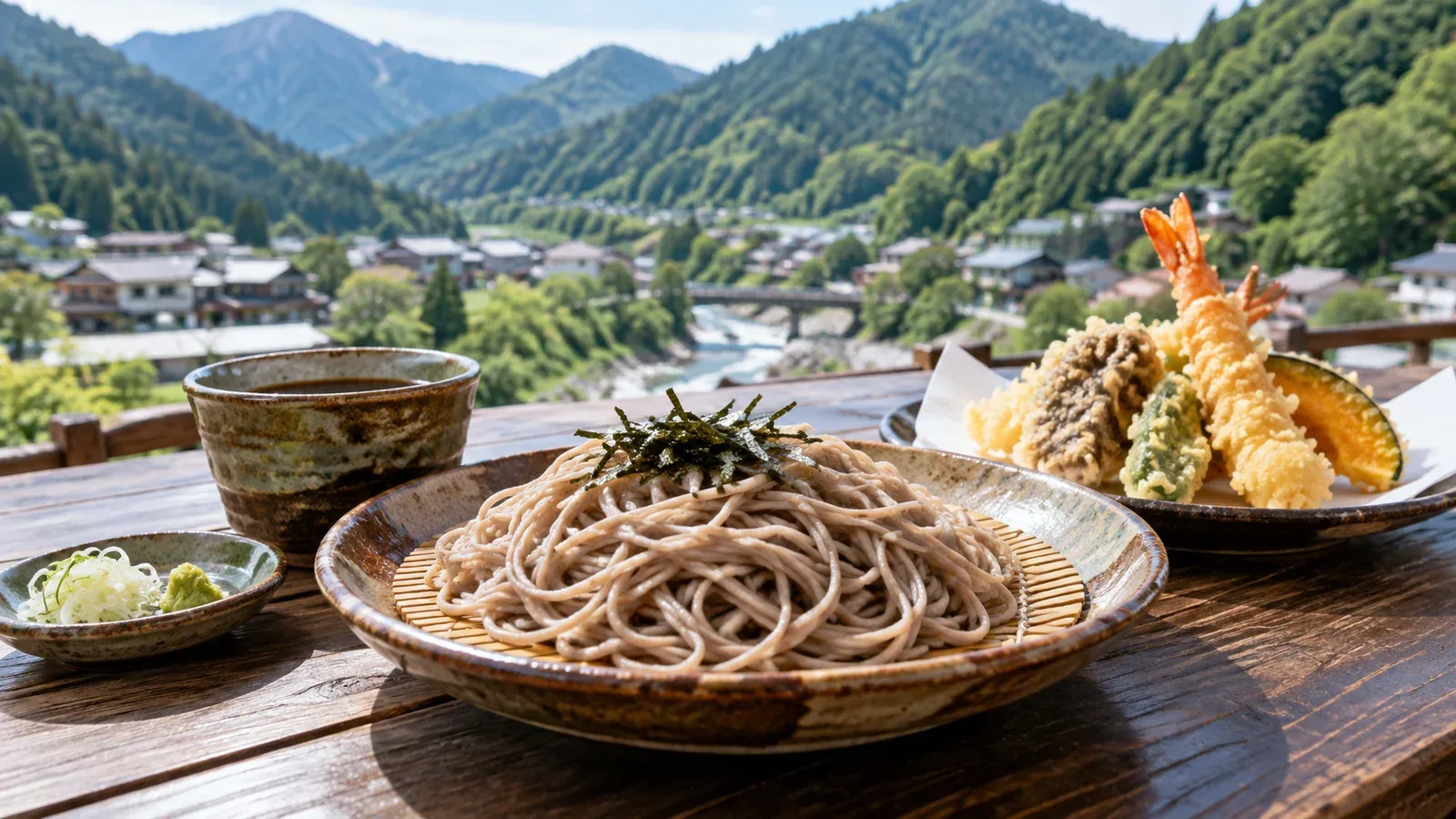
After a hike, a meal in a village or town near the trailhead helps you recover and introduces you to the area’s culture and livelihoods. In unfamiliar mountains, it can be hard to know what to order or where to find it.
Mountain towns have food prepared for visitors and food rooted in local daily life. Both are worth exploring. Ask what ties an ingredient or dish to the place. Knowing a little of the story helps you choose, even when time is short.
Here’s how to find local specialties and choose something to eat when you’ve just finished a hike.
Why mountain towns have distinctive food traditions
Difficult transport and a harsh climate helped shape mountain food culture. Preserved and fermented foods, root vegetables, mushrooms and wild greens fit places with isolated winters and short growing seasons. The pickles and miso of Shinshū and Tōhoku reflect the climate of Nagano and northeastern Japan.
The same conditions helped preserve dishes made from ingredients that are hard to find elsewhere. Mountain streams are home to fish such as iwana char, yamame trout and ayu sweetfish. The fish and their flavors can vary by river. Where hunting traditions continue, you may find venison or wild boar at restaurants near the trailhead.
Eating near the source can cut transport and bring you fresher food. Using local ingredients can also make economic sense for restaurants. Visitors get the chance to eat produce close to where it was grown.
What to prioritize after the hike
After hiking you may need energy, fluids, electrolytes and protein. Appetite varies. Some people want to eat right away and others need time. Choose something that feels manageable.
Start with something warm. After a cold hike, soba or udon in broth, ramen or a hot pot can feel comforting and provide fluid and salt. Set meals in mountain towns often include soup.
Adjust portions for rich foods. Fried food and rich ramen can be appealing but feel heavy after a tiring day. Consider how much you’re likely to finish.
Start with a nonalcoholic drink. Alcohol may make dehydration worse. Drink water, a sports drink or tea first and choose based on how you feel.
How to find local specialties
Here are a few ways to find out what an area is known for before you go.
- Check municipal and prefectural tourism sites. They often list local products and dishes. Look them up while planning the hike to give yourself more options afterward.
- Check boards at trailheads, roadside stations and huts. Roadside stations and visitor desks often have maps of places to eat nearby. These can help you find somewhere within reach after descending.
- Ask hut staff or local people. If you’re chatting at a hut or a summit rest stop, ask where people eat after coming down. They may know a restaurant you won’t find in a guidebook.
- Check hours and closing days in advance. In mountain towns, restaurants may close early or open only a few days a week outside the main season. Compare the hours with your expected finish. Popular places may be closed on weekdays or in the off-season.
What you might find in different mountain regions
Specialties vary from one place to another. Here are some regional patterns.
Chūbu and Kōshin’etsu. Flour-based dishes and pickles are common, including soba, nozawana greens, Matsumoto-area sanzoku-yaki fried chicken and Yamanashi’s hōtō noodles. Restaurants near trailheads serve hikers in busy seasons and may close early at other times.
Tōhoku. Look for Yamagata imoni stew, Akita kiritanpo rice skewers and Iwate wanko soba. Some places near trailheads serve mushroom soup or wild greens tempura.
Hokkaidō. Jingisukan grilled mutton, ramen and seafood are well known. The nearest town may be some distance from the trailhead, so plan the stop into the journey home.
Kyūshū and Shikoku. Pork-bone broth and udon are common in parts of these regions. A day-use hot spring may have a restaurant on site.
These are general patterns. Check specific places, prices and hours with the local tourism office or the restaurant itself.
Making the meal part of the trip
A meal after the hike can become part of what you remember. Knowing a little about the food changes how you experience it. A river-fish dish can reflect the history of a mountain watershed. Local fermented and preserved foods reflect generations of getting through the winter.
Ask why you find that food here. A supermarket or roadside station can give you a sense of the area’s food traditions even without a special restaurant.
Plan the meal along with the hike, so the day feels like one trip from start to finish.
Before the next hike
Check the local tourism site and make a note of specialties and opening hours near the end of the route. Nordwand’s partner search can also help locate huts and other facilities near the trailhead. Knowing your options makes it easier to decide when you’re tired.
References
- Official information from prefectural and municipal tourism associations
- Japan Ministry of Agriculture, Forestry and Fisheries: information on the geographical indication protection system
- Japan Ministry of the Environment: information on conservation and appropriate use of alpine and mountain areas