
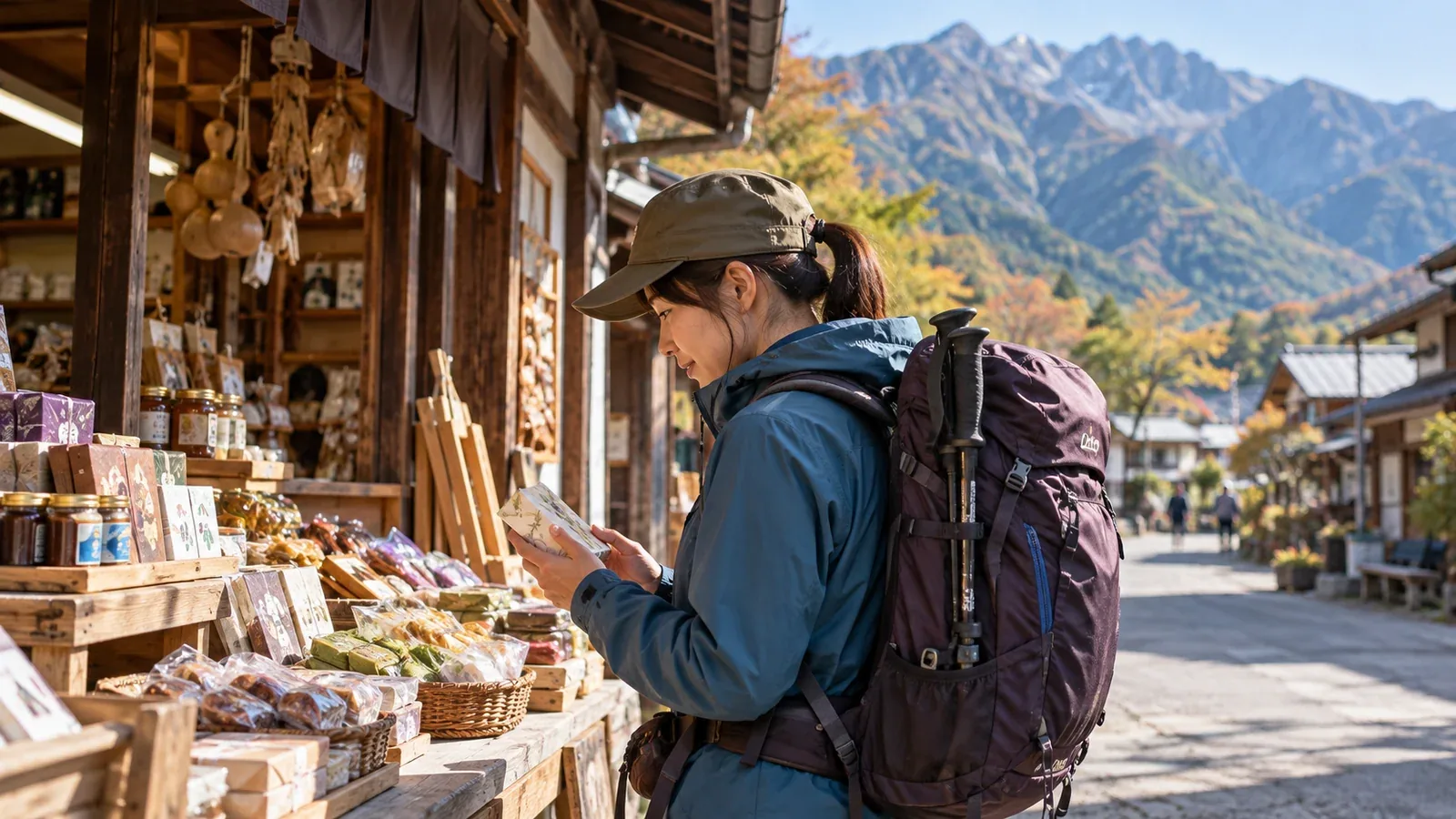
On the way back from a hike, many of us have stood outside a souvenir shop near the station or trailhead wondering what to buy. Time is short, and your pack is already full of wet clothes and leftover trail snacks. Grabbing the first box of local sweets can leave you wishing you’d picked something else, and a heavy souvenir may be hard to take home. It helps to know what to look for before you step inside.
Here’s how to choose something that reflects the area, pack it for the trip home, and find a gift that suits the recipient. Each suggestion explains what makes an item a good choice.
Why some souvenirs don’t feel special
A common mistake is to overlook the difference between something you can only get on this mountain and something sold throughout the region.
A product sold at a trailhead shop may also be stocked at a department store in the prefectural capital or available online. If the recipient discovers that later, it can feel less like a memento from your trip. A small batch of pickles from a village at the foot of the mountain or a button badge sold only at a hut can be more memorable at the same price.
Start by asking yourself whether you could buy the item anywhere else.
What to look for in each mountain area
Mountain souvenirs generally fall into three groups: local ingredients and foods, items tied to mountain worship or history, and practical gear or keepsakes made for hikers.
What makes local foods special is often the elevation or climate that shapes them. In a highland vegetable-growing area, pickles or preserves are easier to carry home than fresh produce and still tell you something about local farming. In the beech-covered mountains of Tohoku, you’ll often find preserved wild greens. In volcanic areas, the soil may favor particular crops. Learning a little about what grows where makes it easier to choose at the shop.
Amulets, goshuin stamp books and wooden votive plaques can reflect traditions of mountain worship. On mountains looked after by shrines or temples, such items may be offered to visitors. Their connection to the mountain makes them easy to explain to someone who doesn’t hike. Check the official information or ask the site operator beforehand, since available items and opening hours vary.
Practical gifts and keepsakes include goods made for a particular hut and summit pins. Pins are small and light, which makes them easy to give to another hiker. A hut’s T-shirt or towel may mean more to someone who knows the mountain and understands the design.
Choose with the recipient in mind
For family or colleagues who don’t hike
Look for something with broad appeal. If it’s food, pick something that’s easy to share with a group of any size. Individually wrapped baked goods or sweets are familiar choices, especially if they’re hard to find outside the area. If allergies are a concern, choose a product with a clear ingredient list.
Consider weight and shape too. Glass jars of jam and ceramics can break on a long journey by train or car. Look for flexible packaging or ask whether the shop can wrap fragile items securely.
For hiking friends
Summit pins and small objects tied to the area give you something to talk about together. Pins are a matter of taste, though. A hut’s tenugui cloth or a small pack of locally made dried fruit or spices is useful and easy to carry.
For yourself
If you want a physical record of the hike, a summit pin or a goshuin, a seal with calligraphy from a temple or shrine, is small and easy to store. Something marked with the mountain’s name, the date or elevation can bring the trip back when you look at it later. For your own keepsake, you can be especially selective about choosing something you can only get there.
Check what will fit in your pack
Your pack already has weight and bulk by the time you come down. Food and water you used on the hike may have freed up some space, but sweaty clothes or wet rain gear can fill it again. Check the load before assuming it’ll be lighter on the way home.
Here’s what to check before buying.
- Weight — Fresh produce, jars and ceramics are heavy. Dried food, button badges and slim booklets are light.
- Shape — Will it fit in a gap in your pack, or will it need a bag of its own?
- Risk of damage — Soft items can get crushed by other gear.
- Temperature — Chocolate and fresh pastries can melt or spoil depending on the season.
When buying chocolate or cream-filled sweets after a summer hike, ask whether the shop can keep them cool for the journey. You may need ice packs or an insulated bag.
Hanging a shopping bag from the outside of your pack can throw off your balance and get in the way on crowded public transport. If your purchases won’t fit inside, ship them home or buy less. Delivery options near trailheads vary, so check with the trailhead office or tourist information center in advance.
It’s fine to go home without a souvenir
You don’t owe anyone a souvenir. After a long traverse or a hike that has taken a lot out of you, getting home sooner without adding to your load may be the better choice.
Hikers’ spending does help support businesses at the foot of the mountains. Buying a small, locally made product is one way to support the community. Choose something if it appeals to you. That’s a habit you can keep up over years of hiking.
Before your next trip
When you plan your next hike, look up local foods, any traditions of mountain worship, and goods made for local huts. You’ll spend less time deciding in the shop after the descent. Nordwand’s partner search can help you find huts and outdoor shops near the trailhead. Use the community features to find hiking partners or exchange information about the area.