
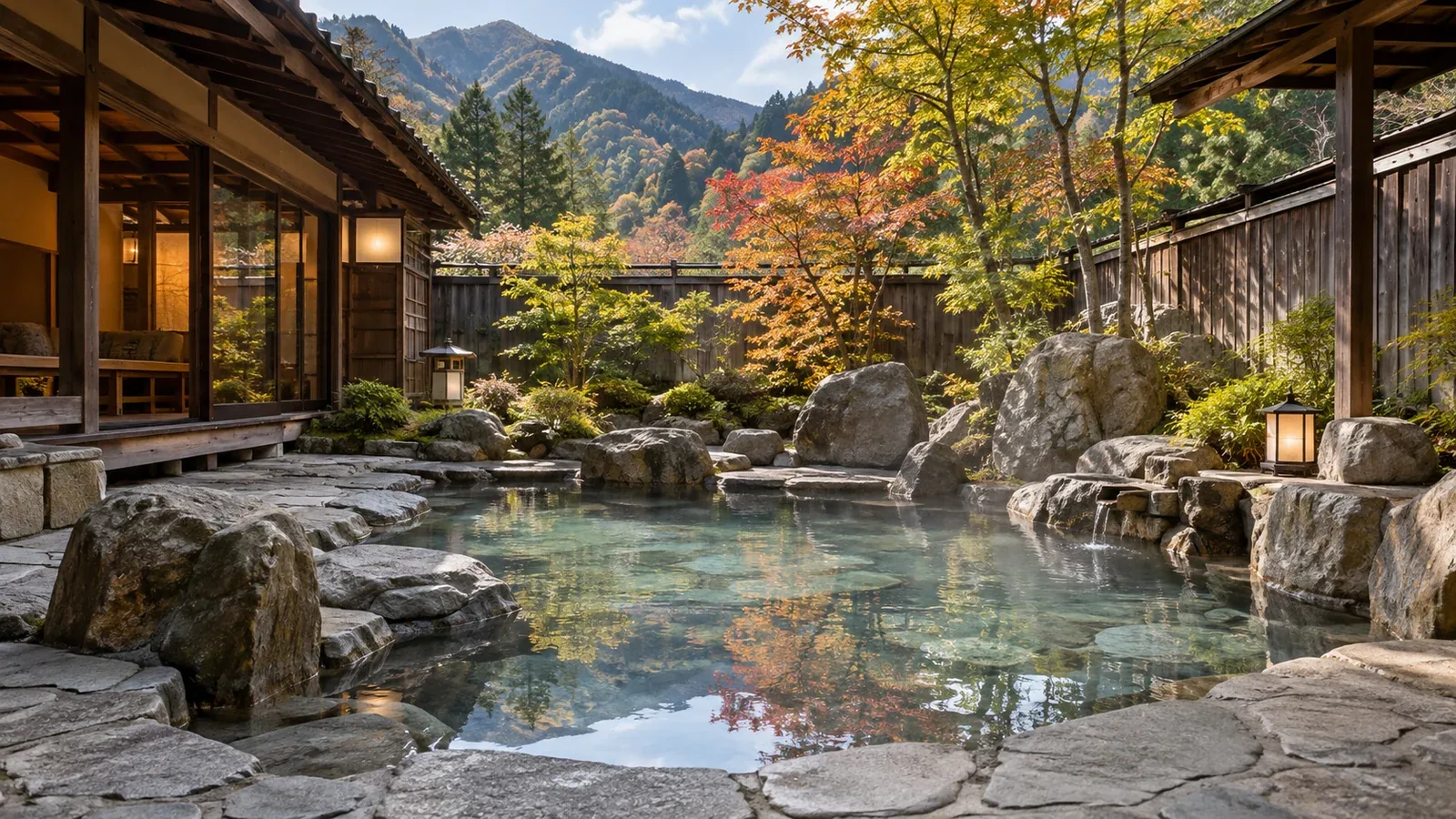
A list of thirty great hot springs might give you ideas. But if the one you pick has closed for the day, changed its hours or gone out of business, you’re left searching again when you come off the trail. Here’s how to find a day-use onsen close to your trailhead, narrow down the options and decide what’s right for you before and after the bath.
The number of hot springs and the ease of getting to them vary from one mountain area to another. You may find one near your trailhead in places like the Northern Alps, Nasu or Zaō. When judging how close it is, think about whether you’ll still be alert enough to drive and whether you’ll get there before dark.
Three places to look
Finding a bath on the spot can be tricky when you’re tired or have poor reception. If you check your options while you plan the hike, you’re more likely to find a bath that’s open when you get there.
1. Municipal or tourism association websites. Search for the municipality and the words 日帰り入浴 (higaeri nyūyoku, day-use bathing). The local authority may have a list. Prices, closing days and hours can change, so check the facility’s own website or call. If a visitor information desk is near the trailhead, you can also stop there and ask.
2. Mountain huts and trailhead noticeboards. Trailhead car parks and visitor or mountain information centres sometimes have flyers for day-use baths nearby. They’re often aimed at hikers, so they’re a handy starting point for local options.
3. Hiking community posts. On Nordwand and similar services, hikers sometimes share where they stopped for a soak. Recent posts are more likely to reflect current conditions. Use them for ideas and confirm opening hours directly.
Five ways to narrow down the options
Set your priorities in advance so you can make a quick decision even when you’re tired and have several baths to choose from.
1. Distance and road conditions
A drive of 30 minutes or less after the hike is a useful starting point. Even a short drive can be tiring if it’s on winding mountain roads. Check Google Maps or a trailhead map to see if the road is paved, gravel or full of sharp bends.
2. Hours and last admission
The last admission for day visitors may be earlier than the closing time. Choose a first option and a backup you can still use if the hike takes longer than expected.
3. Water composition and how your skin feels
Scrapes or sunburn can sting in strongly acidic or alkaline water. The water composition and your skin both affect how it feels. If you have sensitive skin or a wound, check the facility’s water composition and bathing notices. Consult a doctor if you’re concerned about whether bathing is suitable for you.
4. When it gets busy
On weekends, baths and their car parks can get busy when many hikers come down at once. Going on a weekday or choosing a route you can finish earlier at a comfortable pace can help you avoid the rush.
5. When to bathe if you’re exhausted or dehydrated
If you feel very tired or dehydrated, rest and drink water first. Have a snack if you need it. When you feel better, keep your soak short and avoid very hot water. Skip the bath if you still feel unwell.
What the water classifications mean
Japan’s Ministry of the Environment classifies mineral springs using its analysis guidelines. These are some of the main categories you’ll see on notices at an onsen.
- Simple thermal spring. Dissolved minerals are below a set threshold. Check the temperature and the bathing instructions.
- Chloride spring. Chloride is the principal ion. This water may sting if you have broken skin.
- Sulfate spring. Sulfate is the principal ion. How the water feels on your skin varies by facility and how you’re feeling.
- Sulfur spring. The sulfur compounds can give it a distinctive smell. Check the notices if you’re concerned about your skin.
- Acidic spring. The water is acidic and can irritate sensitive or broken skin.
- Bicarbonate spring. Bicarbonate is the principal ion. These sometimes go by the name bijin no yu, or “beauty bath”. Follow the facility’s bathing guidance.
Hot springs licensed for public bathing in Japan must post their composition and contraindications. If you’re concerned about a health condition, ask a doctor about bathing before relying on a water classification or an advertised benefit.
What to do before, during and after a soak
A few simple steps can make bathing easier on your body after a hike.
Before you go in
- Rehydrate as soon as you finish the hike. If you’ve been sweating, consider a drink with electrolytes or water with food.
- If you have a noticeable scrape or cut, check whether it’s appropriate to bathe. Consider skipping the bath if you have an open wound.
- Check where to store your bag and valuables in the changing room. Bring a bag for damp hiking clothes to keep the shared space clean.
While you’re in the bath
- Long, hot or repeated soaks can be hard on you when you’re tired. Follow the facility’s instructions and keep it brief.
- If you feel dizzy or unwell, ask someone nearby or a staff member for help getting out safely.
After you get out
- Drink water again.
- Allow time to rest if you have a long drive home. Drowsiness after the bath can add to the fatigue of a hike and make driving riskier.
How to find a hot spring on the map
- While planning your hike, check the name of your trailhead and the municipality it’s in.
- Search for the municipality with 日帰り入浴 (day-use bathing), or the mountain with 温泉 日帰り (day-use hot spring). List two or three options.
- Use each facility’s official website or phone number to confirm closing days, last admission and parking.
- Check the route and drive time from the trailhead on Google Maps. Pick one bath for an early finish and another you could still reach if you come down late.
- Save the phone numbers on your phone in case something changes, such as an unexpected closure.
For your next hike
Look up the municipality for your trailhead and search its tourism website for day-use baths. Call to check the closing day and last admission. Pick an option you could still reach if the hike takes two hours longer than planned. You can also use Nordwand to exchange tips with people who’ve hiked in the area and see where they stopped.
References
- Ministry of the Environment, overview of Japan’s Hot Springs Act
- Ministry of the Environment, mineral spring analysis and guidance on using hot springs
- Official sites for regional hot spring resorts and tourism associations