
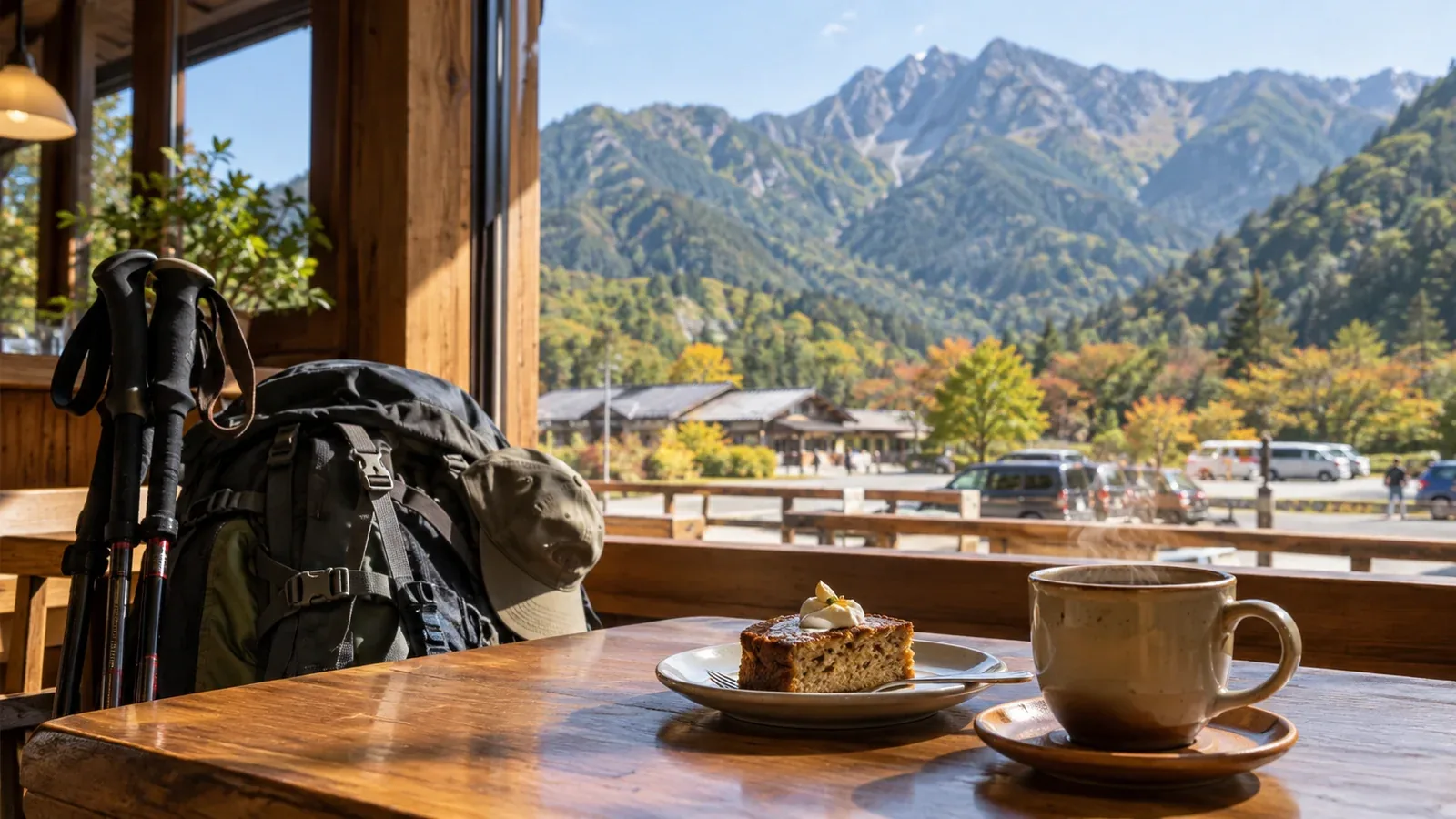
Before catching a bus or getting in the car after a hike, you may want a place to sit down. Looking up cafés near the trailhead in advance can make the trip home easier. Plenty of people plan a stop at a hot spring but forget to look for somewhere to eat. That can mean traveling for hours without a meal.
Here’s how to find a café or somewhere to eat, check which information is current, and decide whether you can actually stop there. Places near trailheads operate differently from cafés in town or at major tourist attractions. Knowing what to check saves a wasted trip.
Why cafés near trailheads operate differently
Places near mountains, highlands and passes often open seasonally, and some close from autumn into winter. If you’re planning a stop from October onward, first find out whether the business is open.
Some close right when hikers are coming down, between about 2 and 5 p.m. Cafés at visitor attractions or roadside stations can close early, so you may miss them even if you go straight there. Keep this in mind from October onward, when it gets dark earlier.
In trailhead villages, the nearest café may be a long walk from the car park. Many are easy to reach by car but less convenient by bus or train. Your transport will affect which places you can realistically visit.
What to check in advance and where to look
When planning a hike, check these things about the area at the foot of the mountain.
1. Days and hours of operation
Reviews and social media posts can be out of date. Opening periods may change from year to year. Use the shop’s official social media account or call to ask whether it’s open that weekend. Cafés at roadside stations and visitor attractions often list their hours on the facility’s official website.
2. Last orders
Some places that close at 5 p.m. stop taking orders at 4 p.m. If you plan to bathe first, count backward from last orders and include time at the baths. Finishing the hike at 3 p.m. and bathing for an hour already takes you to 4 p.m., before you’ve made the trip to the café.
3. Space for wet clothes and packs
Muddy shoes and wet clothes can feel out of place in a café with white sofas. Look at photos and reviews to see if there’s a terrace, room at the tables as well as the counter, and somewhere to put a pack.
How to find a place
Use a few different ways to search for cafés near the trailhead.
Search around the nearest village in a maps app. Searching right at the trailhead may bring up nothing. Try the nearest village or attraction name with terms such as café, coffee shop or lunch.
Look for post-hike recommendations in hiking groups and forums. People who have stopped there may describe the opening hours, atmosphere and how the staff handled packs. Check when the comment was written and confirm current details before relying on an older post.
Look up roadside stations along the access road. Many have a café or dining room and some stay open later. Japan’s Ministry of Land, Infrastructure, Transport and Tourism lists stations and basic information on its official portal.
Ask at a hut or visitor information desk. Staff often know what’s nearby. If you ask before descending, they may also know what’s open that day.
How to decide if a café is a good stop
Good food is one part of the decision. Narrow down your choices ahead of time so it’s easier once you’re tired.
How comfortable you’ll feel walking in. Check whether there’s a dress code and whether the café is used to hikers. Many places at the foot of a mountain welcome hikers, though some have been renovated with a different clientele in mind. Photos can give you a sense of the place.
How long you might have to wait. Popular places can have queues on autumn foliage weekends. Waiting 30 minutes or more is tiring after a hike. Consider a quieter time, such as after 2 p.m. where appropriate, or a place that takes bookings.
What’s on the menu. After a long hike, you’ll want food and fluids. A place that serves snacks or meals may suit you better than a sweets-only café. If you feel worn out, lighter food may be easier to eat. Choose based on how you feel.
How it fits the return journey. Work backward from your bus or train and decide how long you can stay. Set aside enough time to get to the stop before the last bus leaves.
Make the stop part of your itinerary
An unplanned stop can be harder to make after a hike. As with a hot spring visit, decide while planning where you want to stop, when you need to get there, and what you’ll do if it’s closed.
Choose a first option and a backup. The same approach works for a hot spring. Hours can change without notice, so check again on the morning of your hike.
Before your next hike
Use a maps app to find two places within about 15–30 minutes of the end of the hike by car or public transport. Confirm opening days by phone or on the official account, then compare your expected finish with last orders. If you’re hiking with friends, ask where others stopped afterward in Nordwand’s Basecamp or shared hiking logs.
References
- Japan Ministry of Land, Infrastructure, Transport and Tourism: official Michi-no-Eki roadside station portal
- Local tourism associations and municipal visitor information: places to eat near the trailhead