
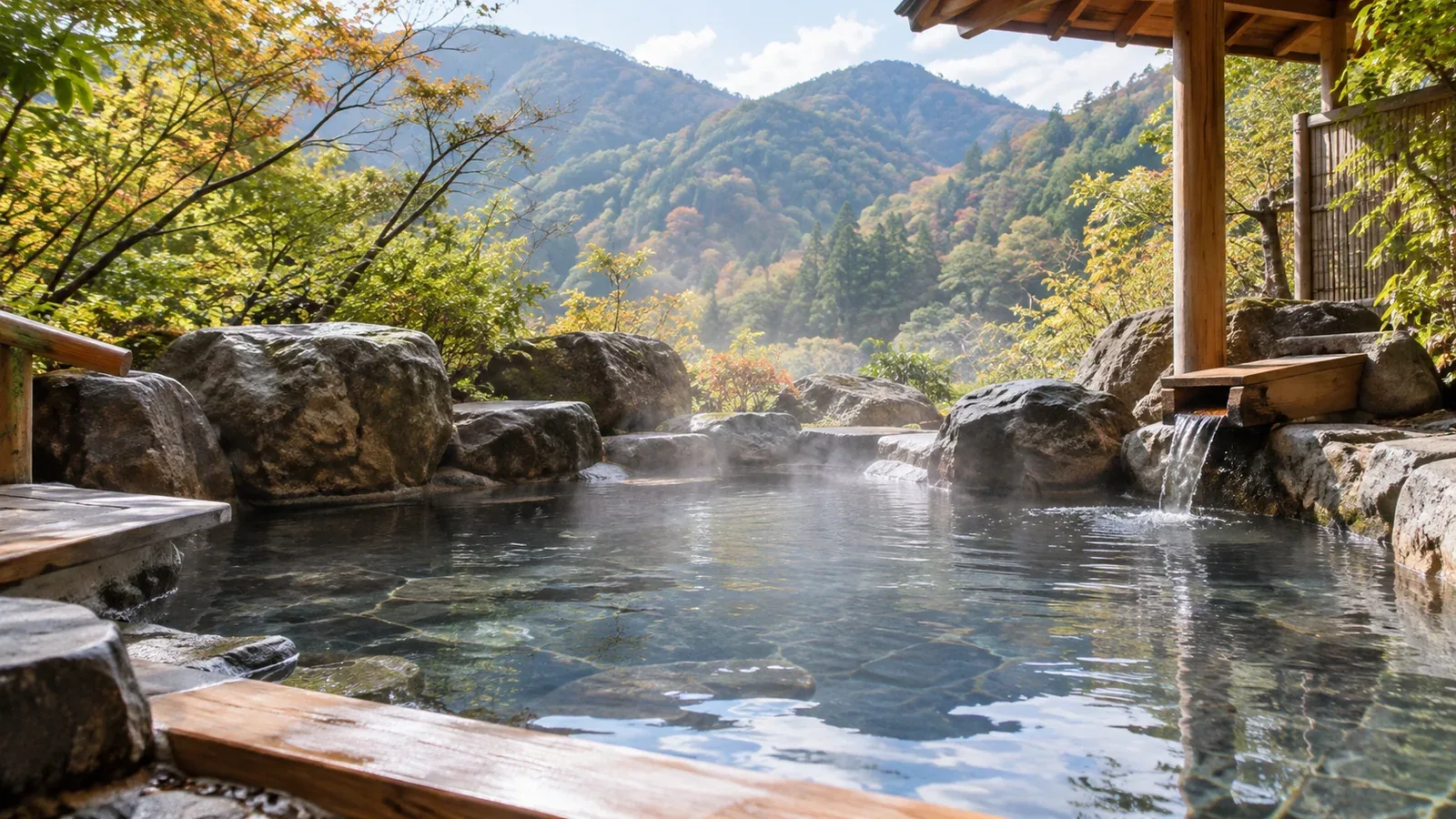
A Japanese hot spring is a classic way to end a hike. Take a break and drink some water first. Here’s how to choose a comfortable bath and pace yourself from the changing room to the rest area.
We’ll walk through what to do from the time you finish the hike until you leave the onsen. You won’t need any special equipment.
Drink and rest before bathing
Start with water and a snack if you need one
After a long hike, sweating can leave you short of fluids. Getting into hot water suddenly can make you feel dizzy or light-headed. Drink water before heading to the onsen or before entering the changing room, and check how you feel.
If you’re hungry, have a light snack. Give yourself a little time after a meal before getting into the bath.
Allow time to cool down
If you’re still hot after a steep climb or carrying a heavy load, rest in the shade or somewhere cool. Wait until your breathing and sweating settle and you feel well enough to bathe. This matters particularly after a long day or in hot weather.
Wash and ease into the water temperature
Wash first, then pour warm water over yourself
In a communal bath, wash away sweat and dirt at a washing station before getting into the tub. If you do kakeyu, the practice of pouring warm water over your body, start with your feet or hands and let yourself adjust gradually. There’s no set number of pours.
Choose a bath that isn’t too hot
If there are several tubs, pick one that isn’t too hot. Move slowly when you get in and out. Follow any guidance the facility posts on temperature and how long to stay in the water.
The order to follow after a hike
Once you’re feeling settled, try this sequence.
- Wash at a washing station. Wash off sweat, mud and sunscreen and rinse away the soap.
- Adjust to the temperature with kakeyu. Pour a little warm water at a time over your hands or feet.
- Soak briefly in a bath that isn’t too hot. If you’re still tired, keep the water moderate and the soak short.
- Get out slowly. If you feel unsteady or unwell, ask someone nearby to help.
- Shower if appropriate. A quick rinse is an option depending on the water, your skin and the facility’s guidance.
When to put off a bath
Situations where it’s better to skip or shorten a soak
- Severe fatigue or a headache. If a headache or dizziness persists or you suspect heat illness or hypothermia, skip the bath. Rest and get medical advice or care as needed.
- Scrapes or cuts. Some water can sting a wound. Skip the bath if the wound is open and follow the facility’s instructions.
- Older adults or people with heart or blood pressure conditions. Ask your usual doctor in advance about how to bathe.
Keep the soak short
A long, hot bath can be harder on your body when you’re tired. Keep it brief. If you feel overheated, unsteady or unwell, ask someone nearby for help getting out safely.
Drink and rest afterwards
Rehydrate when you get out. You may sweat while bathing, so drink according to how you feel and how much you’ve sweated. Use water to rehydrate, and leave alcohol for a time when you won’t be driving.
After changing, sit down in the rest area and give yourself time to settle. Japan’s Ministry of the Environment suggests a rest of about 30 minutes after bathing. Eat according to how you feel.
For your next hike
Remember the sequence: drink, rest, wash, adjust to the temperature and soak briefly. If you’re with friends, ask one another how you feel. Nordwand’s Base Camp can also help you make plans for a hike with an onsen stop and meet people nearby.