
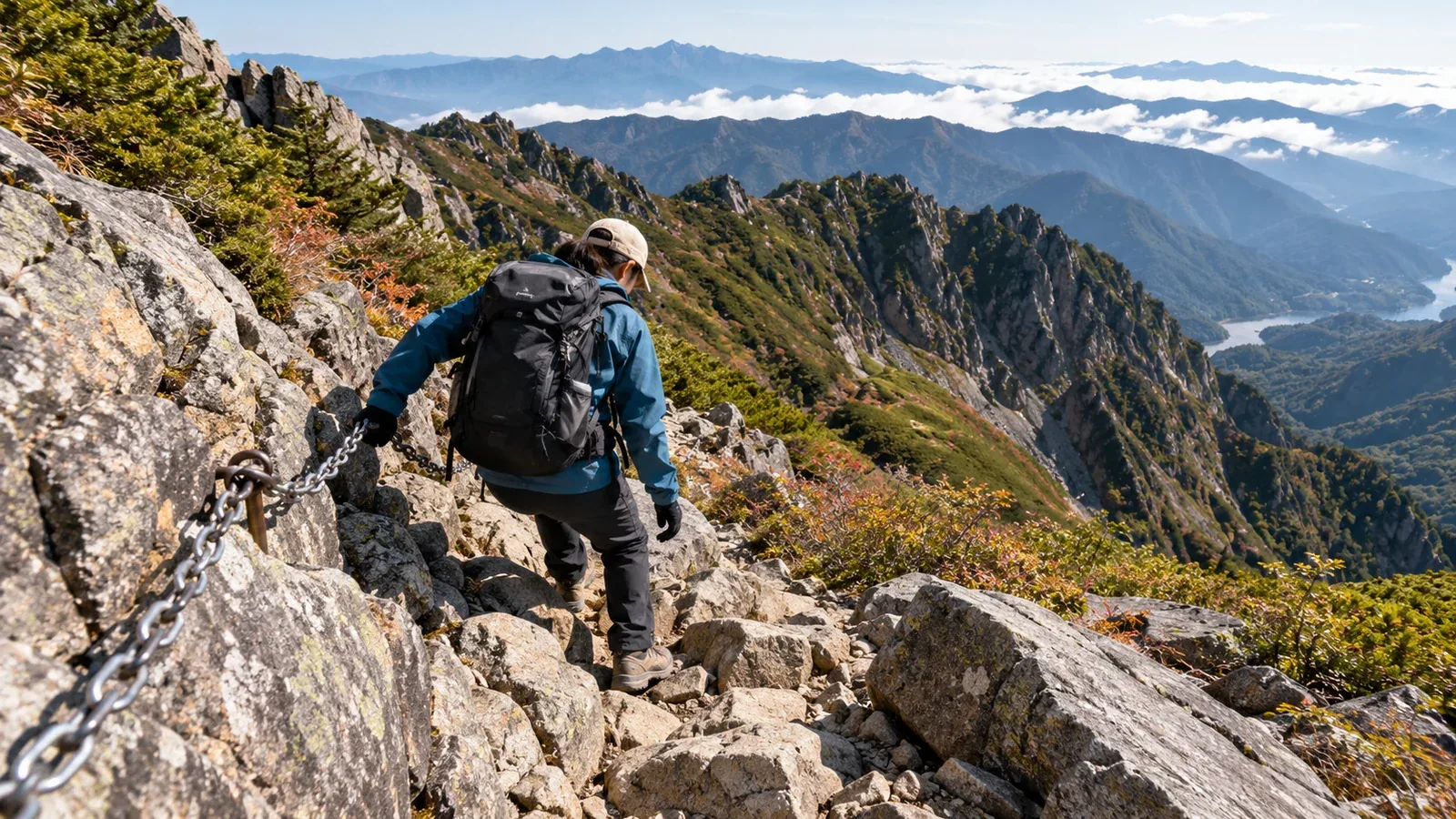
A descent can be more demanding than the climb when footholds are hard to see or legs are already tired. Nagano Prefectural Police warn that many mountain incidents occur on the descent. Leave enough time and energy for it when planning.
Three things can make a rocky descent difficult: seeing the next hold, keeping your balance and controlling the lowering movement with tired legs. Look for a stable place to pause before each steep step.
Practise low, manageable descents with an experienced companion or instructor before attempting longer ridges, overnight routes or snow. Check whether there is a simpler descent or a way to turn around before you reach the difficult section.
When you cannot see the next foothold
On the way up, many holds are in front of you. On steep rock, keeping three secure points of contact gives you time to check where to place the hand or foot you are about to move.
On the way down, a ledge may be directly below you and hard to see. Stop on secure holds to find it before moving. If you must lean out or lose your balance to see it, reconsider how you are approaching the step.
On steep rock, facing the rock can help you use handholds while lowering one foot at a time. Confirm the next foothold before committing weight, and keep the other three points secure. On easier ground, choose the position that lets you see your footing and stay balanced. If you cannot identify a reliable next hold, stop and seek guidance or take an established alternative when safe.
Balance and grip
Grip depends on the shape and condition of the hold, the sole and how you load it. Wet rock, mud, ice, loose stones and worn soles can all change what is safe.
A long step or a foothold under only the edge of a shoe can make it harder to keep control. Use short, deliberate steps where the terrain permits, keep your body balanced over your supports and test each foothold before transferring weight.
Look for stable footholds that let the sole make secure contact. Where the shape of the rock allows, use a broader part of the sole without forcing your ankle or sacrificing balance. Practise slow lowering and weight transfer on low, stable ground.
Why the legs tire on a descent
On a descent, the muscles at the front of the thigh help control lowering as they lengthen under load. Walking studies have measured more of this eccentric work on downhill slopes. Long descents can tire the legs and affect the control you need for precise foot placement.
Shaking legs, poor balance and increasingly careless foot placement are reasons to stop on secure ground and reassess. Check your companions as well.
Build in enough time and places to pause before fatigue affects your movement.
Allow time for the difficult sections. Check where they are on the descent and account for the slowest person, conditions and any queue. Keep a margin of daylight and time to change the route.
Stop where you can recover safely. Pause on a wide, stable part of the trail away from exposure and rockfall. Give yourself time to assess whether you can continue with control. If you cannot, change the plan while you still have a safe option.
How to use trail chains and fixed ropes
Use a trail chain for balance while you stand on secure footholds. It does not provide fall arrest. Check its condition from stable ground and turn back or use an established bypass if it looks damaged, icy or unreliable.
Use a grip you can control and keep fingers clear of links and pinch points. Move one limb at a time on steep rock and keep your other holds secure. If you wear gloves, check their grip and fit on safe terrain, especially when cold or wet.
A fixed trail rope can also be a movement aid. Its presence alone does not establish that it can hold a fall or serve as an anchor. If the section requires a belay or a rappel, choose an alternative unless you have the necessary skills, equipment and verified anchor system.
Fatigue, weather and fading light
Check how much energy and daylight the group has, and where the next difficult section and any established alternative are. Make the decision while you still have secure ground and options.
Reassess before going farther if any of these apply.
- Your legs are shaking or fatigue is affecting your balance.
- Rock is wet or icy, or rain and fog are making footholds hard to assess.
- Remaining daylight is short for the terrain, the group and possible delays.
- Poor sleep, illness or symptoms at altitude are affecting how you move or think.
Agree before leaving when to wait, change route or turn back. Check the Japan Meteorological Agency forecasts and the latest notices from the route operator or hut. If someone is injured or the group cannot continue or retreat safely, call 119 or 110 in Japan from a secure position if possible and report the location and conditions.
Before your next descent
Mark the hard sections on the way down, the places where you can wait securely and the established alternatives. Plan enough time and energy for each section. Nordwand’s Base Camp can help you ask people who know the route about the descent.
Further reading
- National Police Agency mountain incident reports
- Nagano Prefectural Police mountain safety advice
- Japan Meteorological Agency timed regional forecasts
References and sources
- National Police Agency · Mountain incident reports
- Nagano Prefectural Police · Descent and rockfall advice
- Japan Meteorological Agency · Timed regional forecasts
- Nagano Prefecture · Guidelines for safe hiking
- Gunma Prefectural Police · Mountain walking fundamentals
- Nagano Prefectural Mountain Center · Group hiking handbook
- Original study · Eccentric muscle work on slopes
- Original study · Downhill walking and foot placement control
- Japan National Tourism Organization · Emergency numbers