
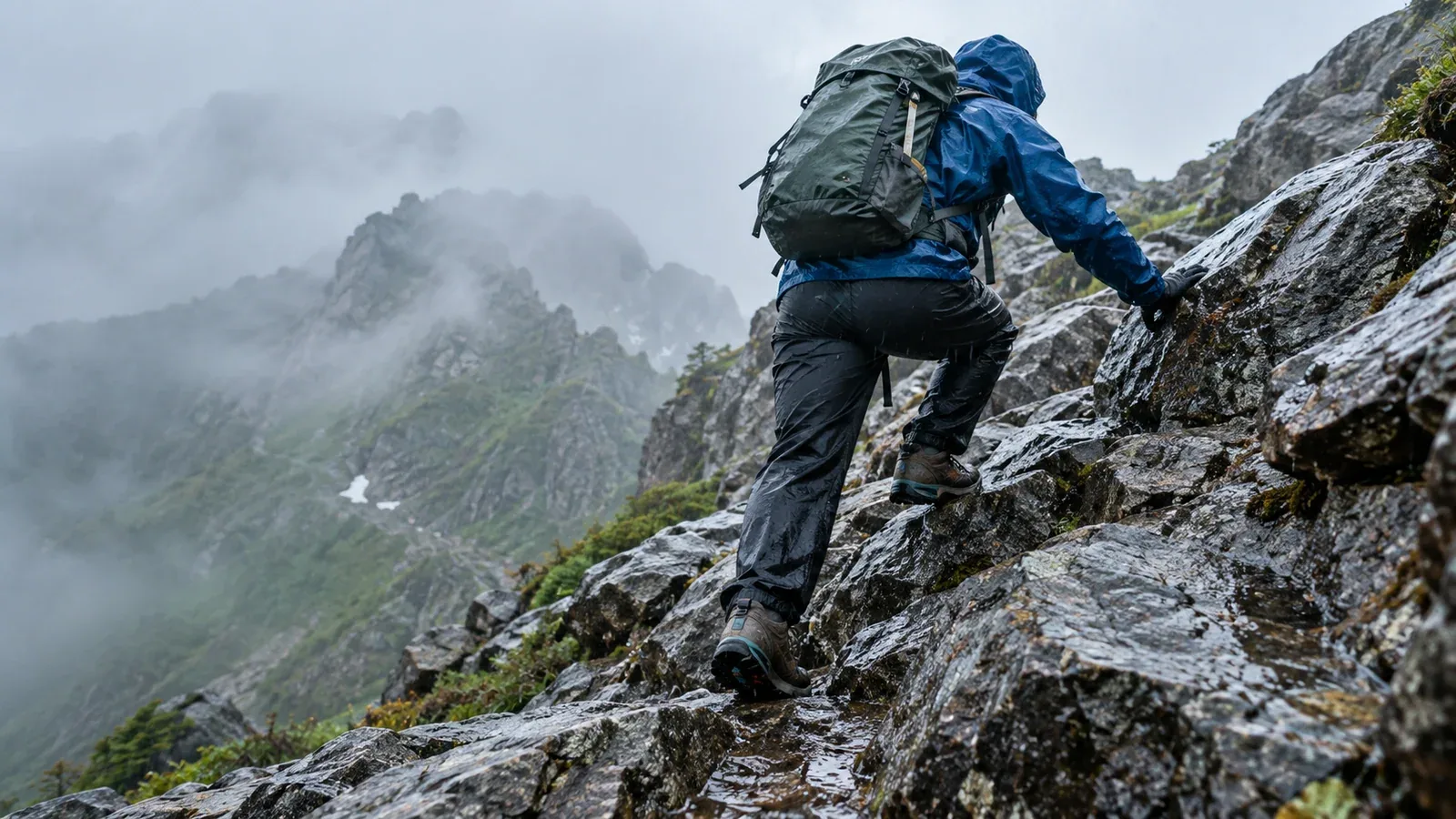
Rain can turn a familiar rocky step into a difficult one. Water, mud or moss can change the grip, and a chain or handhold may be harder to use. Before moving on, assess the terrain, weather and what would happen if you slipped.
A deliberate pace and secure holds help on suitable terrain. If you cannot move with control, use a marked alternative or turn back before entering the exposed section. Extra equipment cannot make every wet crossing safe.
Read the surface in front of you
Look at surface texture, moisture, moss, mud, ice and loose rock. Conditions can change within a few steps, even on the same rock.
Granite. Rough and polished surfaces can occur on the same outcrop. Water, mud or lichen can change the grip. Check whether the next hold is secure from a stable position.
Andesite and basalt. A rough surface can still be slippery where water, mud or moss cover it. Look at the actual foothold and avoid assuming it is reliable because of its rock type.
Limestone. Smooth, worn or water-covered patches can be slippery. Look for a stable alternative foothold on the marked trail and stop if you cannot find one.
On any rock type, keep secure supports while checking the next hold. Avoid relying on appearance alone or testing a dubious hold with your full weight.
Deciding whether to continue or turn back
Stop somewhere stable before a wet section and review the conditions and your options.
Reasons to stop, wait or turn back
- Rain is continuing or worsening, or the forecast and warnings point to deteriorating conditions.
- Water is running over the holds, filling the route or making an unbridged stream crossing unsafe.
- The chain, rope or rock holds are unreliable because of water, ice or visible damage.
- You hear thunder, see lightning or have reason to expect it on an exposed ridge. Leave exposed terrain as safely as possible and seek proper shelter.
- Fatigue, cold or poor visibility makes it hard to choose holds or move with control.
When a cautious continuation may be possible
- The rain has passed and the actual holds are firm and usable.
- The marked terrain is gentle enough to use secure holds and the consequences of a slip are limited.
- You have identified a secure way forward and a place to stop or retreat.
- Everyone in the group can move with control and has enough time, warmth and visibility.
Reassess as you go. Rockfall and high water can remain a problem after rain, including when it fell upstream. Avoid flooded crossings and follow closure notices. If there is no safe way to advance or retreat, ask for help from a secure position. In Japan, call 119 or 110 in an emergency.
Moving on wet rock
On steep terrain, keep three secure points of contact and move one hand or foot at a time. Check each new hold before shifting weight onto it.
Find a secure place for the sole
Choose a stable foothold with good contact. Use a broader part of the sole where the rock allows, without forcing the ankle or losing balance. Keep your weight on existing supports while checking whether the new hold is usable.
Keep your balance over stable supports
Use small, controlled movements and a position that lets you see the next hold without leaning out. Check your balance after each move. If you cannot find secure holds, stop and reconsider the route.
Treat chains and fixed ropes as aids
Use trail chains and fixed ropes as movement aids when they are sound. They are not fall-arrest systems. Wet metal or rope can be hard to grip, and gloves cannot compensate for ice, loose anchors or damage. Stay on secure footholds and use a marked alternative if the aid is unreliable.
Three situations that deserve extra care
Plan the descent as well as the climb
Allow time for downclimbing and look for usable footholds before committing. On steep rock, facing the rock may help you use stable handholds while lowering one foot at a time. If the only descent is beyond your ability in those conditions, turn back while a safe route remains.
Watch for moss and vegetation
Moss and slick vegetation can remain wet after the rain stops. Avoid standing on them where you can do so while staying on the trail. If there are no secure holds on the marked line, turn back or use an official bypass.
Secure your pack and slow down
Fasten loose straps and keep the load close to your back. A shifting pack can affect balance on a steep step. Give each move time and avoid rushing through exposed terrain to escape the rain.
Check your equipment on stable ground
- Footwear. Check the sole and tread for wear or separation. Follow the maker's advice on repair or replacement. Choose footwear that fits and grips the terrain you expect.
- Gloves. If you wear gloves, check their fit and grip in a safe place. Account for wetness and cold, and keep fingers clear of chain links and pinch points.
- Rain gear. Put it on in a stable place before entering exposed terrain. Carry insulation and adjust layers if you get wet or cold. Keep the hood positioned so you can still see the trail and your holds.
Use the maker’s instructions to check and maintain equipment. A local guide or specialist shop can help you choose gear for the route and season.
Before your next rocky hike
Check Japan Meteorological Agency forecasts and alerts, and the latest notices from the route manager. Plan a marked alternative and agree on when to turn back if wet rock or rising water makes the planned route unsafe. You can also ask a qualified guide about terrain and equipment for the day.
Further reading
- Japan Meteorological Agency forecasts and alerts
- National Police Agency mountain incident reports
- Manufacturer guidance on hiking footwear care
References and sources
- Japan Meteorological Agency · Warnings and advisories
- National Police Agency · Mountain incident reports
- SCARPA · Hiking footwear care and sole inspection
- Japan Meteorological Agency · Heavy rain and lightning safety
- Nagano Prefecture · Safe hiking, rocky sections and stream crossings
- Kantō Regional Forest Office · Wet trails and rockfall
- Nagano Prefecture · Rapid rises in stream levels
- Japan National Tourism Organization · Emergency numbers