
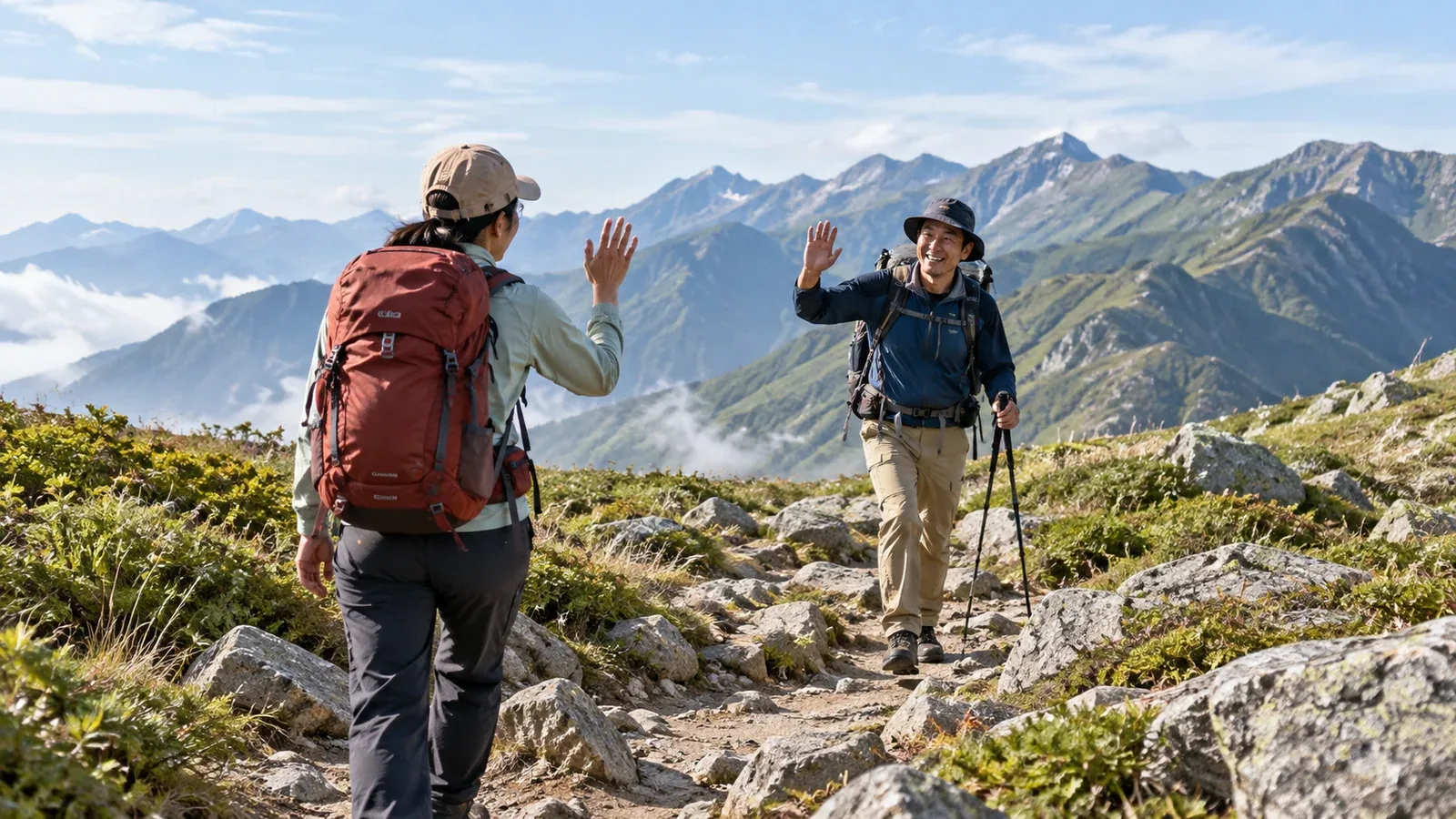
You might pass strangers in town without saying a word, but hikers in Japan often say konnichiwa, or hello, as they pass. A brief greeting makes you aware of each other and can help you make room to pass or notice how the other person is doing.
When people pass every few seconds on a busy autumn weekend or on one of Japan’s popular Hundred Famous Mountains, saying hello to everyone can get tiring or feel intrusive. This guide explains what a greeting does and how to judge the moment.
Why hikers greet each other
When you look at someone and greet them in passing, you may remember who was walking in which direction. In a search, accounts of when and where a person was seen can help alongside their hiking plan and intended route.
Even a quick hello can draw your attention to someone walking unsteadily or trying to find the way at a junction. If they seem to be in difficulty, ask “Are you OK?” from a safe spot.
Trails and campsites are places you share with people you’ve never met. A few words help you notice one another and make it easier to speak up when it’s time to let someone pass or share a spot.
How to greet someone: volume, timing and words
Konnichiwa is natural in the daytime and ohayō gozaimasu means good morning. You may also hear otsukaresama desu, an acknowledgment of someone’s effort, said to hikers coming down. Customs vary, so choose a short greeting that suits the moment.
Speak just loudly enough to be heard. A quiet greeting may carry on a still, level trail, while wind on a ridge or a rushing stream may call for a slightly louder voice. In a quiet forest, a normal voice is plenty.
Say hello when you’re close enough to be heard, keeping your attention on your footing. On a narrow trail, one person will stop somewhere safe to give way. “After you” or “Thank you” makes your intention clear.
When you can skip saying hello
There are times when a wordless greeting suits the situation.
When the other person needs to concentrate, a nod or small wave is enough. Calling out to someone picking their way down steep scree or balancing on a rocky ridge could startle them. If you make eye contact, nod. Wait until they’re somewhere safe to speak, or carry on.
When you’re passing a steady stream of people on a crowded trail, a nod, eye contact or a small wave works. Give your footing your attention if the terrain demands it.
When someone wearing headphones hasn’t noticed you, you can simply pass if there’s nothing to communicate. If you need to flag a hazard or share route information, move to a safe place where they can see you, signal and speak once you have their attention.
At a crowded summit rest area, a quick nod to the people nearest you feels natural. You can say hello if a conversation starts.
A few words are also useful when you arrive at or leave a hut, share a toilet or water point, or walk near the same group for a long stretch. They make it easier to coordinate.
When someone doesn’t reply
You’ll sometimes get a nod or no reply. Someone may be out of breath, watching their footing, unable to hear you or unfamiliar with the language.
You’ve let the other person know you’re there. If there’s no reply, keep going with care.
If they’re unsteady on their feet or seem lost at a junction, ask “Are you OK?” from a safe position. A direct question can help you find out what they need.
Greeting people who speak other languages
You may meet hikers from abroad on Japanese trails. A nod or a smile works across languages, and “Hello” or “Hi” in English may also be understood.
People may pronounce Japanese words differently or use expressions you don’t expect. What matters is understanding each other. If you want to discuss the route or the condition of the trail, pointing to a spot on the map can help.
Try it on your next hike
On your next hike, choose a greeting that fits the situation, whether you’re on a busy trail or a quiet ridge. A hello can lead to an exchange about the mountain or an introduction to someone walking the same route. Nordwand’s Base Camp and hiking log sharing can help you stay in touch after the hike.