
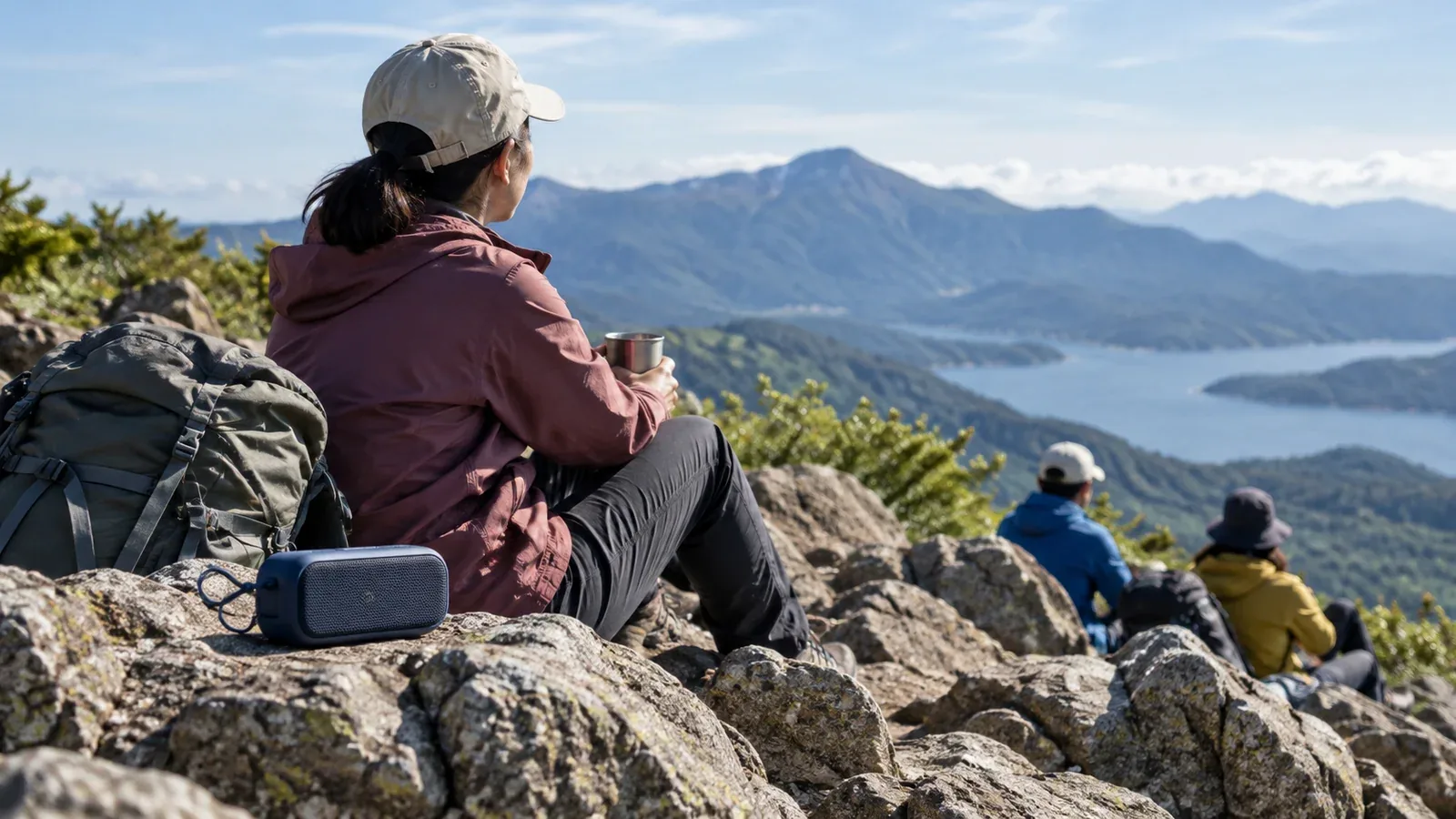
Have you ever heard someone playing music or a radio through a speaker in the mountains and wondered whether it was acceptable? Maybe you’ve considered bringing a speaker yourself and wondered what’s customary.
If you want to listen on a hike, keep music or radio audio from playing out loud. Check local guidance for park noise rules and for using sound to make your presence known in bear country.
Rules differ between national and other natural parks and from hut to hut. Read the guidance from whoever manages your destination before setting out.
Why speakers are a problem
Trails are shared. In quiet mountain surroundings, audio from your speaker can reach people ahead of and behind you.
There are three main reasons to keep the speaker off.
Other visitors may have come for the quiet. People who want to hear birds, the wind or their own footsteps may find someone else’s speaker intrusive.
Human noise can mask sounds wildlife depends on. It can make it harder for animals to hear calls from others of their species or pick up signs of predators.
It can hide signs of danger. Music can make it harder for you and others to hear thunder, falling rocks or a hiker calling from behind.
What about earphones or headphones?
Earphones can keep the sound to yourself, but how you use them matters.
The biggest risk is losing awareness of the sounds around you. It can be harder to hear thunder and warnings from other hikers. Keep your hearing clear while walking.
You can wear a single earbud, lower the volume until you can hear your surroundings or use bone-conduction headphones that leave your ear canals open. Even with bone conduction, loud audio can make other sounds hard to hear.
In a mountain hut or emergency shelter, keep the volume low enough to hear staff and other visitors. Follow any posted rules.
Can sound help you avoid bears?
In bear country, Japan’s Ministry of the Environment lists bear bells, radios and conversation as ways to make your presence known. Encounters can still happen. Check recent reports and local advice before you go.
Wind, rain or rushing water can drown out a bell or radio. Take particular care where visibility is poor, and reconsider your route if bears have been reported nearby. Turning music up also makes it harder for you to hear your surroundings.
The environment ministry’s bear information page links to local sighting reports. Check the latest information from the site manager or local authorities and follow closures and other instructions.
How to judge the situation by location
Think about other visitors, wildlife and the rules of the place you’re visiting.
In national and other natural parks
Article 37 of Japan’s Natural Parks Act prohibits unjustified conduct that seriously disturbs other visitors, such as making excessive noise with loudspeakers or radios in special zones, marine park zones or group facility zones of national and quasi-national parks. Check the park’s own guidance too. The Yakushima World Heritage Conservation Center, for example, asks hikers to avoid making loud sounds.
Busy places: summits, huts and rest areas
Keep speakers off where people gather. Even a sound that seems quiet to you can reach everyone nearby. This is especially relevant at summits and on hut terraces.
Quiet areas, early mornings and evenings
Even when few people are around, wildlife relies on the sounds of its surroundings. Keep your music to yourself.
Paved approaches and areas near the trailhead
Car parks and approach roads can feel more like ordinary streets than mountain trails. Keep other hikers and local residents in mind there as well.
What to do if you want to listen
When listening to audio in the mountains, make sure you can still hear what’s going on around you.
- Keep your surroundings audible if you wear earphones. Use just one earbud or turn down the volume, and take them off where the route needs your full attention.
- Keep music off speakers. Sound can travel well beyond the people you can see.
- Be aware of people at summits, huts and narrow ridges. Leave room for others to pass and follow posted rules.
- Follow local bear advice. Check sighting reports and use a bell or conversation to make your presence known where appropriate.
If you have reception, you can check the forecast on the Japan Meteorological Agency’s website or another weather service without playing it aloud. Check before departure too, since you may lose your signal in the mountains.
Check before you go
Before your next trip, look for rules on sound from the park, local authorities or hut operator. On Nordwand’s Base Camp, ask people who hike in the area what to expect. Local experience can help you judge the situation.
Further reading
- Article 37 of the Natural Parks Act and Yakushima’s hiking guidance
- Bear safety and sighting information from Japan’s Ministry of the Environment
- U.S. National Park Service guidance on wildlife and noise, and Japan Meteorological Agency disaster information
References and sources
- e-Gov Law Search — Natural Parks Act, Article 37
- Yakushima World Heritage Conservation Center — Hiking precautions and etiquette
- Japan Ministry of the Environment — What to know about bears before visiting a national park
- Japan Ministry of the Environment — Bear information and sighting reports
- U.S. National Park Service — Effects of noise on wildlife
- Japan Meteorological Agency — Local disaster and weather information