
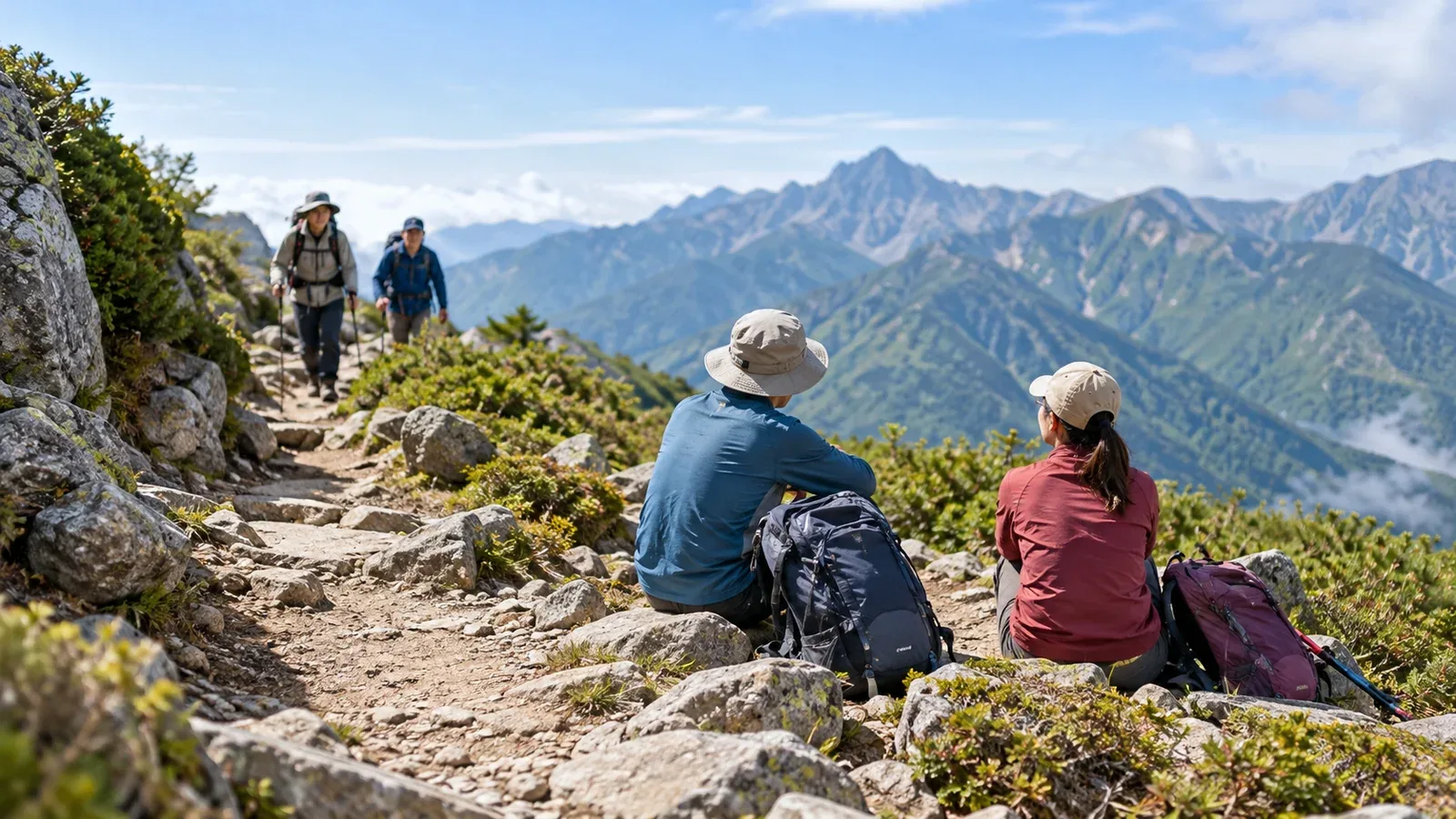
You take off your pack to rest just as another group catches up. Where should you stand? It’s not always obvious where you can pause, especially if you’re new to hiking.
Here’s how to spot a place where you can rest and leave the route clear, and what to do once you’ve found it.
Why the spot matters
Trail width varies widely. A ridge can be barely wide enough for one person. If a group stops side by side, others can’t get past. Stopping where uphill and downhill hikers normally pass also forces one side to wait.
When you’re tired or the view opens up, it’s tempting to stop straight away. Take a moment to check whether people coming from either direction can still pass safely once your pack is down.
Spots where a break can block the way
Avoid resting in places like these.
Narrow stretches. On a narrow ridge or a traverse across a rocky slope, putting a pack down can block the way. Carry on until the trail widens.
Trail junctions. People come from several directions where routes meet. That includes signed junctions and quieter spots where paths merge.
Partway up a steep slope. If you stop on a steep slope, people behind you may have to wait on unstable ground. If you have the energy to go on, rest where the gradient eases and the footing is firm.
At the ends of chains and ladders. Keep the equipment and its entrances clear. Find a safe spot out of the way of people using the section or waiting their turn.
On bridges and at stream crossings. Follow posted capacity limits and directions on bridges. Keep moving while crossing. After you’re across, clear the exit for the next person.
How to find a good rest spot
Good places to rest tend to share a few features.
A wider spot within the trail. Look for firm footing on a wide stretch of trail or in a designated rest area. Avoid stepping into vegetation or onto the edge of a drop to clear the way.
Benches and marked rest areas. Use benches provided for breaks or signed rest areas. Leave the space in front of information boards clear for people reading maps or trail signs.
A flat spot with a view. Even a wide, flat area may be used by people passing each other. Keep to the side and leave room to get through.
Outside mountain huts and shelters. Read the signs or ask staff whether the space outside is open for use. Keep doors and water points clear.
Where to stand and put your pack
Once you’ve found somewhere to stop, think about where you and your gear will go.
Keep packs together away from the passage, on ground where they won’t roll. On a slope, choose a stable spot on the uphill side. When resting as a group, keep to one side and leave room for people to pass.
When someone comes along, move to a safe spot within the trail and say “After you.” Whether they’re going uphill or down, check that they have solid footing and make room for each other.
Before setting off again, look both ways and let anyone approaching pass. On rocky stretches, watch where you step so you don’t dislodge loose stones.
Planning time and places for breaks
Think about your next possible rest spot before you’re exhausted. Mark potential places such as rest areas or huts on your map. Check the footing and foot traffic when you get there. Keep the middle of junctions and hut entrances clear.
Include breaks in your estimated trip time. Choosing likely stopping points in advance gives you more time to judge the conditions when you arrive.
Try it on your next hike
Before your next hike, mark about three potential rest spots on your map. When you arrive, check the trail width, footing and number of people passing before you decide to stop. Photos in Nordwand hiking logs can help you plan. Check current conditions and rules with the site manager.