
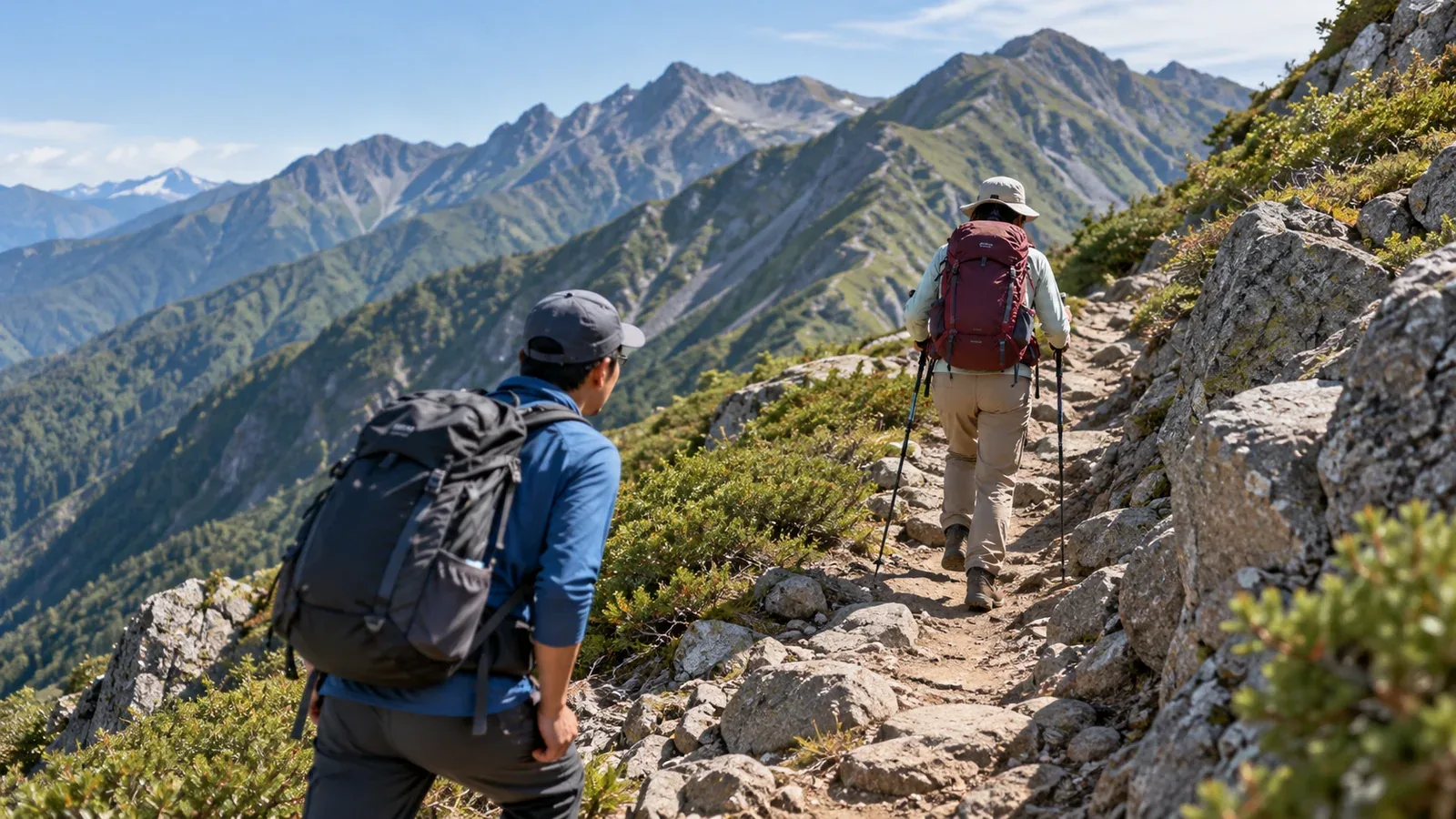
Some stretches of trail are barely wide enough for one person. To pass a hiker from behind, choose when to speak, wait for their signal and work out where you can both pass safely.
An “Excuse me” on its own may leave the other person wondering whether to stop or keep walking. Coming up silently behind someone can startle them and make them lose their footing.
This guide shows what to say and where to wait in a few common situations.
Why passing takes care
People can’t always tell what the other person intends. The hiker in front may wonder whether the person approaching from behind wants to pass. The hiker behind may be unsure whether someone has stopped to let them through or for another reason.
Steps, roots and rocks make footing uneven, and a sudden move can cause a fall. Once you’ve spoken, give the other person time to reach somewhere safe to stop.
Fitness, fatigue, pack weight and the aim of the day can all affect walking pace. Give each other time to walk at a pace that suits you.
Before you ask to pass
Look ahead for a safe place to pass before speaking. On a narrow slope, leave some space and wait for a junction or a wider section.
Stay far enough back to avoid crowding, while close enough to be heard. Speak once the person has stepped over a ledge or a rock and is back on steady ground.
What to say and how to say it
Say clearly that you’d like to go ahead. A bare “Excuse me” could sound like the start of a question about the route. Try a short request.
- “Excuse me, may I pass?”
- “Could I go ahead when there’s room?”
- “Would you mind letting me by?”
Speak loudly enough to be heard. Raise your voice a little in the wind or beside rushing water. Keep it down in quiet places or when other people are nearby.
If Japanese isn’t working, a short “May I pass?” in English or a gesture towards the trail ahead can help.
Keep your distance until the other person has noticed you and made enough room on stable ground. Once you have a clear signal and can see there’s room, walk past.
Where to wait
If someone asks to pass while you’re on a narrow section, you can carry on until you find somewhere safe to give way. Watch your footing as you go.
Look for these features when choosing a place to give way.
What makes a safe place to wait
- Level ground or only a small step. Avoid sloping ground, wet roots and loose rocks. Choose a place where both feet can rest securely.
- Space to pass while staying on the trail. Choose a spot where both of you fit. Stay clear of the drop-off and avoid stepping into vegetation.
- Easy to reach. If you’re on rocks or a narrow slope, carry on to a spot with stable footing before stopping.
While you look for a spot, tell the person behind you, “I’ll stop a little farther on.” Otherwise they may wonder if you heard them.
Steep, chain-assisted and rocky sections
Avoid overtaking on chain-assisted sections and on rocks where you need your hands. Wait somewhere safe before the section, so the other person can get through without having to let go or change position to make room.
When you meet someone coming the other way, uphill hikers generally go first. Speak to one another and let the person who has a safe place to wait give way.
After someone passes you
Once they’re past, check your footing and leave some space before setting off again. At a wide, stable spot you can rest briefly while the gap opens up.
Keep walking at your own pace. It helps you stay steady and conserve energy on a long outing.
Try it on your next hike
The next time you notice someone behind you, try looking for a safe spot before they ask to pass. It makes the exchange easier. Share your experiences or questions with people who walk the same area through your Nordwand hiking log or community. If you’re unsure about a route you haven’t walked before, you can also ask a certified guide.