
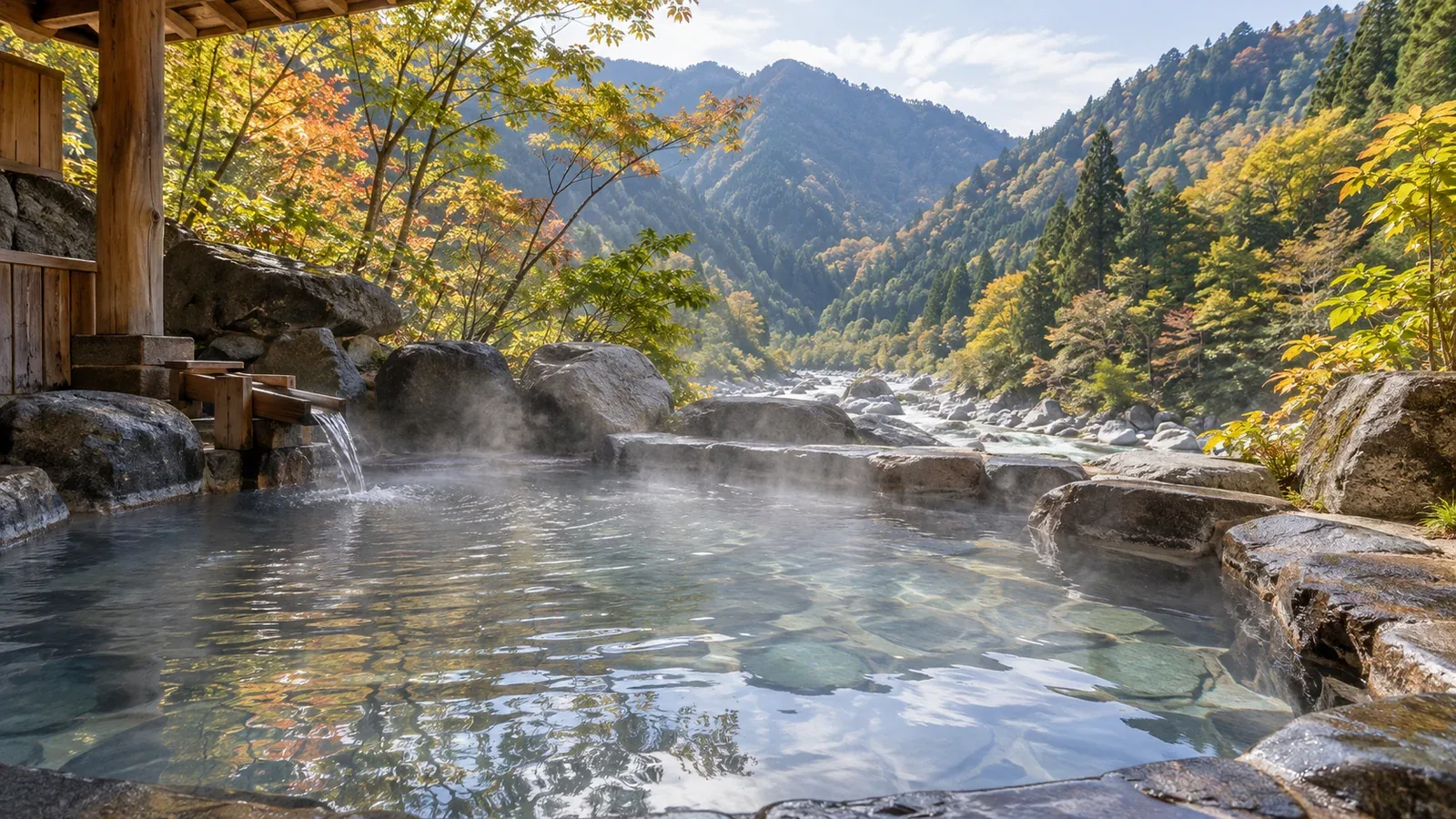
At an outdoor bath after a hike, you can sometimes see the ridge you walked through the steam. The water’s journey to the surface involves underground heat, water, and fractures in the rock.
We’ll trace how hot springs form near volcanoes and compare them with springs farther away. We’ll also cover how to walk where steam vents are visible and what to check before taking a bath after a hike.
Where does a hot spring get its heat?
Near volcanoes, magma and the rock it heats can warm groundwater. Some springs far from volcanoes use water heated deep underground.
Temperature generally rises with depth underground. The rate of increase, called the geothermal gradient, varies from place to place. In the southern Kantō Plain, for example, wells draw warm water from deep geological layers.
Some springs also contain fluids that rise from great depths. The Geological Survey of Japan links springs far from volcanoes, including Arima Onsen, to fluids that have risen from deep underground.
How water comes back to the surface
Water needs a path into the ground to reach the heat. Once warmed, it needs a route upward to emerge at the surface.
Some rain and snowmelt seep into fractures in the bedrock or through permeable layers. Near hot rock, water warms and can move in response to differences in density and groundwater pressure. Connected fractures may carry it toward the surface.
At the foot of a volcano, hot water can emerge where underground heat and water pathways coincide. The height of the mountain tells you little about where this will happen. Fractures and permeable layers also matter.
How geology shapes the water’s chemistry
Water flowing underground can pick up dissolved substances by reacting with rock, as well as gases it encounters along the way. Under Japan’s Hot Springs Act, one criterion for an onsen is a temperature of at least 25°C when collected at the source. Meeting the specified concentration for any listed substance also qualifies.
Hydrogen sulfide can give the water an egg-like smell. The color and smell alone tell you little about its chemistry or origin. Check the facility’s posted analysis for the source temperature, pH, and dissolved components.
Walking near steam vents and hot water
Where steam vents or hot water are visible, watch for volcanic gases and hot ground. Check access restrictions and stay on designated paths or boardwalks.
Steam vents and hydrogen sulfide. Volcanic gases can contain hydrogen sulfide (H₂S), which may collect in low or poorly ventilated places. It can dull your sense of smell, so a fading odor gives no assurance of safety. If your eyes or throat start to sting or you feel unwell, leave immediately for fresh air. Call emergency services if someone has trouble breathing or shows signs of altered consciousness.
Ground in geothermal areas. Ground that looks solid can have a thin crust over hot water. The crust can give way. Stay behind fences and ropes and avoid touching hot runoff.
Check the Japan Meteorological Agency for volcanic activity. Gas monitoring and trail closures vary by site, so also check notices from local authorities or the site manager.
Bathing after a hike
Before getting in, consider how much you’ve been sweating, how tired you are, and how you feel.
Japan’s Ministry of the Environment advises resting for about 30 minutes after exercise and drinking water before bathing. Rest if you’re very tired and skip the bath if you feel unwell.
The water’s temperature and composition can irritate your skin. Read the facility’s posted precautions and contraindications. If you have an ongoing medical condition, consult your doctor as needed.
For a natural spring, check local notices about temperature, hygiene, gas hazards, and whether access and bathing are allowed. Choose a site where bathing is permitted and safe use can be confirmed.
Before your next hike
If your route passes through an area with hot springs, start by checking the Japan Meteorological Agency’s volcanic information and local notices about access and closures. If you plan to stop for a bath after hiking, check opening hours and transport from the trailhead.
Sources
- Deep hot water and Arima-type fluids (Geological Survey of Japan), and how hot water emerges (U.S. National Park Service)
- Hydrogen sulfide, thermal-area safety, and volcano monitoring (U.S. National Institute for Occupational Safety and Health, U.S. National Park Service, and Japan Meteorological Agency)
- Japan’s definition of an onsen and bathing guidance (Japan Ministry of the Environment)
References and sources
- Geological Survey of Japan: Deep hot water beneath the southern Kantō Plain
- Geological Survey of Japan: The origin of deep fluids
- U.S. National Park Service: Hydrothermal features at Yellowstone
- Japan Ministry of the Environment: The definition of an onsen
- U.S. National Institute for Occupational Safety and Health: Hydrogen sulfide
- U.S. National Park Service: Safety in Yellowstone’s thermal areas
- Japan Meteorological Agency: Volcano data and information
- Japan Ministry of the Environment: Hot spring bathing guidance