
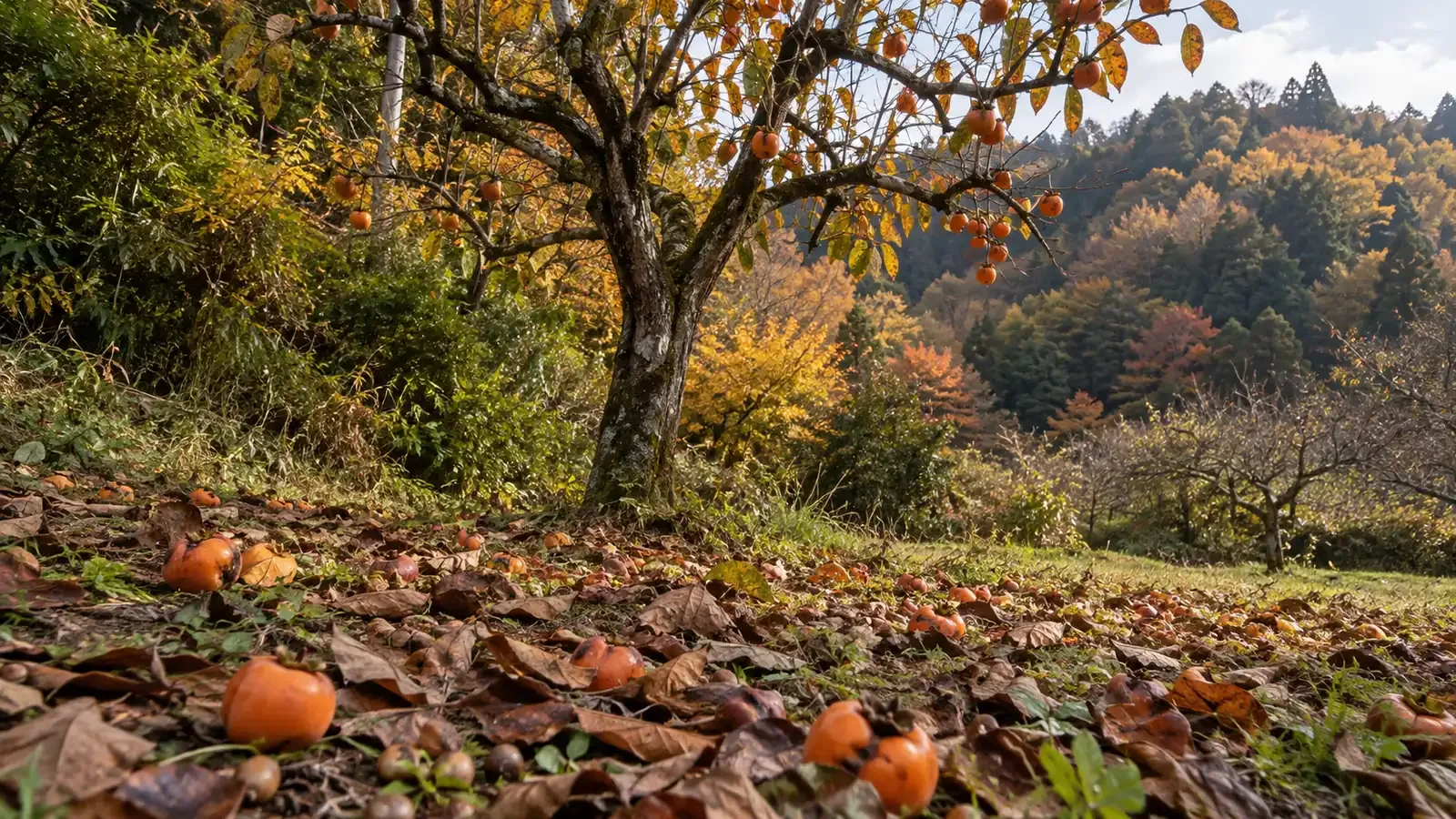
Bears can turn up around homes even in a good year for forest nuts. Japan’s Ministry of the Environment recorded 50,801 reports of Asian black bears in fiscal 2025. Bear incidents, including those involving brown bears, killed 13 people. To see why bears keep returning to communities, it helps to look at the autumn food supply, where bears live, how they reach settlements and what they find to eat there.
More than 50,000 reports in fiscal 2025
Fiscal 2025 ran from April 2025 through March 2026. The ministry counted 50,801 sighting reports, about two and a half times the previous year’s 20,513. Akita accounted for 13,592 and Iwate for 9,739. Prefectures count reports in different ways. Hokkaido does not publish a count, and the eight prefectures of Kyushu and Okinawa are outside this survey.
Incidents involving people are counted separately and include brown bears. The ministry recorded 216 incidents involving 238 people, of whom 13 died. Reports rose sharply in autumn that year, and the monthly table also shows large numbers in early summer.
In a ministry breakdown of where Asian black bear incidents occurred in fiscal 2023, roughly 30–60% took place near homes, depending on the month from September through December. Along with mountain trails, pay attention to the villages around the trailhead.
Nut crops and autumn sightings
Asian black bears eat Japanese beech nuts and mizunara oak acorns in autumn. Miyagi Prefecture observes the same trees every year at 17 beech sites and eight oak sites, rating each crop on a three-level scale. Japan’s Forestry and Forest Products Research Institute explains that when nuts are scarce, bears may range farther in search of food and be reported in more settlements across a wide area.
The nitrogen that goes into beech seeds
In beech trees studied by the institute and its partners, the carbon in the seeds came from that year’s photosynthesis. In a heavy crop year, the trees also allocated large amounts of nitrogen to seeds. The nitrogen used for seed production can limit how many flower buds form for the following year.
Crops vary by tree species and region. In October 2026 the Tohoku Regional Forest Office reported good beech crops in national forests in Iwate, Miyagi and Yamagata, and average crops in Aomori and Akita. The ministry’s prefecture-by-prefecture survey notes that individual bears may still visit settlements with food attractants in a good crop year.
The term “forest nuts” covers different species, including beech nuts and mizunara acorns. When reading a crop report, check which species and area were surveyed.
Where bears have spread and how rural land has changed
Comparing the ministry’s fiscal 2003 and 2018 surveys, the number of occupied five-kilometre grid cells grew to 2.70 times the earlier count in Chugoku, 1.69 times in Kinki, 1.34 times in Tohoku and 1.26 times in Kanto. In Shikoku it fell to 0.88 times the earlier count. Several surveys around Mount Tsurugi on Shikoku documented 27 individual bears in fiscal 2025. That is a count of identified bears, separate from any estimate of the full population.
The ministry draws attention to expansion at lower elevations. Miyagi estimated 2,783 Asian black bears for fiscal 2024, with a 95% confidence interval of 1,898–4,019. Check the uncertainty and survey methods when comparing population estimates across places.
Between forest and village, untended fields and thickets can provide cover for bears moving through. Unharvested fruit and crops left behind can offer food along the way. Bears and people come into closer contact where the expansion of bear range meets changes in land use around settlements.
Why bears return after finding food near homes
A bear that learns it can find persimmons, food scraps or animal feed near homes may return to the same place. Becoming accustomed to people and learning that a settlement offers food are different processes, both relevant to prevention. Removing food attractants and improving visibility around dense brush reduce reasons and ways for bears to enter.
An amendment to Japan’s wildlife management law, effective in September 2025, created a system under which municipalities can arrange emergency shooting when bears or certain other animals enter inhabited areas, provided conditions such as resident safety are met. In December 2025 the Nature Conservation Society of Japan called for emergency response in inhabited areas alongside scientific population management, habitat zoning and care of the satoyama landscape around villages.
Check sightings along the trail and near the trailhead
When nuts are scarce in autumn, bears may travel farther for food. Over time, their range, land use and access to food around villages also matter. For decisions on the day, use current alerts from local authorities and land managers.
Before leaving, check current information and closures from local authorities or the visitor centre. Consider changing routes or postponing if there have been repeated sightings nearby. In bear habitat, avoid dawn and dusk. In places with poor visibility, make your presence known early with your voice or a bell, and take food scraps home. Check current alerts for parking areas and villages you’ll pass through on your way back.
If you see a bear, keep your distance and avoid approaching for a closer look or a photograph. From a safe place, tell the local authority or land manager the time, location, number of bears and direction of travel. Residents and the next visitors can use that information to make decisions.
References and sources
- Ministry of the Environment: Bear sighting reports (preliminary figures)
- Ministry of the Environment: Bear incidents involving people
- Ministry of the Environment: Bear distribution and incidents
- Miyagi Prefecture: Nut crop surveys for predicting black bear sightings
- Forestry and Forest Products Research Institute: Nitrogen and variation in beech seed crops
- Tohoku Regional Forest Office: Beech seed crop results for fiscal 2026
- Ministry of the Environment: Fiscal 2026 nut crop surveys (preliminary results)
- Shikoku Regional Forest Office and partners: Black bear survey in the Shikoku Mountains, fiscal 2025
- Miyagi Prefecture: Evaluation of the fiscal 2024 black bear management plan
- Ministry of the Environment: Manual for responding to bear sightings
- Ministry of the Environment: Municipal emergency shooting system
- Nature Conservation Society of Japan: The rise in bear incidents in 2025 and how to respond
- Ministry of the Environment: What to know about bears before visiting a national park