
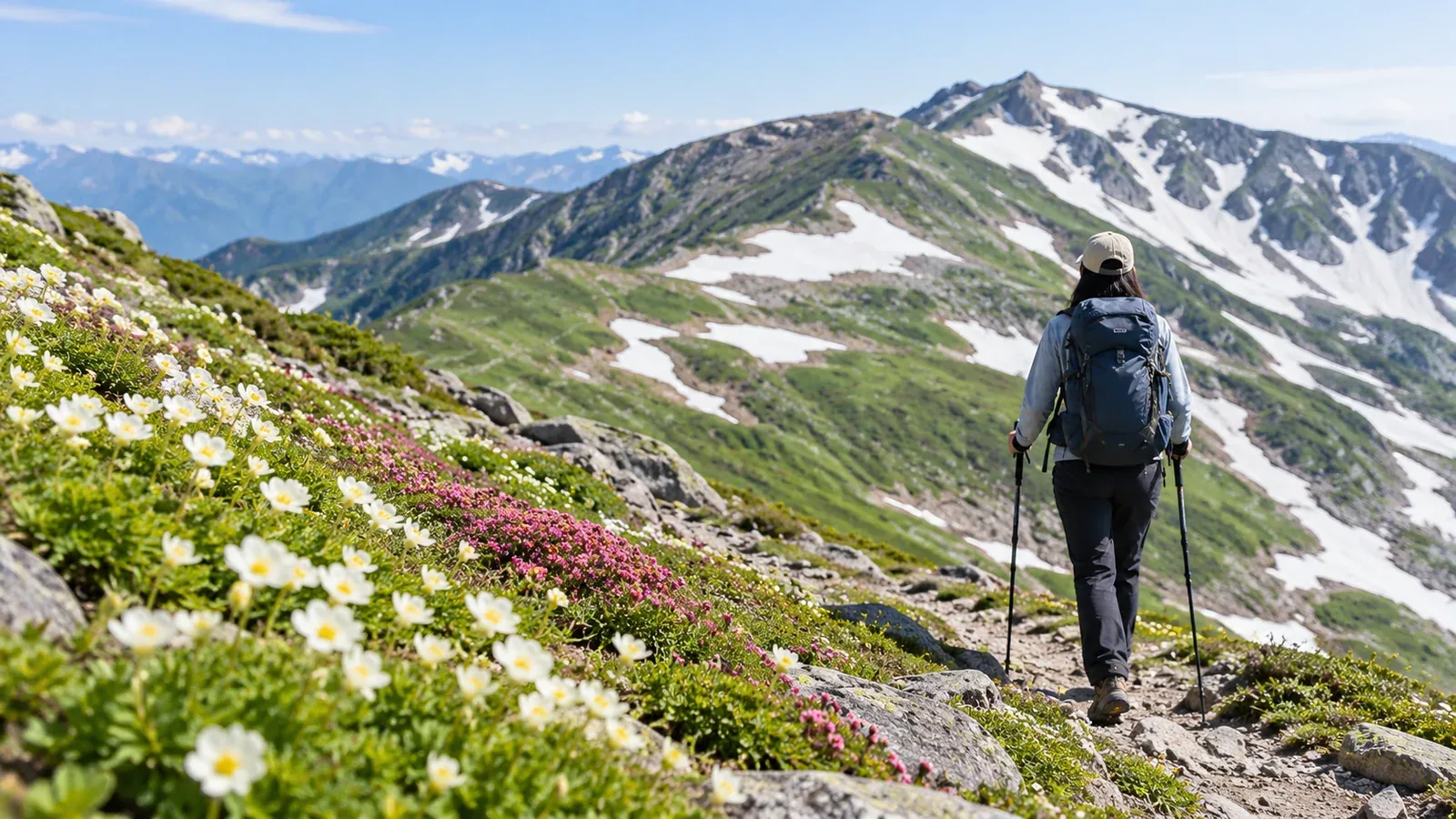
Visit the same mountain in the same month and the snow may lie in different places or different flowers may be in bloom. Long-term observations help researchers understand how snow and vegetation change amid that year-to-year variation.
We’ll look at snow data from the Japan Meteorological Agency and alpine plant surveys in Daisetsuzan and elsewhere. We’ll also cover where to check snow and flowering conditions before your next hike.
How snow cover is changing
Climate Change in Japan 2025, published by Japan’s Ministry of Education and Meteorological Agency, reports declining annual maximum snow depths since 1962 when long-term stations on the Sea of Japan side are grouped by region. About 40 years of AMeDAS observations from higher-elevation sites across Japan, beginning in 1982, show no clear trend across that period.
Annual maximum snow depth is the deepest the snow gets during a winter. It’s a separate measure from when snow melts in spring or how much remains on a particular trail. Brief periods of heavy snowfall can still occur in regions with a long-term decline.
A study of very small glaciers in the northern Japanese Alps found years when snow accumulated across entire glaciers and low-snow years when they lost snow and ice across their surfaces. Check current access information for trails that cross snow gullies. Nagano Prefecture, for example, announced a closure of the Hakuba Daisekkei route starting August 31, 2026.
Changes in flowering and vegetation
Japan’s Monitoring Sites 1000 program tracks ground surface temperatures, snowmelt, flowering, and vegetation in alpine areas. On the same mountain, flowering can differ between snowbeds, where snow lingers, and wind-exposed areas, where little snow accumulates.
Surveys have found plants that respond to years with warmer ground or earlier snowmelt.
- Some species flower earlier. In a survey comparing six species that grow in both snowbeds and wind-exposed areas, four flowered earlier in years when the ground surface was warmer. One example is alpine cinquefoil.
- The period when flowers are visible can change. Research by Hokkaido University in Daisetsuzan found that changes in temperature and snowmelt could shorten the flowering period of the plant community as a whole.
- Plant distributions also change. Surveys track growth in the branches of Siberian dwarf pine and which plants cover which areas. Researchers examine the influence of temperature and snow, as well as other factors such as deer browsing, at each site.
In snowbeds, flowering can begin later in years with late snowmelt. Record the slope’s aspect, remaining snow, and the date alongside the mountain name and elevation to make records from different years easier to compare.
Using snow and flower reports to plan a hike
Use a map to identify where snow is likely to linger, then compare it with recent local reports. For flowers, check when and where the observations were made.
Planning around lingering snow. If the route crosses a snow gully, a shaded stream valley, or a slope, check trail notices and snow reports from huts or land managers just before setting out.
Choosing gear and a route. Choose equipment based on snow and ice, slope steepness, and the terrain you could fall onto. If you lack the skills to use the required equipment or can’t verify conditions, choose another route or date.
Finding out what’s in bloom. Check dates, locations, and elevations in photos or field reports from huts and visitor centers. On the same mountain, a windy ridge and a hollow where snow lingers can flower at different times.
Observing from the trail. Stay on marked paths and boardwalks, even when taking photographs. Keep yourself and your tripod off the plants and follow access restrictions.
Why conditions change differently on the same mountain
Air temperature helps determine whether precipitation falls as rain or snow. Once snow settles, wind, sunlight, and terrain influence where it accumulates and when it melts.
One factor is elevation and the character of the slope. Even at the same elevation, ground can emerge at different times on a ridge where wind strips away snow and in a sheltered hollow where it drifts.
Another is how individual plant species respond. Some flower soon after snow melts. Others wait until temperature or other conditions are right. When flowering shifts, it can change how much it overlaps with the activity of pollinating insects.
Long-term trends and conditions on the day
Long-term records help explain changes in snow and flowers across a region. A single heavy snowfall or early bloom on one slope cannot establish a trend for the entire area.
For your next hike, find out whether any section is closed or still covered in snow or ice, and how the weather is expected to change. Past trip reports can point you to places worth checking.
Before your next hike
Choose a gully or slope on your route where snow is likely to linger. Check the land manager’s access notices and the weather forecast before leaving. If you see flowers, record the date, location, and any nearby snow from the trail so you can compare next year.
Sources
- Observed and projected changes in snow in Japan (Japan Ministry of Education and Japan Meteorological Agency)
- Monitoring flowering, snowmelt, and vegetation in alpine areas (Biodiversity Center of Japan)
- Research on flowering periods in Daisetsuzan (Hokkaido University)
- Very small glaciers in the northern Japanese Alps (Arie and colleagues)
- Hakuba Daisekkei access notices and Daisetsuzan visitor guidelines (Nagano Prefecture and Japan Ministry of the Environment)
References and sources
- Japan Ministry of Education and Japan Meteorological Agency: Climate Change in Japan 2025, snow
- Biodiversity Center of Japan: Monitoring Sites 1000, alpine ecosystems
- Biodiversity Center of Japan: Summary of the alpine ecosystem survey
- Hokkaido University: Research on flowering periods in Daisetsuzan’s alpine plant communities
- Arie and colleagues: Characteristics of mountain glaciers in the northern Japanese Alps
- Nagano Prefecture: Hakuba Daisekkei route closure from August 31, 2026
- Japan Ministry of the Environment: Visitor guidelines for Daisetsuzan National Park