
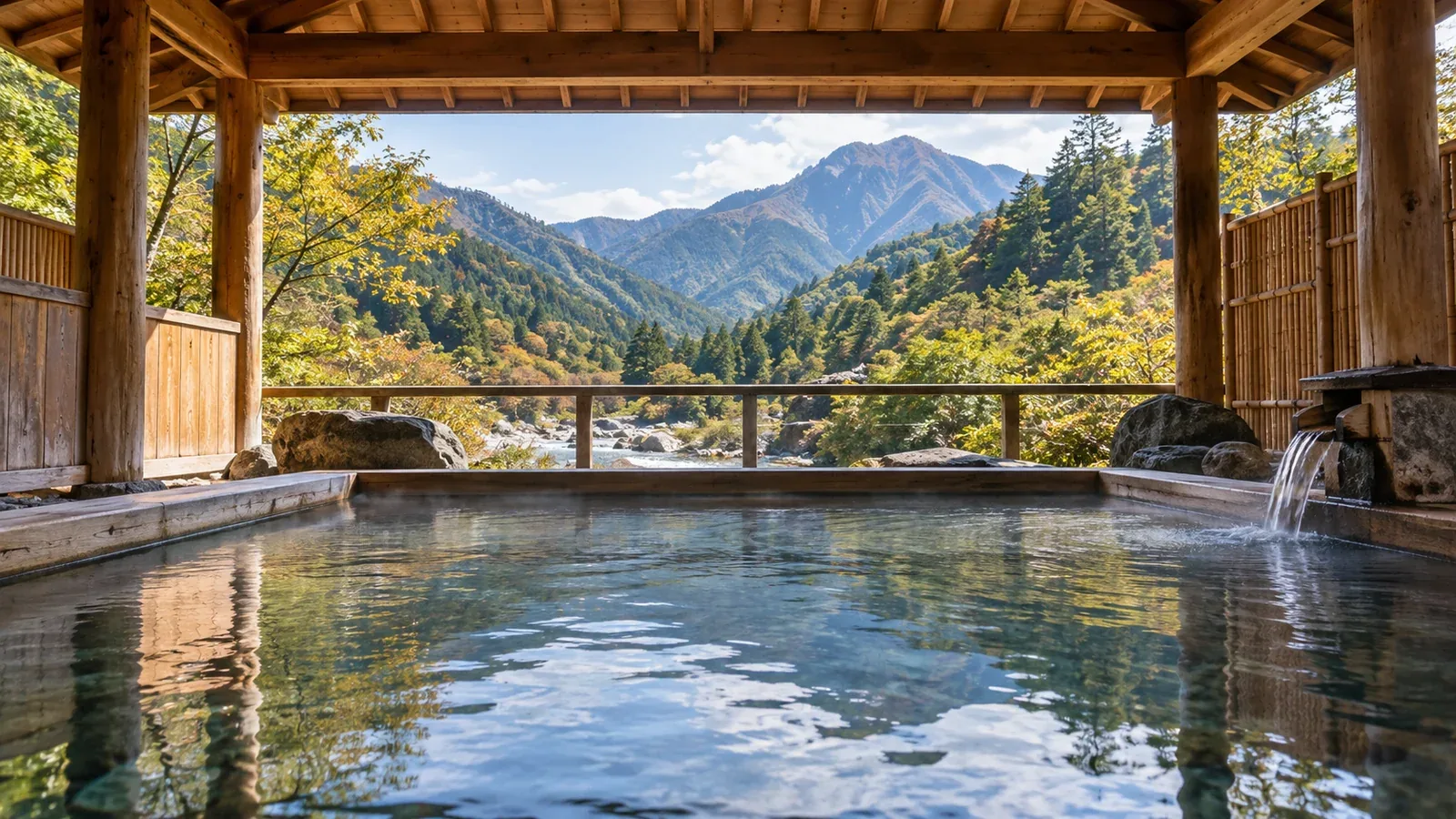
After a hike in Japan, a nearby onsen, or hot spring bath, can be easy to find on a map. Figuring out whether you can go in and what to do once you're inside can be harder. Some visitors turn around at the door. Others find out about the rules only after getting into the bath.
Here's what visitors are most likely to encounter and how to prepare. The same pointers can help local hiking partners or mountain hut staff explain what to expect.
Why a first visit can feel unfamiliar
Many visitors are used to spas where people wear swimsuits. At a typical Japanese onsen, people bathe without swimwear and use separate bathing areas for men and women. Both customs can take some getting used to.
Signs in Japanese can leave a visitor guessing. The distinction between the washing area and the tub matters, as do rinsing before getting in and keeping towels out of the bathwater. Someone who grew up using onsen may know these steps by heart. A first-time visitor may have no way to infer them.
Some baths restrict entry for people with tattoos. Policies vary, and some facilities have changed their rules as more overseas visitors come to Japan. Ask before visiting, even if the entrance has no notice in English.
Five things to know before bathing
If you're bringing someone to their first onsen, go over these steps before entering.
- Undress in the changing room before entering the bathing area. Use a locker for valuables. Depending on the facility, you may need to carry the locker key or return it to the attendant.
- Rinse off first. Use the shower or a basin at the washing station. Rinsing with warm water removes surface dirt and lets you adjust to the temperature before you get into the tub.
- Wash in the washing area before soaking. Wash off mud, sweat, and sunscreen from the hike. Some facilities supply shampoo and body wash, and others expect you to bring your own.
- Keep your towel out of the bathwater. Leave it beside the tub or rest it on your head.
- Keep the first soak short. Rest for about half an hour after exercise and drink water before and after bathing. Japan's Ministry of the Environment suggests starting with about three to ten minutes, depending on the water temperature. Get out slowly if you feel light-headed and ask for help if you need it.
How to check the tattoo policy
Facilities set their own rules. Some bar all tattoos. Others accept them if they are out of sight or covered with a patch, or let guests use a private bath. Check in advance to avoid arriving and being turned away.
There are three ways to find out.
- Check the facility's official website or call. Some baths that serve English-speaking guests have an inquiry form.
- Ask through a booking service or tourist information center. A tourist office near the trailhead may have someone who speaks English.
- Search for “tattoo-friendly onsen” in the area. Search results can point you to possible options. Confirm with the facility directly in case the policy has changed.
How to make the instructions easier to follow
Some facilities provide instructions in English, Chinese, or Korean. Others post them only in Japanese. If a Japanese-speaking companion is with you, asking at the front desk can make it easier to get the right instructions.
Many baths have diagrams. Pointing to the steps in order helps even when you can't read the signs. A phone translation app can also help with written notices. Use it to read signs where phones and cameras are permitted.
When to skip the hot spring after a hike
A soak can feel relaxing after a hike. How you feel that day matters. Use the following points as general guidance and ask a clinician if you need advice about your own health.
- Severe pain in the ankle or knee can make it easier to fall while stepping into or out of the tub.
- A severe headache or nausea after hiking at altitude can be a sign of altitude illness. Skip the hot bath while you feel unwell and seek medical advice if symptoms are severe or persist.
- Bathing after drinking alcohol can increase the risk of dehydration or feeling faint. Skip the bath if you have been drinking, including at a hut after hiking.
Some facilities prohibit bathing after drinking. Check the posted rules before entering.
What to do next
Check local tourism websites and information boards at roadside stations when looking for an onsen to visit after a hike. Opening hours and tattoo policies can change, so confirm directly before you go. When planning with hikers from overseas, use Nordwand's Base Camp or interest-based communities to find companions and share practical details ahead of time.
References
- Japan Tourism Agency, guidelines on improving visitor services for international travelers
- Ministry of the Environment, information on the Hot Springs Act
- Foreign-language guides published by prefectural hot spring and tourism offices