
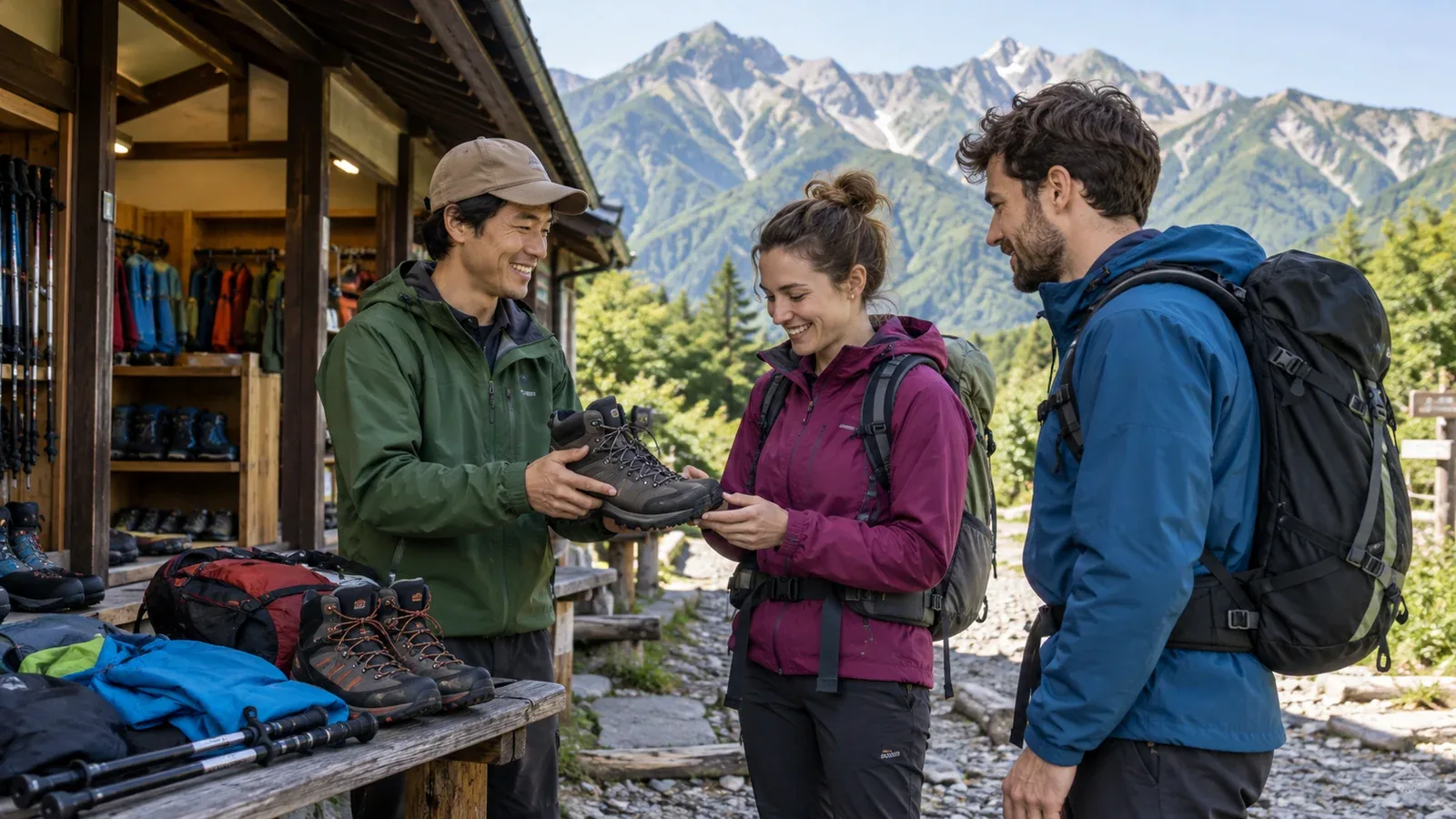
If you're visiting Japan to hike, one of the first things to work out is where to get your gear. Hiking boots and rainwear take up room in a suitcase, and buying a whole kit in Japan costs time and money. Even when you know renting is possible, it can be hard to find out what's available, whether you can get help in English, and how far in advance to book.
This guide covers the main ways to rent equipment, what each option offers, and how to make arrangements. It can also help you advise an overseas friend or hiking partner.
When renting makes sense
Rental services have developed in response to demand around popular mountains such as Mount Fuji. The increase in international visitors has also brought more attention to safe access and discussions about requiring suitable equipment. Rules vary by area, so check the current requirements for the route you're planning.
Renting saves luggage space, lets you choose equipment for the area and weather, and saves you from taking it home afterward. Fit still matters. Rental boots may be hard to match to your feet, which is one reason to bring your own pair if you can.
Where to look for rentals
Specialist shops near the trailhead
Look for dedicated rental shops around the Yoshida and Fujinomiya approaches to Mount Fuji. If you're going through the Kamikochi bus terminal or an access point on the Tateyama Kurobe Alpine Route, check whether an outfitter serves that area or you need to collect your gear before you arrive. Some shops have English-speaking staff or multilingual signs. Confirm opening days, stock, and language support on the operator's official site or booking form.
The advantage of a local shop is that staff may know the area's weather and terrain well enough to suggest a suitable combination of gear. They may also be able to discuss the expected ridge temperature or whether rain is forecast.
Online services that deliver equipment
Some rental operators let you book online and arrange delivery to your accommodation. Some also accept returns through a convenience store or have an English booking page. Check which pickup and return options the provider supports. Sorting out reservations and delivery a few days before the hike can save time once you're there.
Check how and when you need to return everything. Moving on to another destination with borrowed equipment can make it harder to meet a deadline or get to the return location. Read the terms when you book, and use the provider's website for current fees and return options.
Rentals from mountain huts
Some huts lend out items such as warm layers, rainwear, or gaiters. Stock is limited, and the service may mainly be there to help hikers caught out by a change in the weather. Treat it as backup and secure the equipment your hike requires before you arrive at the trailhead.
Outdoor shops in major cities
Some outfitters in Tokyo, Osaka, Nagoya, and other major cities offer rentals. If your trip starts in a city, you may be able to collect gear there and return it to the same store after your hike. Ask by email or through a booking form whether staff can help in English.
What to rent and what to bring
It's possible to rent a full kit, but some items are easier to borrow than others. Use these categories as a starting point.
Good candidates for renting
- Waterproof jacket and trousers
- Fleece or insulated down jacket
- Helmet, where required for rocky ridges or a particular route
- Gaiters
- Trekking poles
- Hiking backpack
Consider bringing or buying these
- Hiking boots. Fit varies from person to person, and a poor fit can cause blisters or make you more likely to fall. Bring your own boots if you can. If that isn't practical, try on the rental boots and walk in them before committing.
- Base layers and socks made from wool or moisture-wicking fabric. For hygiene, bring your own or buy them locally.
How to reserve and check your equipment
- Choose the date, area, and difficulty. These determine what you'll need. A summer hike on Fuji and an autumn hike in the Northern Japanese Alps can call for different levels of insulation.
- Check forecasts and access rules. Use Japan Meteorological Agency information for the weather and official local authority or park management information for closures and entry requirements.
- Choose a rental provider. Take your trailhead, travel plans, and return arrangements into account.
- Ask about English support. Use the operator's official site or inquiry form. Translation tools can help, but double-check anything about sizing or returns.
- Aim to book at least three to five days ahead. Stock can go early during busy periods, including July and August on Fuji and the October foliage season.
- Try on and inspect your gear at pickup. Walk in the boots, put on the pack, and adjust the straps. Tell staff right away if something is damaged or doesn't fit.
- Check the return terms in writing. Confirm the deadline, what happens if gear is dirty or damaged, and whether you can extend the rental.
Safety checks that still matter
Make sure you know how to use the gear before you leave the shop. Check how to put on the rainwear, adjust your trekking poles, and fasten the helmet strap. Ask staff to show you anything you're unsure about.
Many rental packages leave out essentials such as a hiking map, compass, headlamp, food, water, or a first-aid kit. Use a checklist to make sure you've packed them. Mountain rescue can involve charges in some places or circumstances, including when private services are involved. Check the local arrangements and what your hiking insurance covers before you set out.
What to do next
Set the date, area, and gear list, then contact a shop near the trailhead or in a city on your itinerary. Nordwand's partner listings can help you find outdoor shops and mountain huts. If you're hiring a qualified guide, ask about gear as part of the planning conversation.
References
- Japan Meteorological Agency, mountain weather information
- National Police Agency of Japan, overview of mountain incidents
- Official local authority and management office notices, including Mount Fuji access restrictions and conservation contributions
- Japan Tourism Agency, safety information for international hikers