
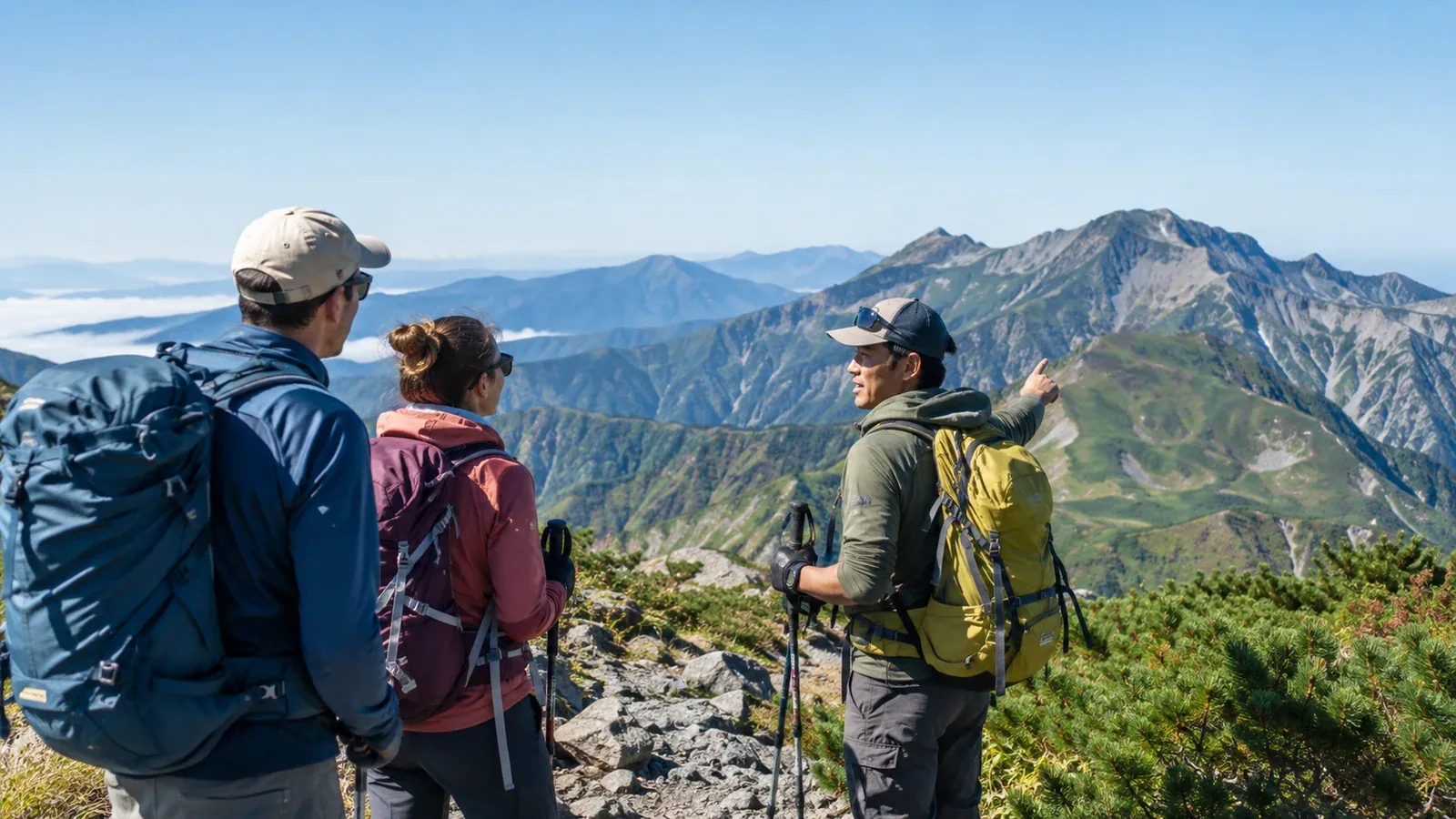
As more visitors hike in Japan, hiking groups are fielding more questions about hiring a guide or offering guided trips. Two questions often come up. Does a mountain guide need a guide-interpreter credential to take overseas visitors? What mountain routes can a licensed guide-interpreter lead? The questions involve two different qualification systems.
This guide explains the role of each credential and the combination of skills needed to guide visitors from abroad. Use it to decide what to ask about before hiring a guide or planning to lead a group.
What a licensed guide-interpreter does
A National Government Licensed Guide Interpreter is a qualified tourism professional who can guide visitors in another language. The Japan Tourism Agency says the amended Guide Interpreter Act took effect on January 4, 2018. It opened paid foreign-language tourism guiding to people without the credential. The national and regional licensed titles and similar titles remain reserved for people entitled to use them.
The amendment was intended to make it easier for destinations with too few guides to meet demand. It also raised questions about how to maintain the quality of guiding. The change concerns tourism and language services, so anyone leading hikers still needs to assess what the route and conditions require.
Mountain guide certification
The Japan Mountain Guides Association (JMGA) certifies guides by the work they are qualified to do. Its 2026 rules list Hiking Guide Stages I through III, with different scopes for terrain and seasons. Its Mountain Guide qualifications are a separate category with Stages I and II. Technical rock climbing calls for the appropriate specialist qualification. The association publishes written and practical assessment requirements for each category.
Some huts or mountain areas may ask for proof of qualification or require a notification when a guide brings a group. Ropeway operators and trail managers may have their own rules for guided groups. Check with the manager, municipality, or hut for the route you plan to use.
Mountain guide certification demonstrates competence in guiding in particular terrain and conditions. The guide-interpreter credential demonstrates competence in providing tourism guidance in another language. Check each separately when a trip calls for both.
How the two roles can work together
Paid guiding for hikers from abroad calls for mountain skills, safety management, and the ability to communicate in the group's language. Guides who can handle all of these may be difficult to find for a particular route or season.
There are three common arrangements to consider.
- A mountain guide who can work in the group's language. This arrangement is often in demand and can be hard to find. Paid foreign-language tourism guiding does not require an interpreter credential under the amended act. The credential can give clients an additional way to assess a guide's language and tourism skills.
- A Japanese-speaking mountain guide working with a guide-interpreter or fluent staff member. This gives the team distinct roles for mountain safety and communication. It can add cost and take more coordination.
- A fluent guide without mountain guide certification. The 2018 change allows paid foreign-language tourism guiding without a guide-interpreter credential. Anyone leading a group still takes responsibility for safety, and local conditions or rules may call for particular qualifications. Consider the legal and safety risks of leading technical routes without appropriate mountain training and certification.
Choose an arrangement that fits the route's difficulty, the season, and the size of the group.
Practical issues when guiding visitors from abroad
Language is one consideration. Plan how to handle these practical issues as well.
- Emergency communication. You may need to arrange rescue or talk to medical providers in another language. Check what language support the emergency contacts for your route can provide.
- Climbing plans and entry procedures. Local ordinances require a climbing plan on some routes. Guides should explain the applicable filing and entry procedures clearly.
- Equipment expectations. Hikers may be used to different gear and conditions. Explain the route's terrain and the weather you expect in Japan before the trip.
- Mountain insurance. Whether a visitor's policy covers mountain rescue in Japan depends on the terms. Ask participants to check with their insurers before the trip.
These arrangements take knowledge of the terrain, local rules, and how to communicate them to the group.
What to check if you are hiring or working as a guide
If you are hiring a guide, the JMGA website lists active guides and their qualifications. Ask directly whether a guide can work in your language and has the right credentials for your route. You can also use Nordwand to request a certified guide.
If you want to guide hikers from abroad, check whether your mountain qualifications cover the terrain and difficulty you intend to guide. Leading paid trips on technical routes without appropriate certification can carry legal and safety risks. If your main skill is language, consider working with a qualified mountain guide. A guide-interpreter credential is one way to demonstrate your experience in foreign-language tourism.
What to do next
If you want to guide, look up the JMGA certification requirements and find the entry criteria for the category you intend to pursue. If you are looking for a guide who speaks your language, try Nordwand's certified guide request feature or contact a regional guide association. Before finalizing the trip, confirm the latest route restrictions and filing requirements with the responsible authority, hut, or trail manager.
Further reading
- Japan Tourism Agency guidance on the Guide Interpreter Act
- Japan Mountain Guides Association certification system
- National Police Agency and prefectural police mountain incident statistics