
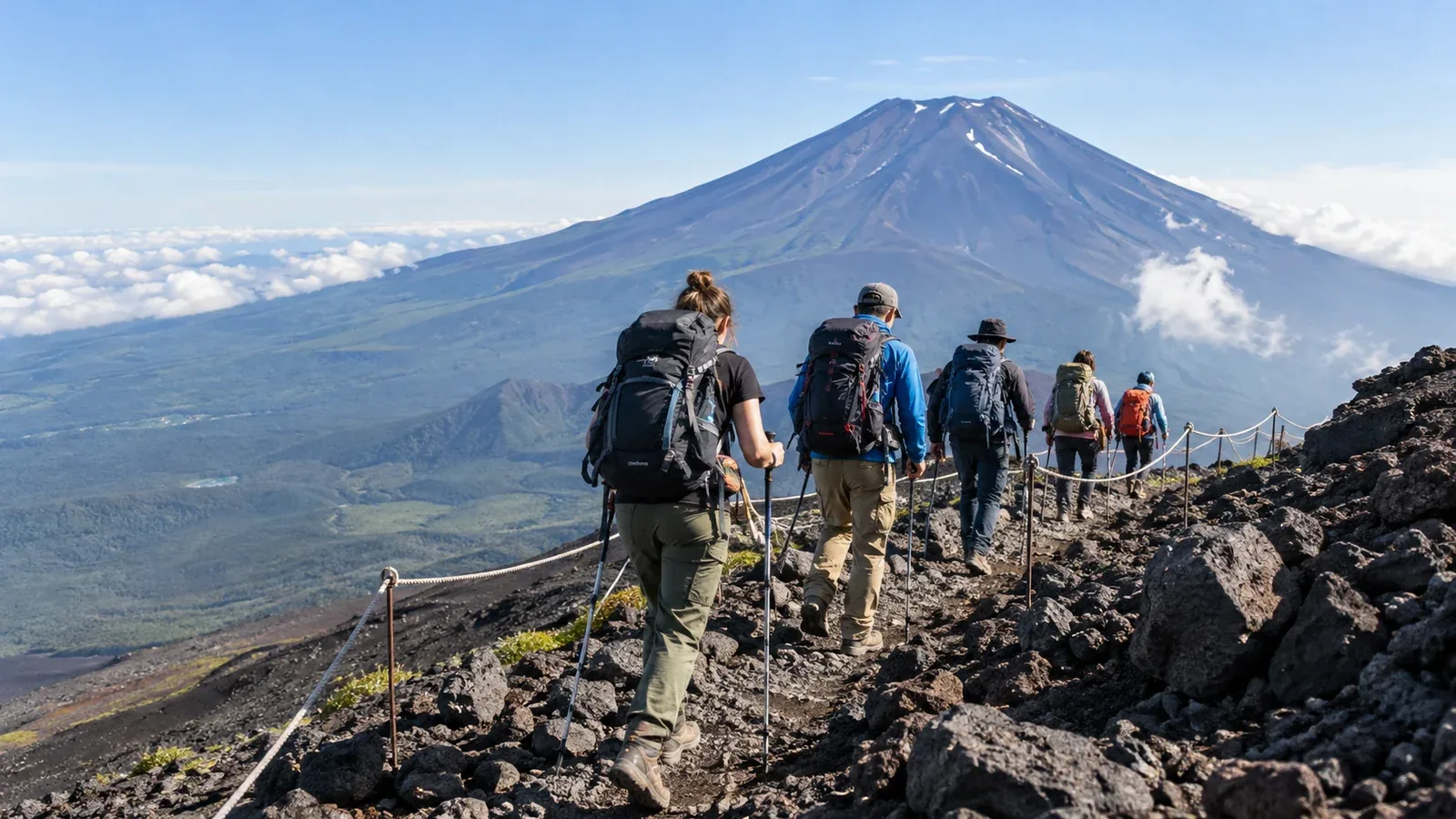
As travel to Japan has grown, so has the number of international visitors climbing Mount Fuji. Reports from Yamanashi and Shizuoka prefectures and news coverage describe visitors from abroad as a significant part of the summer climbing season. Sharing the mountain with people who may have different languages and hiking experience has become a practical question for trail managers and other climbers.
This article looks at what brings visitors to Fuji and the challenges that come with a busy climbing season: safety, congestion, and getting the rules across. It also looks at what everyone sharing the trail can do.
Why Mount Fuji draws climbers from around the world
Several factors make Mount Fuji appealing to visitors, alongside its fame as a sightseeing destination.
World Heritage recognition. Since UNESCO added Fuji to the World Heritage List as a cultural site in 2013, it has appeared widely in international travel media and online videos. The idea of climbing Fuji once in a lifetime has reached people who have never climbed a mountain before.
Access from major cities. Travelers can build a trip to Fuji into an itinerary from cities such as Tokyo or Osaka, with timing and overnight stays depending on where they start and which trail they choose. Maintained trails and mountain huts can make the summit appear easy to reach. Climbers still need equipment and preparation suited to a high mountain.
The appeal of seeing sunrise. Online posts often show climbers setting out in the dark to watch the sun rise. For some visitors, that experience is part of the reason to climb Fuji. Overnight and early-morning access is subject to the rules for the chosen trail.
Safety information does not reach everyone equally
People arrive with very different ideas about how demanding the climb will be. That gap in preparation becomes more visible as more people visit.
At 3,776 m, Mount Fuji presents risks such as altitude illness, hypothermia, and rockfall. Someone who plans the ascent as another sightseeing stop can overlook the gear, food, and physical preparation it requires.
Trail staff and local authorities have reported problems such as these.
- Climbers arriving in sneakers or light clothing.
- Carrying too little water or food.
- Continuing upward despite signs of altitude illness or struggling to decide when to descend.
- Running out of energy on an overnight ascent and having to stop outside a mountain hut. In Japan, pushing through the night without a planned rest is often called dangan tozan, or bullet climbing.
These problems can affect any climber. Language barriers can make it harder for hut staff and trail patrols to get a warning across. Yamanashi and Shizuoka provide multilingual notices at trailheads. Checking official guidance in advance gives climbers time to prepare and ask questions before they arrive.
What climbers can do. Yamanashi and Shizuoka publish guidance on their websites and on the official Mount Fuji climbing site. Information is available in languages including English, Chinese, and Korean. Share it with everyone in your group before the climb.
Congestion and safety on the trails
Peak-season crowds can be heavy, especially on the Yoshida Trail. When more climbers use the trail at the same time, bottlenecks, rockfall, and full mountain huts become harder to manage.
Yamanashi introduced a gate at the Yoshida Trail’s Fifth Station in 2024 and began limiting access during specified hours. The measures aim to curb bullet climbing and spread traffic more evenly. The hours, conditions, and exemptions can change by season. Confirm the latest requirements with Yamanashi Prefecture or the official trailhead information.
Passing other climbers and bunching up in narrow sections can dislodge stones. On crowded sections, stay aware of people above and below you and leave space for safe passage.
Making rules and trail etiquette clear
Before climbing, check the applicable entry charges, carry out your trash, and stay out of protected vegetation areas. Fee and registration requirements depend on the trail and season.
Trailhead leaflets, multilingual signs, and reminders from hut staff help visitors understand the rules. People can still miss an instruction if they only encounter it after arriving. Making official information easier to find before the trip remains important.
Social media and video guides can repeat old or exaggerated information. Claims that climbers can skip a fee or avoid restrictions by arriving at night can quickly become outdated or misleading. Use official trail information as your starting point.
Sharing the mountain
Many international visitors treat Mount Fuji with respect and follow local rules. Preparation, access to reliable information, and an understanding of the climb matter for everyone, including hikers from Japan.
Here are a few ways to help when you are sharing the trail.
- Share official information. If English, Chinese, or Korean leaflets are available at the trailhead, offer one to someone who appears to need help.
- Check on someone who is struggling. A simple “Are you OK?” can help if someone looks unwell or lost.
- Keep yourself safe. Help others only from a position where you can do so safely.
Even without a shared language, pointing to a map, a sign, or a place to stop can help you work out what someone needs.
Before you go
Check the official climbing site and the relevant prefecture for current access restrictions, charges, and trail conditions. Share the English-language climbing guide in advance if anyone in your group needs it. Nordwand can help you find hiking partners or request a certified guide if you are planning your first trip to Fuji.
References
- Yamanashi and Shizuoka prefectures, official Mount Fuji climbing information
- Official Website for Mt. Fuji Climbing, Fujisan World Heritage Council
- National Police Agency, Overview of Mountain Incidents
- Japan Tourism Agency, international visitor statistics