
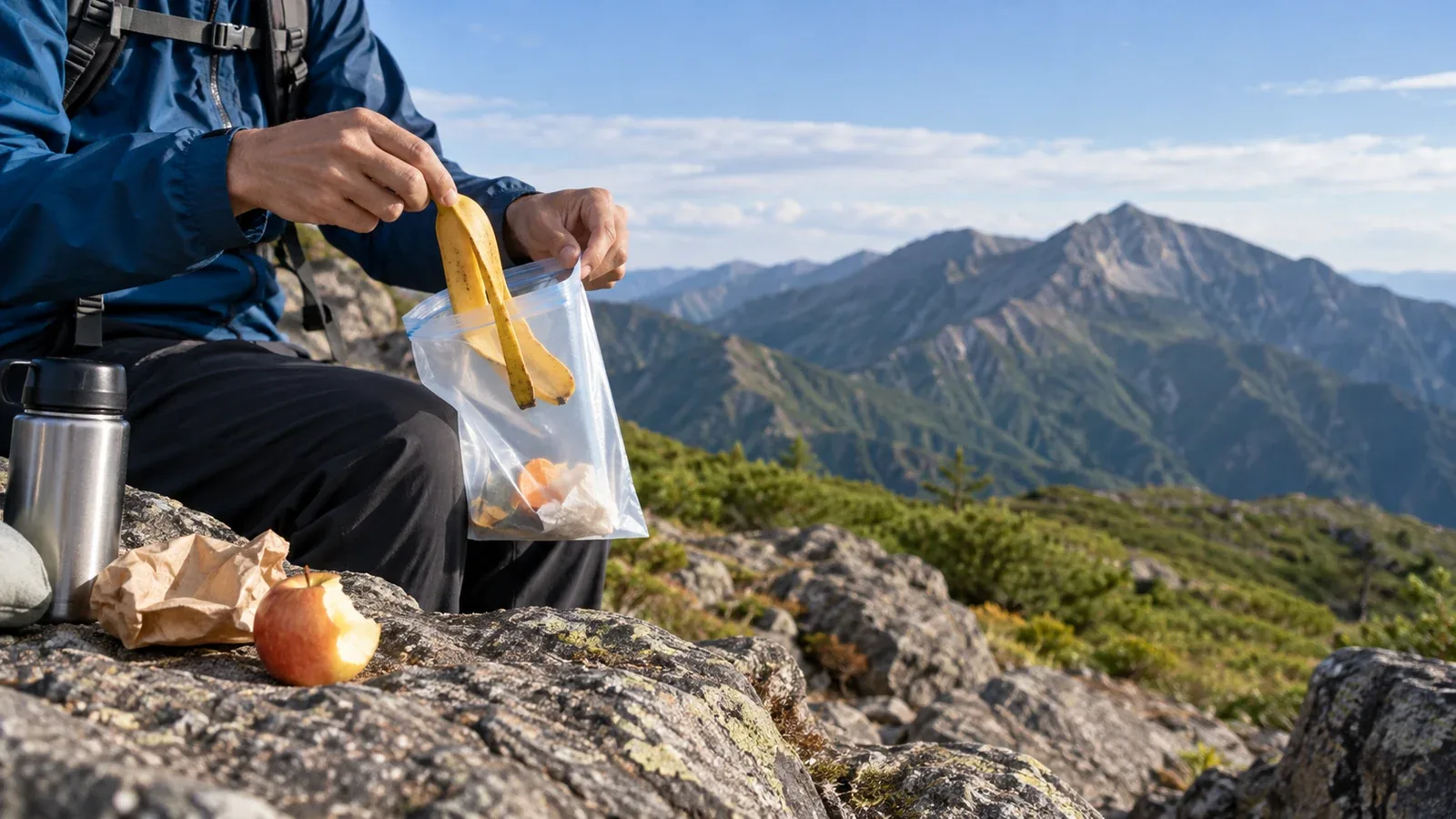
You may have wondered whether it’s fine to leave a banana peel behind because it will rot. Even if you always bring your wrappers home, fruit peels and nut shells can seem different. They’re natural, so what’s the harm?
Pack out fruit peels and cores just as you would wrappers. Here’s what to take home, why it matters for wildlife and how to make it easy on the trail.
Why “it will decompose” isn’t enough
How quickly peels and shells break down depends on the material, temperature and moisture. In cold, dry conditions, scraps can break down slowly and remain beside the trail for a long time.
Scraps may contain seeds that weren’t present at the site. Whether they sprout depends on the seed and its surroundings. Nagano Prefecture asks visitors to keep seeds out of alpine areas and to take home all food brought into natural parks.
How food scraps affect wildlife
The smell of leftovers and peels attracts wild animals. If a bear finds food people have left near a trail, it may return to that spot repeatedly.
Repeated visits raise the chance of an encounter and can lead to trail closures. Keep food away from wildlife and bag peels and leftovers to carry home. Check the rules for your destination with the local authorities or park office.
Food scraps to pack out
Take the following items home even if they seem natural enough to leave behind.
- Fruit peels and stems, such as banana peels, mandarin rinds and grape stems
- Fruit seeds, pits and cores, such as apple cores and peach pits
- Nut shells, such as peanut and walnut shells
- Hard-boiled egg shells
- Used tea leaves and coffee grounds
- Pits from umeboshi, Japanese pickled plums
Small shells and seeds are easy to drop while you eat. When you’ve finished, check where you sat and look around your feet.
How to pack out scraps without mess
It’s easy to worry about smells or stains in your pack. A little preparation can help.
Use two bags if needed. Put wet or strong-smelling scraps in a resealable bag and close it. If you’re worried it might leak, add a second bag. Have the bag ready before you peel your fruit so you can put the scraps away straight away.
Keep a bag with your trail snacks. Put an empty resealable bag in your food pouch. You can stow scraps as soon as you make them without opening your whole pack.
Bag wet scraps too. Keep juice from squeezing peels and any rinse water off the ground. Put wet scraps straight into a sealable bag or container.
Dispose of rubbish after the hike. Follow the sorting rules where you dispose of it. If you see a bin at the trailhead or a hut, check who may use it and what goes in it.
Choose snacks with the waste in mind
One easy way to make waste easier to manage is to consider how many peels, shells or pits your trail food will leave.
If you bring mandarins, pack a resealable bag. For another hike, choose a snack that leaves less peel than a banana, or buy shelled nuts. Planning snacks and packing supplies together makes it easier to take everything home.
Try it on your next hike
Put two or three resealable bags in with your snacks for your next hike. Check the park or local authority’s guidance on rubbish and wildlife. Use Nordwand’s partner shop search to find shops selling trail snacks or gear.
Further reading
- Japan Ministry of the Environment’s national park etiquette
- Ishikawa Prefecture’s guide to hiking Mount Hakusan
- Bear safety advice from the Kanto Regional Environment Office
- Nagano Prefecture’s guidance for natural park visitors and hikers