
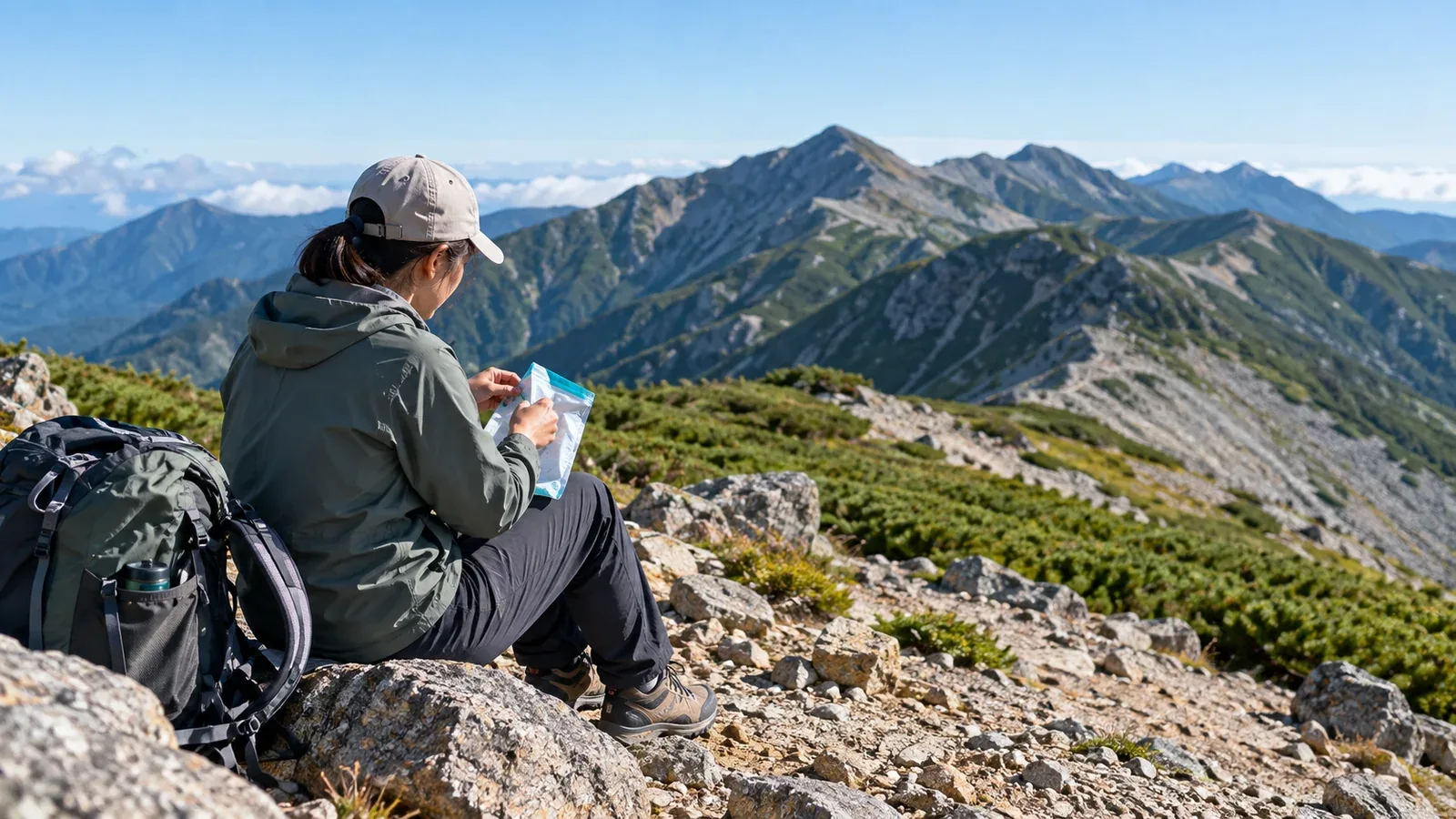
You might need a toilet on a long traverse, on a ridge above the trees or on a winter hike, far from a hut or campsite with a working toilet. This guide answers practical questions, from whether you can bury paper to where you can use a portable kit.
When you use a portable toilet, carry out both the used paper and your waste. Check the manager’s instructions for paper in built-in toilets and for where to use and dispose of portable kits.
Three misconceptions about toilet paper
“It’ll decompose if I bury it.”
Paper breaks down at different rates depending on the material, temperature and moisture. It can break down slowly in the cold, and shallow-buried paper can become exposed. Bag used paper and carry it out.
“White paper won’t stand out.”
Left behind, used paper and waste can spoil the landscape and contaminate water or soil. Take extra care near water sources, streams and snowfields. Follow local guidance on where to use a portable toilet.
“This is how we’ve always done it.”
Even on a mountain you know, the months when toilets are open and the drop-off locations for kits may change. Check the latest information as you plan.
How to choose and use a portable toilet
A portable toilet kit lets you seal human waste and carry it out. Some contain a waste bag, absorbent powder and an outer bag to contain odours. Check what your kit includes.
- Bag kits. Many are light and compact. Pack enough for the number of times you expect to use one.
- Kits with a support for the bag. A folding seat or other frame holds the bag open. Read the product instructions to see how to reuse the frame and dispose of the bag.
How to use one
- Use a designated booth or area where available. Otherwise, follow local advice and protect plants and water sources.
- Open the waste bag according to the product instructions. If there’s a special seat, fit the bag over it.
- Use the bag. Follow the product instructions for the absorbent sheet or powder.
- Seal the waste bag tightly and put it inside the odour-resistant outer bag supplied with the kit or one you brought.
- Protect the bag from tearing or leaking and store it separately from food.
- After the hike, use a designated collection box if available. Otherwise, follow the product and local waste instructions. Keep the used kit out of ordinary bins and toilets.
Preventing leaks and odours
Before sealing the bag, check its capacity and the product instructions. Close it tightly and use the outer bag in case of a tear. Carry more kits than you expect to need on multi-day hikes or in snowy conditions.
Packing out paper and other options
Follow the product instructions and local disposal rules on whether to put paper in the waste bag or in a separate one. If you use an installed toilet, check the signs to see whether paper can be flushed or must go in a designated container.
Using a portable wash bottle
Follow local directions on where and how to use one, keeping rinse water away from streams and water sources. Wash your hands with soap and clean water. If those aren’t available and your hands aren’t visibly dirty, an alcohol-based hand sanitizer with at least 60% alcohol can help.
With a portable toilet, carry out the paper too. If you bag paper separately, seal the odour-resistant bag and store it away from food.
Where to check local rules
The places to use, drop off and dispose of portable kits vary. Check the following sources for information specific to your route.
- Prefectural and municipal websites. Park guidance and disposal instructions where no collection box is provided.
- National and quasi-national park offices. Locations of designated areas, booths and collection boxes.
- Huts and campsites. Booking instructions, signs at the site and official websites.
- Trailhead boards. Current notices for the hiking season.
- Clubs and guide associations. Local practices and recommended methods.
The Yakushima World Heritage Conservation Center, for example, lists toilet booths and collection boxes. Even on the same mountain, facilities may differ by route and season. Check for your itinerary.
Pre-hike checklist
Check these items before setting out on a day hike or a multi-day trip.
- Number of kits. Estimate your needs for each day, then add spares.
- Odour-resistant bags. Bring a small separate bag for used paper as well as the bags for the kit.
- Hand sanitizer. Pack it for times when soap and water aren’t available and your hands aren’t visibly dirty.
- Storage. Decide where in your pack you’ll put the used kits.
- Disposal. Check collection-box locations and the dates when they can be used.
Check before you go
Plan after checking the local authority or park manager’s instructions on where to use and dispose of a kit. You can find portable toilets at outdoor shops. Nordwand Magazine has articles on trip planning and gear. Use the community to share information with the people you’re hiking with.
Further reading
- Hokkaido Regional Environment Office guidance on portable toilets and carrying out paper
- Yakushima World Heritage Conservation Center toilet guidance and Montbell product instructions
- U.S. Centers for Disease Control and Prevention guidance on hand sanitizer
References and sources
- Hokkaido Regional Environment Office — Carry a portable toilet when you hike
- Hokkaido Regional Environment Office — Can you leave tissues or toilet paper in the mountains?
- Yakushima World Heritage Conservation Center — Toilet facilities and disposal
- Montbell — O.D. toilet kit contents and instructions
- U.S. Centers for Disease Control and Prevention — Hand sanitizer guidelines