
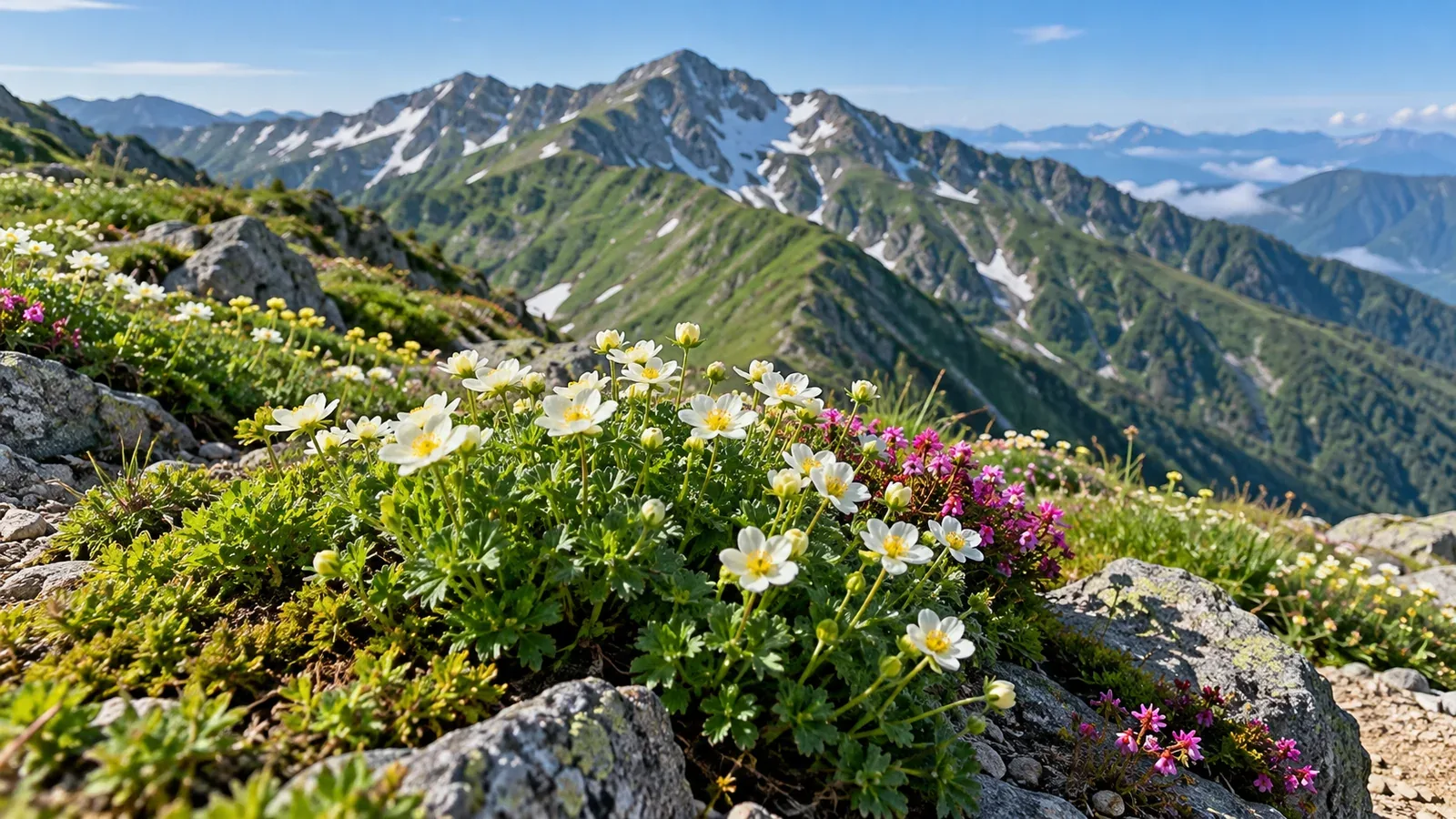
When you spot an alpine flower on the trail, it can be tempting to take just one. The rules on picking depend on the park zone, the species and who manages the land.
This guide covers the main laws and local ordinances on picking plants and what to check before you go.
Several laws can apply to picking plants
The rules for picking depend on where you are. In some places, more than one law applies at the same time.
Under the Natural Parks Act, you need a permit to collect or damage plants designated by the environment minister in special zones of national and quasi-national parks (Article 20(3)(11)). In special protection zones, permits are also required to collect or damage plants other than trees and bamboo or to collect fallen leaves or branches (Article 21(3)(7)).
The Act on Conservation of Endangered Species of Wild Fauna and Flora generally prohibits collecting or damaging plants designated as nationally rare species. Transfer and sale are also regulated, with exceptions that depend on the designation. The act applies inside and outside parks. Check the environment ministry’s list and rules.
Under the Forest Act, taking wild vegetables, mushrooms or other products without permission in a national forest may be treated as forest theft (Article 197). Ask the district forest office whether you can collect anything.
Prefectural ordinances can also apply. Nagano Prefecture, for example, requires advance notice to collect species designated under its ordinance. Collection of specially designated species is generally prohibited.
Why picking a little can make a difference
Leaving plants where they grow gives them a chance to set seed and lets the next hikers see them too.
The growing season is short in the high mountains, so damaged vegetation can take a long time to recover. Each person may take only a little, but the effects add up if many visitors do the same.
Uprooting plants or walking onto a slope for a closer look can make the soil more vulnerable to erosion. Picking a flower also reduces its chance to produce fruit and seed.
Where many people visit, leaving flowers in place and looking at them from the trail helps protect vegetation.
How to decide on the trail
Here’s what to check if you’re wondering whether you can collect a plant.
If you’re unsure, leave it where it is
You may not be able to tell where a park or national forest boundary is or how a species is designated once you’re there. Check these points before setting out.
- Whether the location is within a natural park, using an official map
- Whether the species appears on the list under the Act on Conservation of Endangered Species
- Whether the location is within a national forest, since boundaries may be hard to see
If you can’t verify that you’re allowed to pick it, leave it where it grows.
What about edible wild plants and mushrooms?
Rules for foraging also depend on the location and the land manager. Ask the park office about national park rules, and get the manager’s permission before taking forest products from a national forest.
If you plan to forage, ask the municipality, park office, forest office or land manager before you go. A local tradition of picking doesn’t tell you what’s allowed in that particular spot.
Can you pick up fallen seeds and fruit?
In special protection zones, you also need a permit to collect fallen leaves or branches. Before picking up fallen seeds or fruit, check the zone, the species and the land manager’s rules. If you’re unsure, leave them where they are.
How to enjoy plants where they grow
Photos and observation let you enjoy plants while leaving them where you found them.
Take photos from the trail. Identification apps and information boards can help you look up names. If you can’t be certain a wild plant or mushroom is safe to eat, leave it and don’t eat it.
Botanical gardens and guided nature walks offer a chance to see alpine plants up close with an expert. A guide who knows the local vegetation can explain the plants’ ecology and where they grow.
When to check and whom to ask
Situations that call for a check
- You plan to forage for wild plants or mushrooms in an area you haven’t visited.
- You see a notice restricting access near a hiking trail.
- You’re visiting an area where a plant sold as a regional speciality grows wild.
Whom to ask
- National and quasi-national park zones. Check the environment ministry or the park office.
- Prefectural natural parks and ordinances. Check the prefecture’s nature conservation department.
- Permission in national forests. Check with the relevant district forest office of the Forestry Agency.
- Species designated under the Act on Conservation of Endangered Species. Check the environment ministry’s published list.
If you can’t contact an office, start with the rules on its official website.
Check before your hike
Look up the park boundary map and land manager before you set out. A national park and a national forest can overlap. Share what you find with the people you’re hiking with. You can also ask a certified guide who knows the area’s plants.
Further reading
- Environment ministry guidance on designated plants and permits in national and quasi-national parks
- Environment ministry overview and species list for the Act on Conservation of Endangered Species
- Tohoku Regional Forest Office guidance on national forests
- Nagano Prefecture’s ordinance rules and the Japanese government’s advice on preventing food poisoning
References and sources
- Japan Ministry of the Environment — Designated plants in national and quasi-national parks
- Japan Ministry of the Environment — Activities requiring permits or notification in national parks
- Japan Ministry of the Environment — Rules under the Act on Conservation of Endangered Species
- Japan Ministry of the Environment — List of designated nationally rare species of wild fauna and flora
- Tohoku Regional Forest Office — National forest entry procedures
- Nagano Prefecture — Rules under the ordinance on rare wild fauna and flora
- Japan Government Public Relations — Preventing poisoning from wild plants and mushrooms