
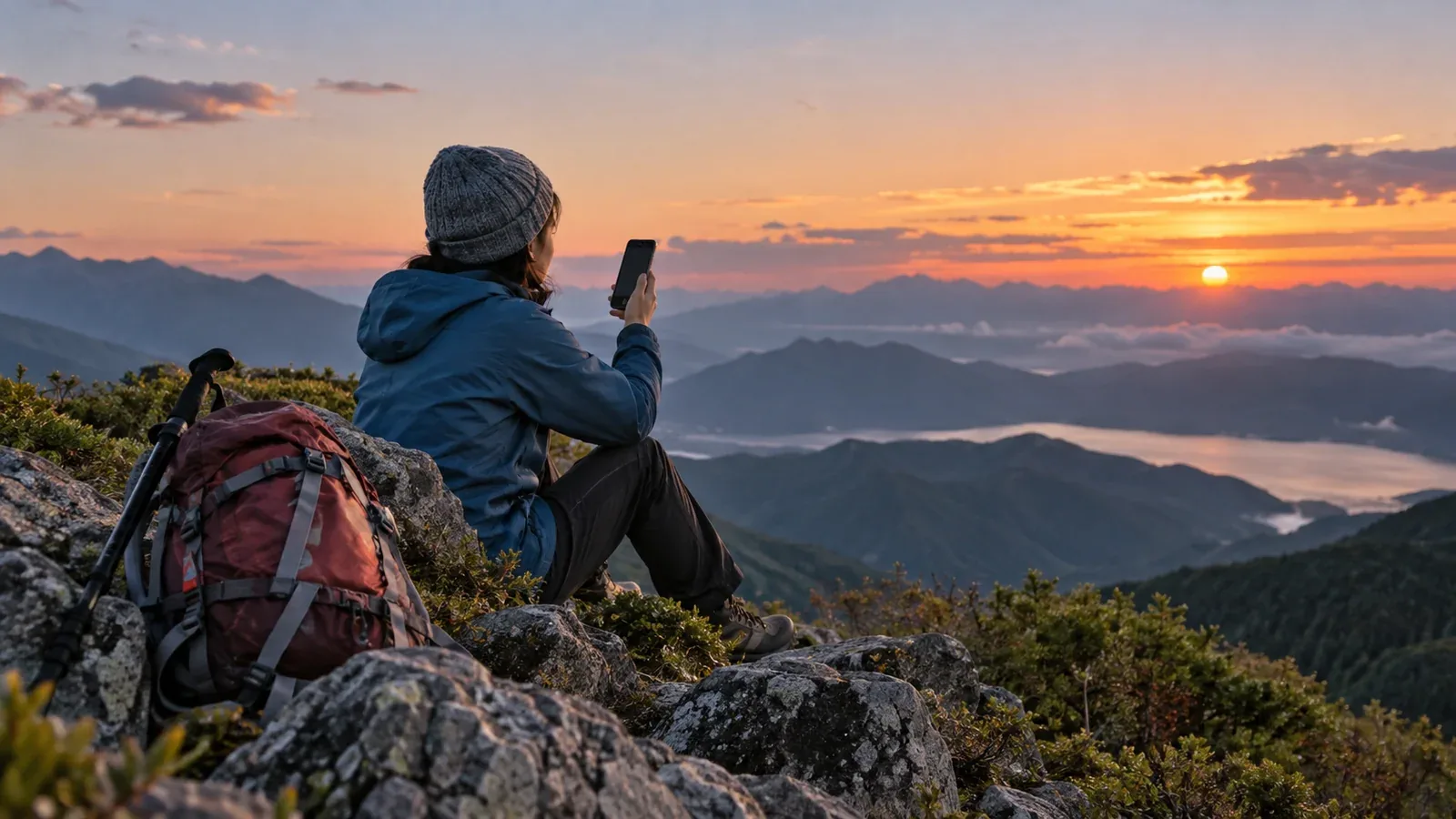
You have lost the trail, a twisted ankle makes walking unsafe or daylight is running out. Stop in a safe place, assess what is happening and tell someone promptly if you need help. Continuing without a plan can put you farther from the route or make you harder to find.
Calling for help, waiting and moving are related decisions. Use the person’s condition, your location, weather, daylight and the route to decide what is safest.
Recognize when you need help
If you cannot see a safe way back to the trailhead or shelter, seek help. A worsening injury, poor visibility or an unrecognizable route can make it unsafe to continue even if the trailhead looks close.
Ask yourself these questions while you are on safe ground.
- Can I identify my position and the route back?
- Can everyone reach a safe place in the remaining daylight?
- Is this a safe place to wait if the weather worsens?
- Is anyone injured, ill or unable to walk safely?
An unknown location, a missing safe way out, an unsafe place to wait or someone who cannot walk can each be enough to change the plan. Call early if you cannot resolve the situation safely.
Call for help early
Make the call before conditions deteriorate. Darkness, storms and worsening symptoms can make walking and rescue harder. Tell the dispatcher if there is a threat to life or you cannot move.
In Japan, call 110 for police or 119 for fire and medical emergencies. The Government of Japan lists both numbers for mountain rescue. Give the dispatcher the details you know.
- Location. Give the mountain, trail, last confirmed junction or landmark and GPS coordinates if available.
- People and condition. Say how many people are there and describe injuries, symptoms or inability to move.
- Equipment and supplies. Explain whether you have shelter, warm clothing, food and water.
- Weather and terrain. Describe conditions at your location and any immediate hazards.
- Contact. Give a callback number and tell the dispatcher how much battery you have.
Try the emergency number first. If it cannot connect, use satellite SOS if your device and location support it. Move only to a nearby spot you can reach safely if it may help you communicate. Avoid exposed terrain. Signal with a whistle or headlamp and make yourself visible from a safe place. A filed plan gives responders a place to start looking.
Decide whether to wait or move
After making contact, stay where you are if it is safe and follow the dispatcher’s directions. Rescuers use the location you gave them. If you need to move, report your new position and why as soon as you can.
Move only as far as needed for safety or as directed. The following conditions can require action.
- Falling rocks, unstable ground or avalanche danger. Leave the immediate hazard if you can do so safely.
- A rising stream or flood-prone gully. Move away from the channel to stable higher ground if there is a safe path.
- A thunderstorm on an exposed ridge. Get off exposed ground safely and head to substantial enclosed shelter if reachable. Avoid isolated trees and water.
- A visible hut or trail. Consider moving only if the way is clearly safe and everyone can manage it. Confirm with responders if in contact.
Staying where you are usually makes sense if the place is safe and any of these apply.
- An injury makes safe walking difficult.
- Fog, snow or darkness prevents you from finding the route.
- You are too cold or exhausted to move safely.
- Responders have your position and have told you to wait.
Ask whether moving makes you safer, including during the move itself. A shorter distance to the trailhead is no advantage if it takes you across a drop, into a gully or away from the search area.
Prepare to wait after dark
If you cannot reach shelter before dark or rescuers may take time to reach you, prepare an emergency bivouac while there is still light and you can think clearly.
Look for a safe place to stop.
- Start by avoiding rockfall, rising water and avalanche paths.
- Look for protection from wind and precipitation that you can reach safely.
- Choose firm, reasonably level ground that drains well.
Limit heat loss. Add dry layers and a weatherproof outer layer, insulate yourself from the ground and use a bivy or emergency blanket if available. Replace wet clothing once sheltered. Keep the face clear and leave enough ventilation. If someone shows signs of hypothermia, protect them from further cold, handle them gently and tell the dispatcher.
Use water and food sensibly. Offer food or drink only to someone who is fully alert and can swallow safely. Let rescuers know if supplies are running low or someone’s condition changes.
Keep warm and stay reachable
Once you are waiting in a safe place, protect yourself from the weather, conserve energy and keep the phone available for responders.
- Insulate yourself from the ground. Sit or lie on a pad, spare clothes or a pack. Avoid making a cold, impaired person walk to warm up.
- Keep track of time. Note when you called, when symptoms changed and when it will get dark.
- Record key information. Write down your location, the person’s condition and any care given. Save battery for calls.
- If you are alone, check your condition regularly. Review your shelter, how warm you are and whether the phone is ready for a callback.
In a group, one person can keep the phone available and another can check on the person who needs help. Agree who will signal when responders are nearby and stay together where possible.
Before your next hike
Review who will call, what location information you can share and where you can wait. Check filing instructions and carry emergency shelter, insulation, a whistle, a headlamp and spare power. Share the route with someone who knows when you expect to finish. Nordwand can help you connect with other hikers to discuss a route.
References
- National Police Agency mountain incident statistics
- Fire and Disaster Management Agency rescue information
- Official prefectural mountain rescue guidance
- Japan Mountain Guides Association
References and sources
- National Police Agency — Japan’s 2025 mountain incident figures
- Fire and Disaster Management Agency — Rescue activity reporting
- Government of Japan — Mountain safety and rescue numbers
- Nagano Prefecture — From emergency call to mountain rescue
- US National Park Service — Outdoor emergency plan
- Japan Meteorological Agency — Lightning safety
- Wilderness Medical Society — Clinical guidance on accidental hypothermia
- Apple Support — Emergency SOS via satellite requirements
- Japan Mountain Guides Association — Safety and guide information