
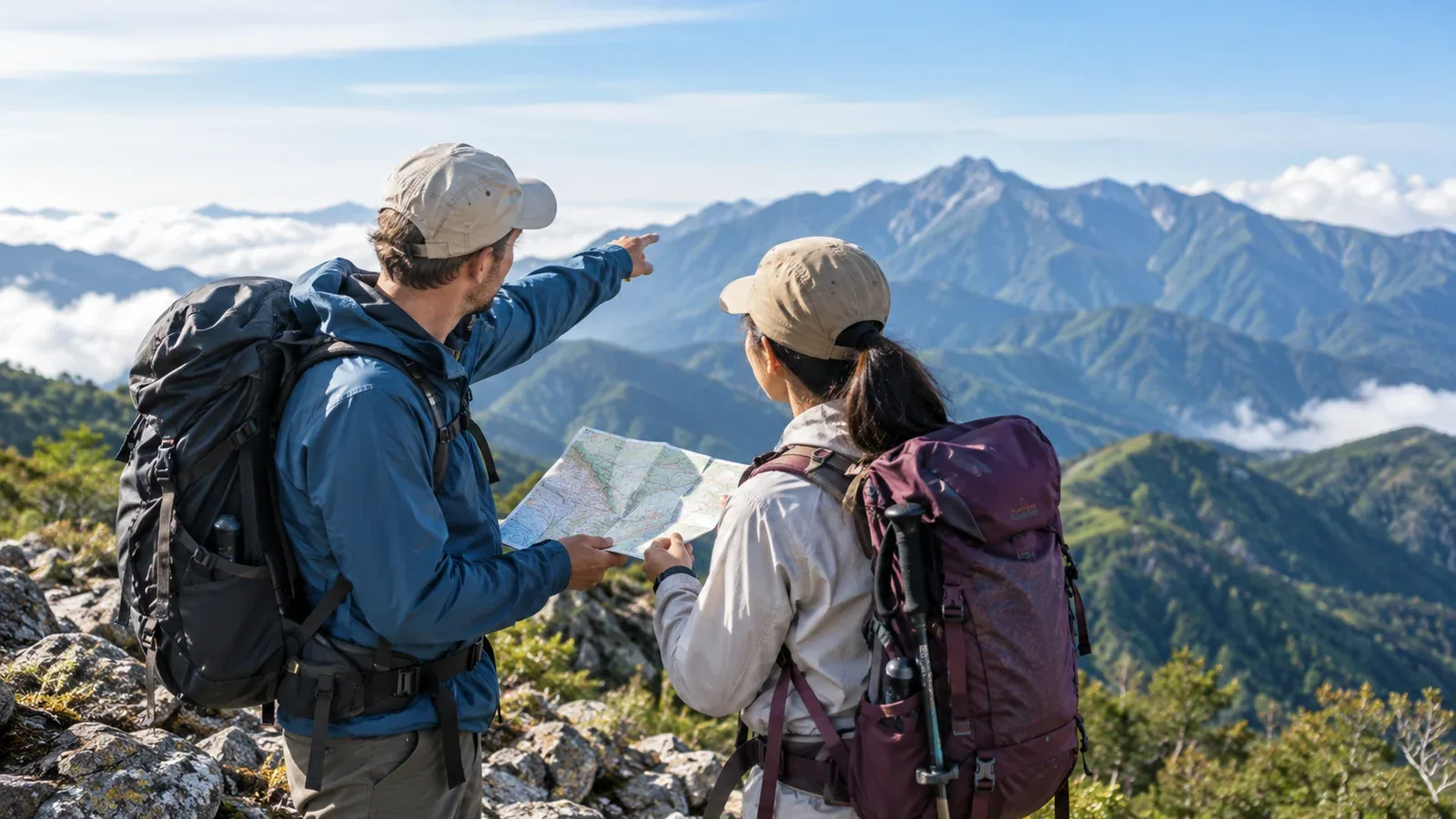
Maybe a visiting hiker asked you a question and you weren't sure how to answer. Or perhaps you shared a summit with someone from overseas and left without exchanging a word. On either side of a language barrier, it can be hard to know how to start.
It helps to think first about what you need to communicate. On a trail, you already have shared topics such as safety, weather, and routes. This guide looks at situations you're likely to encounter, simple phrases for people who are less comfortable speaking English, and a few local customs worth knowing.
Three things hikers talk about
Everyday conversation can go anywhere. On the trail, many exchanges fall into three groups.
- Safety. Changes in weather, trail conditions, or how someone is feeling.
- Routes. Where someone is heading, which way to go at a junction, or a rough estimate of walking time.
- Greetings and small talk. Where someone is from or which mountains they like.
Once you know which kind of conversation you're having, it becomes easier to choose a few words or a gesture. At a junction, for instance, you might only need to ask where the other person is going.
Speak up when safety is involved
If someone seems lost, unwell, or poorly equipped for the conditions ahead, check in with them even if you're unsure of your English.
Start with “Are you OK?” and pay attention to how they respond. If they're having trouble, point to a map or show them which direction you came from.
Short phrases work well when you need to warn someone.
- “The weather looks bad. Be careful.”
- “This trail is closed.”
- “We should go down.”
A few words and a gesture can convey the message. In a safety situation, it's more useful to speak clearly and early than to worry about getting the grammar right.
If a visitor seems to be asking for urgent help and you don't understand, say “Wait,” stop, and give them a moment to show you what they mean. You can ask other hikers or hut staff for help if available.
Giving directions with a map
A junction is a natural place to offer help. A visitor may stop to compare a sign with an app or look unsure about which path to take.
Ask “Where are you going?” If they name a mountain or hut, point out the direction and use the map to confirm you're talking about the same place. Showing each other your maps can do much of the work.
For a time estimate, “About two hours” is often enough. “About” matters because people walk at different speeds and trail conditions change. Give a rough estimate and say if you're unsure.
To show what a rocky stretch, fixed-chain section, or snow crossing looks like, a photo or simple sketch may work better than words. A photo you took of the trail a few minutes earlier can help the other person see what lies ahead.
Customs that can make an exchange easier
In Japan, people often greet hikers they pass with “Konnichiwa.” The custom varies between places, so a quiet passerby may simply be used to doing things differently. A friendly “Hi” is an easy way to start.
A summit or a break at a mountain hut can be a comfortable place to chat. “Where are you from?” can lead to a conversation about places you've hiked, how you got into hiking, or favorite mountains, even when you have only a few words in common.
“Could you take a photo?” is a useful phrase if you'd like someone to take a picture with your camera. Follow any local photography rules and ask before including other hikers in the frame.
Where visiting hikers may need help
Even where Japan's trails and facilities are well organized, it can take time to learn how they work. Knowing where visitors tend to get stuck makes it easier to offer useful help.
Filing a hike plan. Requirements vary by area. A trailhead may have little or no information in other languages, so visitors can miss where to file a plan or how to fill it out. Pointing out the submission box or official instructions is a good start.
Water and toilets. Water sources and toilets vary by route. Showing someone the location on a map takes only a word or two. Be clear if you are unsure whether a water source is available.
Weather information. Japanese forecasts can be hard to read if you don't know the language. Point visitors to the Japan Meteorological Agency's English weather and warning pages, and check what is available for the particular area.
Mountain hut bookings and rules. Meal plans, lights-out times, and rules for bringing your own food vary by hut. If you're walking there with visitors, explain what you know ahead of time so they can ask the staff about anything that's unclear.
What to do next
When you meet a visitor on the trail, pay attention to whether they need help with safety. Speak up when needed and use a few words, a map, or a gesture. Before a hike, practice the phrases you are most likely to use for safety, directions, and greetings. Nordwand's Base Camp can also help you connect with people who have hiked with international visitors.
References
- Japan Meteorological Agency, weather information relevant to hiking
- National Police Agency and prefectural police, mountain incident statistics
- Japan Tourism Agency, hiking information for international visitors
- Ministry of the Environment, rules for visiting national parks