
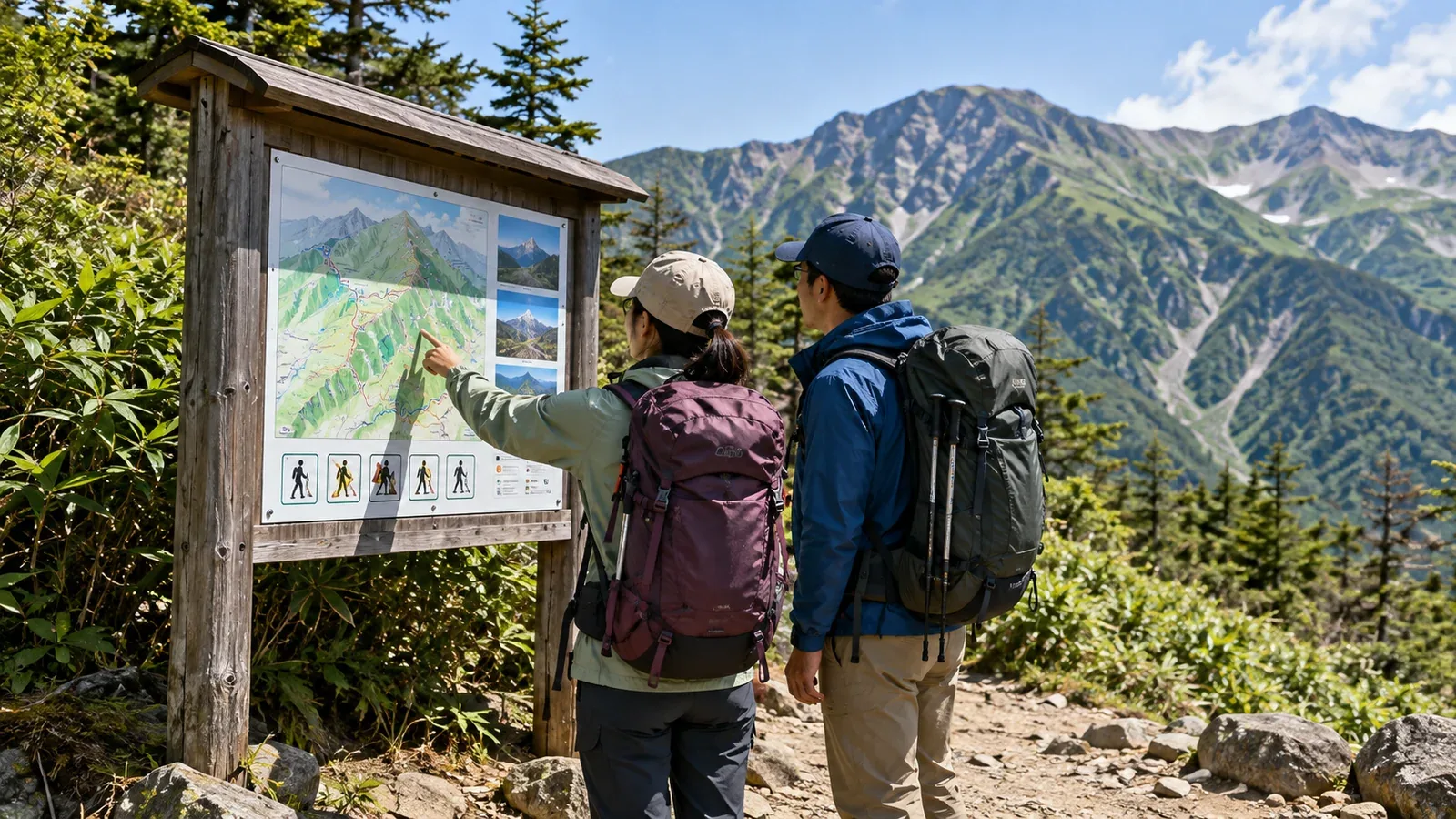
English and Chinese are becoming more visible at trailheads, on mountain hut menus, and on notices explaining how to use emergency shelters. Who decides what to translate, and who keeps it up to date? If you're visiting from overseas and rely on this information, it helps to know how it was produced and where its limits are.
This guide explains where multilingual hiking information comes from and what to check whether you're using it or publishing it yourself.
Who produces the information?
Multilingual hiking information in Japan generally comes from four kinds of publishers.
Government agencies and land managers put up signs and maintain websites. This includes the Ministry of the Environment, the Forestry Agency, prefectural governments, and municipalities. National park signs and instructions for filing a hike plan are examples. Agencies may contract out the work. Some translations get specialist review, while others may be checked versions of machine translations. A change to a rule or closure can reach a translated page later than the Japanese one.
Mountain huts and other facilities produce their own signs and handouts. Staff may translate them themselves or ask regular visitors who speak another language to help. The language can vary in quality and old wording may stay in use, but the people who run the facility are well placed to explain their specific rules and practical concerns.
Mountaineering organizations, nonprofits, and volunteers also translate information. Clubs and guide associations may prepare brochures for people who speak other languages, and local volunteers sometimes translate signs. Keeping the information current can be difficult if funding or the people doing the work change.
Private services and individuals publish hiking apps, travel sites, and blogs. These may be updated quickly, but their fact-checking varies. User posts can offer a wealth of observations. Confirm any access restrictions or safety information with the responsible authority.
Three things that affect translation quality
The quality of a translation depends heavily on the translator's knowledge of hiking, the clarity of the original, and who keeps the text current.
Terms for terrain and access, such as “col,” “scree,” “camping in a tent,” and “entry restriction,” can be difficult to translate without mountain experience. How people read maps and understand safety grades also varies between places. Readers may need different levels of explanation, even when they share a language.
A vague original usually leads to a vague translation. “Hazard ahead” or “proceed with caution” gives little guidance if it leaves out the hazard, the conditions in which it matters, or what to do about it. Translation can be a chance to clarify the original before the same ambiguity reaches more readers.
Without someone responsible for updates, a sign or page in another language can lag behind its Japanese version. Trail repairs, bear sightings, and changes to access rules can affect safety, but the translated notices may have no dedicated budget or staff time.
What to check when using multilingual information
Check the following details before using information from a translated sign, brochure, or website.
Check who published it and when
- A sign or leaflet may give the publisher and year of issue. Compare it with the official agency or mountain hut website.
- Prefectural police or municipal offices that accept hike plans often post access changes and urgent information. If the translated page is incomplete, check the Japanese page too.
- Hut bookings and opening days can change with the season or weather. Contact the hut directly, or use a hiking service that shows information for the current season.
Cross-check information that affects safety
Compare sources for weather, trail conditions, and emergency contacts. Japan Meteorological Agency forecasts and warnings can help you understand weather in the area, and local sources may offer more specific mountain information. Check the latest notices at the trailhead, including notices posted only in Japanese, before making a decision.
What to consider when publishing information
These points apply to anyone producing multilingual information for a mountain hut, guide service, or local tourism organization.
Decide what needs translating first. Translating everything can make updates hard to keep up with. Start with emergency procedures, rescue contacts, closures, and warnings such as snow crossings. General visitor information can follow.
Get language review and mountain expertise. A fluent English speaker can catch awkward wording. Someone with hiking experience can also check that the instructions describe the terrain, equipment, or action accurately. When possible, work with a qualified guide or a translator who has worked on mountain material.
Write down who updates what and when. Assign responsibility for each language when the Japanese original changes. Checking the full set of translations before each hiking season is one way to keep them current.
Use machine translation for a draft. Tools such as DeepL and Google Translate can help you get started on short passages. A mistranslated place name, mountain term, or emergency instruction can have serious consequences. Build in a check by someone who knows the subject.
What is changing and where gaps remain
Japan's Ministry of the Environment has made multilingual information part of its work in national parks. Some mountain areas use QR codes to link signs to translated information. When a notice changes, the web page can be updated without replacing the sign.
A code may still scan where there's no signal, but the linked page may fail to load. Offline downloads and printed copies remain important in mountain areas.
Clear written and visual guidance can also help Deaf and hard-of-hearing hikers and residents who speak Japanese as a second language. Understanding how information is produced and updated helps publishers and hikers make better decisions.
What to do next
Check the publisher and update date, and compare safety information with official Japanese sources. Even a sign at a hut or trailhead may have fallen out of date. Ask the manager or responsible authority directly if you're unsure. Through Nordwand, you can also look for qualified local guides and ask which languages they can use.
References
- Ministry of the Environment, multilingual national park visitor information
- National Police Agency of Japan, annual mountain incident statistics
- Forestry Agency, hiking and recreation in national forests
- Japan Meteorological Agency, mountain weather forecasts