
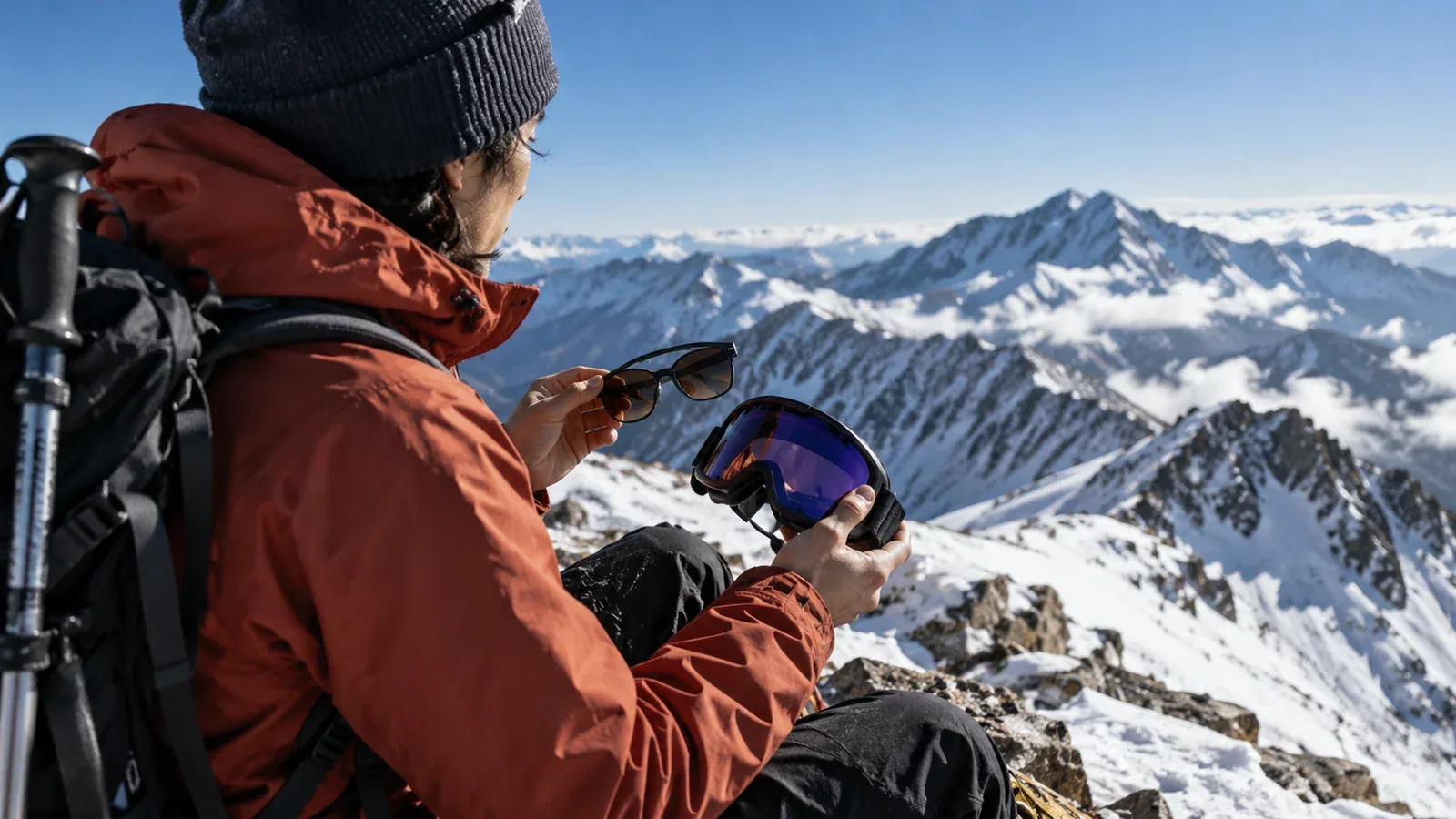
Sunglasses and goggles can both protect your eyes on snow. The better choice depends on wind, visibility, glare and whether you can see the terrain clearly. UV reflected from snow and ice can cause snow blindness, a painful form of photokeratitis.
If your route could bring both glare and blowing snow, bring eyewear for both conditions and keep it within reach. This guide explains how to choose, prevent fogging and change lenses or eyewear safely.
How goggles and sunglasses differ
Sunglasses usually leave more space around the face. They can ventilate well and work in bright or sheltered conditions. A close-fitting wraparound model offers more coverage. Wind, drifting snow and cold air can still enter around the frame.
Goggles use foam and a strap to fit around the eyes and shield them from blowing snow and wind. Field of view and ventilation vary with the frame and fit. Moisture can condense inside even when the lens has an anti-fog coating or the frame has vents.
Check the manufacturer's UV protection for both types. Look for 100% UVA and UVB protection or UV400. Lens darkness and visible light transmission describe glare control, while UV protection is a separate specification. Snow reflection and higher elevation can increase UV exposure, including on some cloudy days.
Choosing what to wear on the route
Consider wind and falling snow, how hard you are working and how much detail you can see in the terrain.
Wind and snowfall
- Calm or sheltered conditions with sun or thin cloud. Close-fitting UV-protective sunglasses may work well.
- Exposed ridges, gusts or drifting snow. Keep goggles within reach and put them on in shelter if sunglasses leave your eyes exposed or your vision suffers.
- Blowing snow or very poor visibility. Goggles can protect your eyes from snow. If you cannot see the route or terrain hazards, stop in a safe place and reassess whether you can continue or retreat safely.
There is no fixed wind speed at which to change. Pay attention to gusts, drifting snow and your vision. Check the latest forecast and local route reports, and plan a sheltered spot before an exposed section.
Activity and exertion
Climbing or breaking trail can make eyewear fog. In sheltered conditions, close-fitting sunglasses may ventilate better if they still protect your eyes. Put on goggles before an exposed saddle or ridge when needed. Keep clear of cornices and turn back if conditions exceed your navigation skills.
Sunlight and the snow surface
In flat light, snow can look uniform and hide hollows, edges and changes in slope. A brighter lens or a contrast-enhancing tint may help you read the surface, depending on conditions and the lens. Compare visible light transmission and your ability to see the terrain. Allow time to change lenses in shelter.
How to reduce fogging
Check how your goggles fit with your hat, hood or helmet before the trip. Practise changing eyewear without touching the lens.
Fogging involves moisture and temperature. Sweat or breath can collect near a cold lens. Ventilation, fit and where you store the goggles affect how quickly moisture builds up.
- Keep goggles off a sweaty forehead. In shelter, place them in a clean, protective pouch or case if you take them off. Keep the vents clear of snow.
- Avoid rubbing a wet inner lens. It can damage the anti-fog coating. Follow the manufacturer's instructions for drying or cleaning and stop somewhere safe if you cannot see.
- Consider a double lens. An insulating air gap can reduce condensation. Compare fit, ventilation and lens options as well.
- Check how a balaclava or face covering fits. Direct breath away from the bottom of the lens and keep vents clear. Try the complete setup before leaving.
Using sunglasses on snow
Choose sunglasses for the UV exposure, brightness and expected wind. Check the fit with the rest of your winter gear.
Choose coverage around the eyes. Reflected light can reach from below and through gaps at the sides. Close-fitting wraparound lenses or suitable side shields can help reduce exposure. Check that you still have adequate peripheral vision.
Match visible light transmission to the conditions. A lower VLT means less visible light reaches your eyes and can help in strong glare. A lens that is too dark can hide terrain in shade, flat light or snowfall. Check the maker's category and driving restrictions, and choose UV protection separately.
Check the frame and temples. Try the glasses with your hat, hood or helmet. Make sure they stay in place, do not pinch and do not restrict your view when you turn your head.
Carrying and switching eyewear
Decide what you will wear first and where you will keep a second option if conditions change.
With gloves on, practise taking goggles from a secure pouch and sunglasses from a protective case. Store them where you can reach them without emptying the pack, and keep lenses separate from objects that can scratch them.
Plan to switch in shelter before entering exposed ground if the forecast or what you see suggests a change. If visibility deteriorates, prioritise a safe stop and a decision about the route. Goggles cannot restore terrain definition in a whiteout.
Your next step
Check the weather and local reports for the route, then test your eyewear with gloves and headwear. Pack a lens or second pair suited to the expected changes. If you develop eye pain, light sensitivity or blurred vision after UV exposure, get out of the sun and seek medical advice.
Official and technical resources
- Japan Meteorological Agency warnings and winter mountain guidance
- Ophthalmology guidance on UV exposure and snow blindness
- Mountaineering equipment lists and manufacturer instructions for lens selection and care
References and sources
- Japan Meteorological Agency — Weather warnings and advisories
- Central Council for Mountain Accident Prevention — Winter advisory and equipment checklist
- Mountaineering Scotland — Goggles, sunglasses and winter equipment
- American Academy of Ophthalmology — Photokeratitis and snow blindness
- American Academy of Ophthalmology — UV exposure and eye protection
- Julbo — Goggle fit, ventilation and lens transmission
- Julbo — Cleaning goggles and protecting anti-fog coatings
- Julbo — Category 4 visible-light filtration and driving warning