
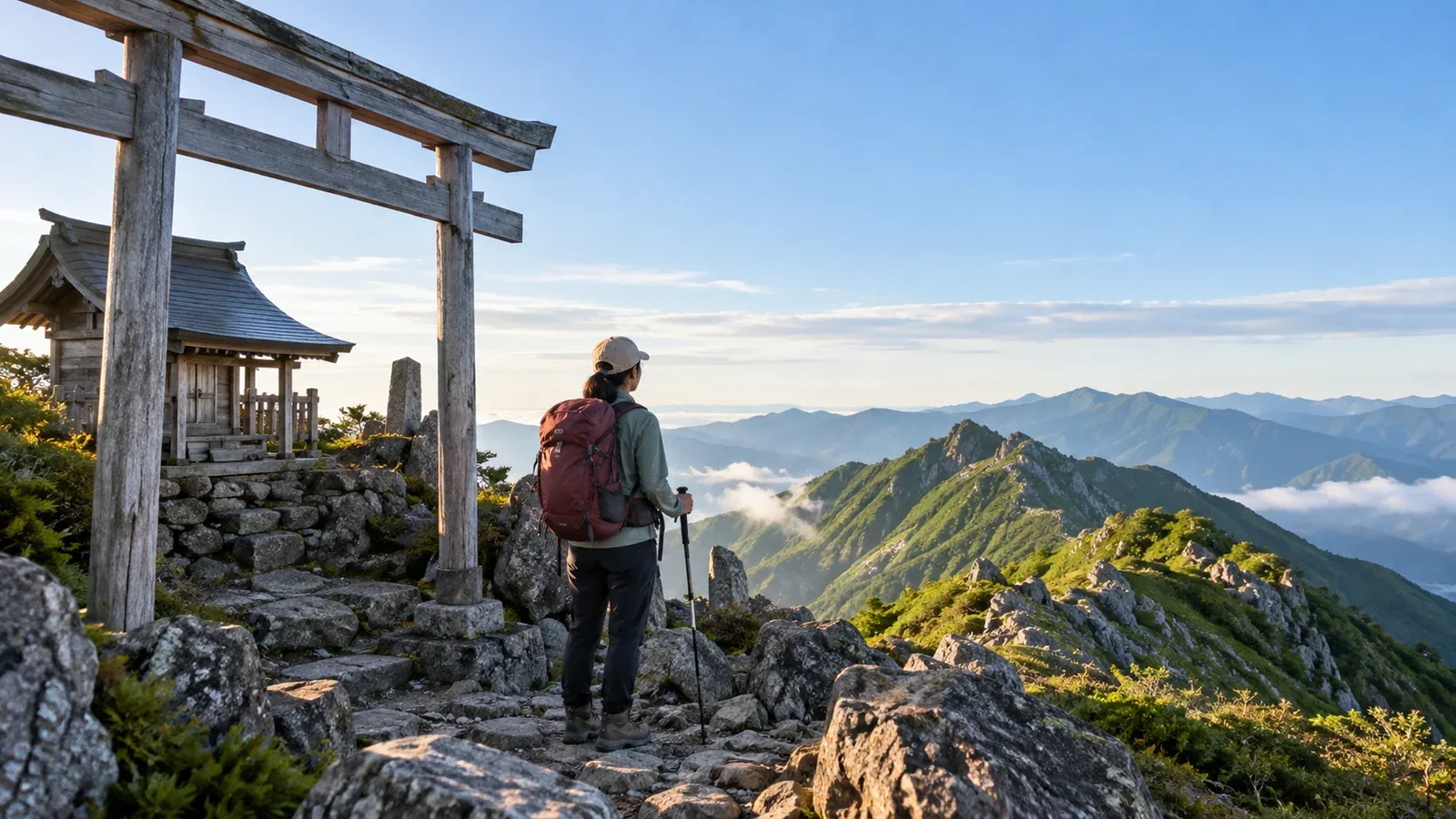
Mount Fuji, Dewa Sanzan and Mount Ōmine have all drawn worshippers. On some mountains the mountain itself is revered as the sacred object. On others, walking the mountain is a form of religious training.
Pilgrim paths, stone monuments and ceremonies still held today can tell you why a path is there. This guide introduces several mountains, the histories behind them and what to check before visiting.
Different forms of mountain worship
What made a mountain sacred? These forms of worship offer some answers, and several can coexist on one mountain.
Mountains revered as sacred objects. Mount Miwa in Nara Prefecture is the sacred object of Ōmiwa Shrine. Access was strictly limited for many years. Today the ascent is a pilgrimage and requires registration at Sai Shrine. Check Ōmiwa Shrine’s latest guidance for photography restrictions, registration closures and requirements for understanding instructions in Japanese.
Mountains used for Shugendō practice. Mountain paths and rocky places became training grounds for religious ascetics. Mount Ōmine in Nara is associated with En no Gyōja, traditionally regarded as the founder. Other examples are Mount Hiko on the Fukuoka–Ōita border and Dewa Sanzan, including Mount Haguro, in Yamagata. Rituals and training continue. Check with the shrines, temples and site managers for areas and times open to visitors.
Mountains where worship of kami and buddhas intertwined. Fuji, Hakusan and Tateyama are known as Japan’s Three Sacred Mountains. The Meiji government began separating Shinto and Buddhism in 1868. On Hakusan, Buddhist statues were brought down from the summit. Statues at the foot of the mountain and place names on pilgrimage paths still trace this history.
Four ways to read the history
Look for these clues when visiting a sacred mountain.
How old are the records of its founding? Compare founding traditions with documents and artifacts that can be dated. Oral tradition and archaeology can shed light on practices rarely recorded in writing.
How far did the worship spread? Local communities sustained some traditions, while others drew pilgrims from far away. The Fuji-kō associations that spread in the Edo period organized worship at Fuji. The lodgings and paths that supported pilgrims still bear traces of their work.
Which ceremonies continue today? They show how people still relate to a mountain. Check dates and terms for attending or observing events such as the Shōreisai at Mount Haguro and the fire-quelling Chinkasai rite at Shirayama Hime Shrine.
World Heritage and national historic site designations also provide context. UNESCO inscribed both the Sacred Sites and Pilgrimage Routes in the Kii Mountain Range, which includes Yoshino and Ōmine, and Fujisan, sacred place and source of artistic inspiration. The reasons for inscription explain how pilgrimage routes, religious buildings and the surrounding landscape are valued.
The stories behind four sacred mountains
These four places show their histories through routes, rituals and rules that are still observed.
Mount Fuji is Japan’s highest peak. Its summit crater and springs at the foot have long been revered. Fujisan Hongū Sengen Taisha enshrines Konohanasakuya-hime. In the Edo period Fuji-kō associations spread the practice of pilgrimage, and circling the summit crater on the ohachimeguri was part of the ascent. Check the official climbing site for current trail openings, entry rules and fees.
Dewa Sanzan (Haguro, Gassan and Yudono) are three mountains in Yamagata. A pilgrimage of rebirth associates Haguro with the present life, Gassan with the past and Yudono with the future. At the Sanjingōsaiden hall on Haguro, people can worship the deities of all three mountains year-round. Snow limits the visiting seasons at Gassan and Yudono. At the main Yudono shrine, rules include removing footwear and refraining from photography.
Mount Ōmine (Sanjōgatake) in Nara is a major Shugendō training site, with Ōminesan-ji temple near the summit. An active religious boundary restricts women from entering the Sanjōgatake area. Check Tenkawa Village’s guidance for routes open to you. The village presents nearby Inamuragatake as a mountain women can climb.
Hakusan’s Gozengamine peak is on the Ishikawa–Gifu border. Three historic zenjōdō pilgrimage routes approached the summit from Kaga, Echizen and Mino. The area is protected as Hakusan National Park. Check the operating dates and booking availability at Hakusan Murodō before planning an overnight stay on the Murodō plateau.
Etiquette at places of worship
A visit calls for a few considerations beyond usual hiking etiquette.
Shrine buildings, torii gates, stone monuments and sacred shimenawa ropes carry religious and historical meaning. Keep bags off them, rest away from spaces set aside for worship and follow signs about access and photography.
Some areas are closed for religious reasons, including boundaries that restrict access for women. Follow instructions on site and choose paths open to you.
If you come across sutra chanting, Shinto prayers or ceremonial drumming, keep the way clear and observe quietly. Check signs or ask staff where and when you may watch.
What to check before visiting
Add these items to your usual hiking plan.
- Entry restrictions or closed areas. Check the shrine, temple or land manager’s official guidance.
- The calendar of ceremonies. Festivals may bring closures or crowds.
- Clothing and what you can bring. Some sites have rules about attire, food or drink.
- Trail conditions and the season. Check Japan Meteorological Agency forecasts and warnings and the operator’s snow and access updates.
Older trip reports can show how a route once looked. Confirm current opening times and entry requirements with the shrine, temple or site manager.
Next steps
Once you have chosen a mountain, check the official shrine, municipal or national park website for pilgrimage rules and current access. You can compare notes with people who know the area in Nordwand’s Base Camp or relevant communities.
References
- UNESCO World Heritage Centre: Sacred Sites and Pilgrimage Routes in the Kii Mountain Range
- Ministry of the Environment: What makes Hakusan National Park distinctive
- Yamagata Prefecture: A pilgrim’s guide to Dewa Sanzan
- Official Website for Mt. Fuji Climbing: Climbing season
- Tenkawa Village: Shugendō on Mount Ōmine
References and sources
- UNESCO World Heritage Centre: Sacred Sites and Pilgrimage Routes in the Kii Mountain Range
- Ministry of the Environment: What makes Hakusan National Park distinctive
- Yamagata Prefecture: A pilgrim’s guide to Dewa Sanzan
- Official Website for Mt. Fuji Climbing: Climbing season
- Tenkawa Village: Shugendō on Mount Ōmine
- UNESCO World Heritage Centre: Fujisan, sacred place and source of artistic inspiration
- Ōmiwa Shrine: Pilgrimage up Mount Miwa
- Soeda Town: Mount Hiko, a nationally designated historic site
- Toyama Prefecture: Three Sacred Mountains Summit
- Dewa Sanzan Shrine: Festivals and ceremonies
- Shirayama Hime Shrine: Hakusan worship and the summit sanctuary
- Shirayama Hime Shrine: Annual ceremonies
- Fujinomiya City: Fujisan Hongū Sengen Taisha Shrine
- Hakusan Tourism Association: Hakusan Murodō reservations
- Japan Meteorological Agency: Weather forecasts
- Japan Meteorological Agency: Weather warnings and advisories
- Japan Tourism Agency: Mountain worship at Dewa Sanzan