
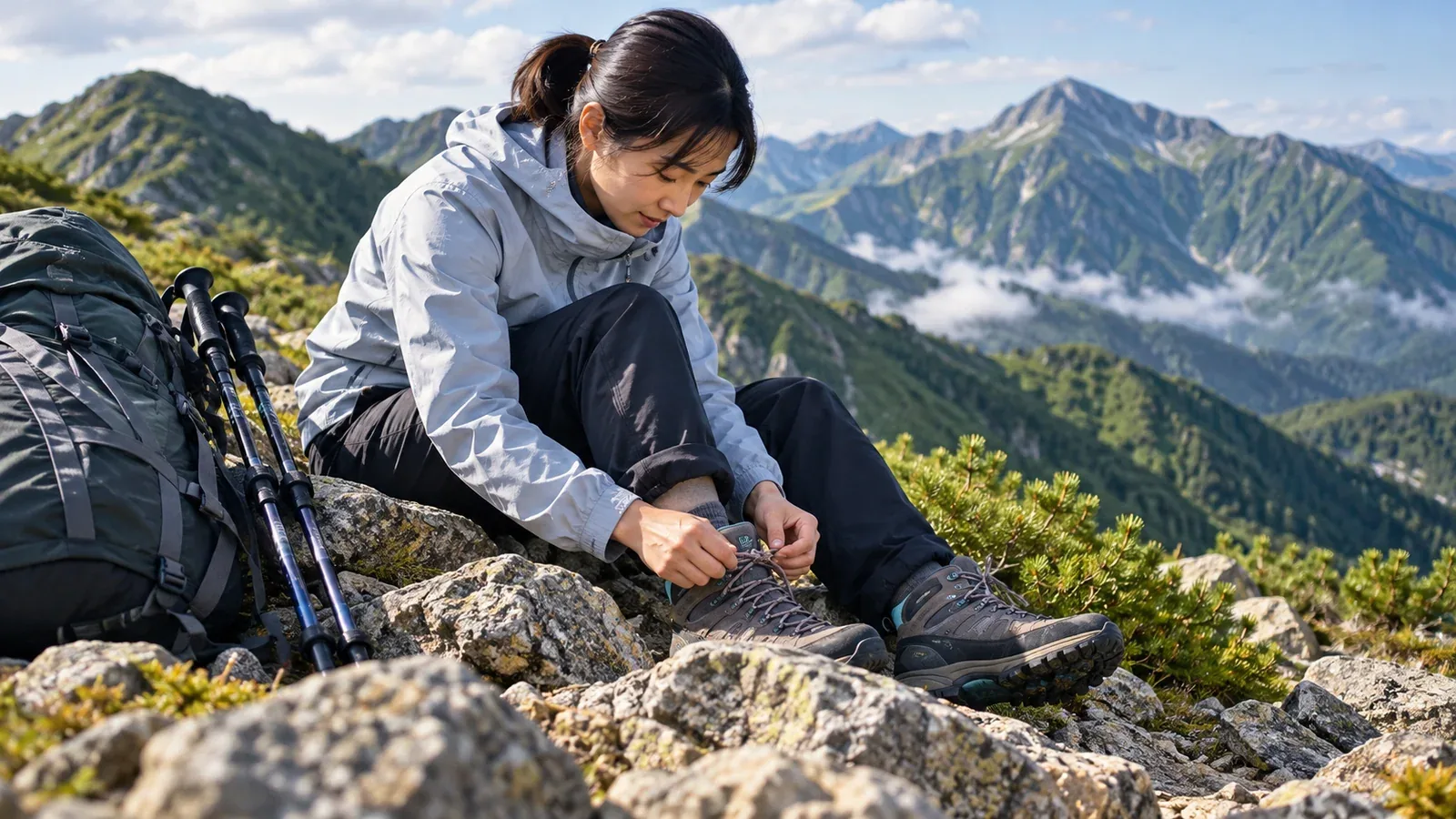
A brand can help you start your search for hiking equipment. Whether the gear works for you comes down to the routes and seasons you hike, how the item fits, and whether it is within your budget.
This guide gives you five ways to compare brands and products, and explains what to look for in footwear, rainwear, packs and insulation.
What to work out before comparing brands
Start by describing the trips you have in mind. Three questions will help.
Where will you hike? Low hills, alpine ridges, rocky scrambles and stream routes call for different features. Think about whether the gear is for summer only or for autumn and winter as well.
How often will you use it? A few hikes a year and several trips each month put different demands on equipment. With frequent use, pay close attention to materials, stitching and warranty service.
How will you divide your budget? Prioritize items where fit and weather protection matter, such as boots, rainwear and a backpack. Check the gear list for your destination and make sure you have essentials such as a map, headlamp and warm clothing.
Five ways to evaluate brands
Use these five criteria to compare brands and specific products.
1. Intended activity
Brands emphasize different activities, from light and robust equipment for alpine climbing to general hiking gear or lightweight gear for trail running and long traverses. The manufacturer’s site or catalogue will tell you what each product is designed for.
2. Size range and fit
Boot width and instep volume, shoulder width and sleeve length, and backpack torso length vary by model and size as well as brand. A boot’s last is the form that gives it its shape. Use size charts and wide options as a starting point, then check the fit on your own feet and body.
Manufacturers such as Montbell offer different lasts and wide models. For brands from Japan and abroad, check which sizes you can try locally and whom to contact after purchase.
3. Materials and construction
Check the product’s rainwear fabric, down fill power and fill weight, or backpack frame and harness. For figures such as waterproofness and breathability, check that the test method and conditions are comparable.
When a brand uses a proprietary material, look for an explanation of its properties. A general claim of high performance gives little to compare.
4. Support and repairs
Some manufacturers resole boots or repair zippers and fabric. The work available depends on the model, damage and stock of replacement parts. Find out where to ask in Japan and how quotes and turnaround times work.
5. Price and availability
Check local sellers, size availability, fitting and return terms. For parallel imports or overseas purchases, ask the seller and manufacturer separately about warranty and repairs in Japan.
What to look for by type of gear
The most important details depend on the item you are buying.
Hiking footwear
What matters most is a last that fits your foot. The last can differ by model within one brand. Try both boots with the socks you will wear. Check for excess heel lift and whether your toes hit the front on a downhill slope.
Rainwear
Compare waterproof and breathable specifications, seam sealing, packed size and weight. Stitching, cut and hood shape affect how two garments with the same fabric feel. Try the shell over your intended layers and check sleeve length with arms raised, shoulder movement and visibility with the hood up.
Backpacks
Check capacity and the fit of the torso length and hipbelt. Adjustable packs still have a fitting range. Try the pack with a load close to what you will carry. It should transfer weight to your hips without causing pain or strong pressure at the hips or shoulders.
Down jackets and midlayers
Fill power measures how much a given weight of down expands. A jacket’s warmth also depends on how much down it contains, its construction and its fit. Consider fleece or synthetic insulation if it may get damp from sweat or rain, and check how well it layers with your shell.
How to look past the logo
Compare a brand’s reputation with the actual specifications, fit and intended use of each candidate.
Specifications vary by product within the same brand. Materials, design, weight and repairability can differ by price tier. Look for the features you need on the exact model.
For some items, looks are a poor starting point. Put function first with footwear, backpacks and rainwear. Appearance can help you choose among items that meet your needs.
Treat reviews as one source of information. Fit, weather and how people hike affect their impressions. Look for reviews from people using the gear in conditions similar to yours.
Specialist shops can offer different perspectives. Staff can help you fit gear and compare features. Visiting more than one shop lets you try a wider range.
How to narrow down the options
Work through these steps when comparing equipment.
- Write down your hiking plans (area, season, frequency and budget).
- Decide what each item needs to do (for example, sealed seams on rainy routes or compatible footwear and traction for snow and ice).
- Try three or four models at a specialist shop (use the socks or pack weight you expect on the trail).
- Check repairs and support before buying (ask the shop or check the manufacturer’s website).
- Choose the price and performance that suit your trips.
Next steps
Start by trying boots and a pack at a specialist shop. Tell staff where you plan to hike, the season, how many nights you will be out and what you expect to carry. You can also ask hikers who know the same area what they used and why in Nordwand’s Base Camp or relevant communities.
References
- Ministry of the Environment, Yakushima World Heritage Conservation Center: Required equipment
- Montbell: Choosing footwear
- Montbell: Repair services
References and sources
- Ministry of the Environment, Yakushima World Heritage Conservation Center: Required equipment
- Montbell: Choosing footwear
- Montbell: Repair services
- Osprey: Backpack size and fit guide
- GORE-TEX: Frequently asked questions
- IDFL: Fill power tolerance and variance
- Patagonia: Down vs. synthetic insulation
- Patagonia Japan: Repair service terms
- Montbell: Essential winter mountain equipment