
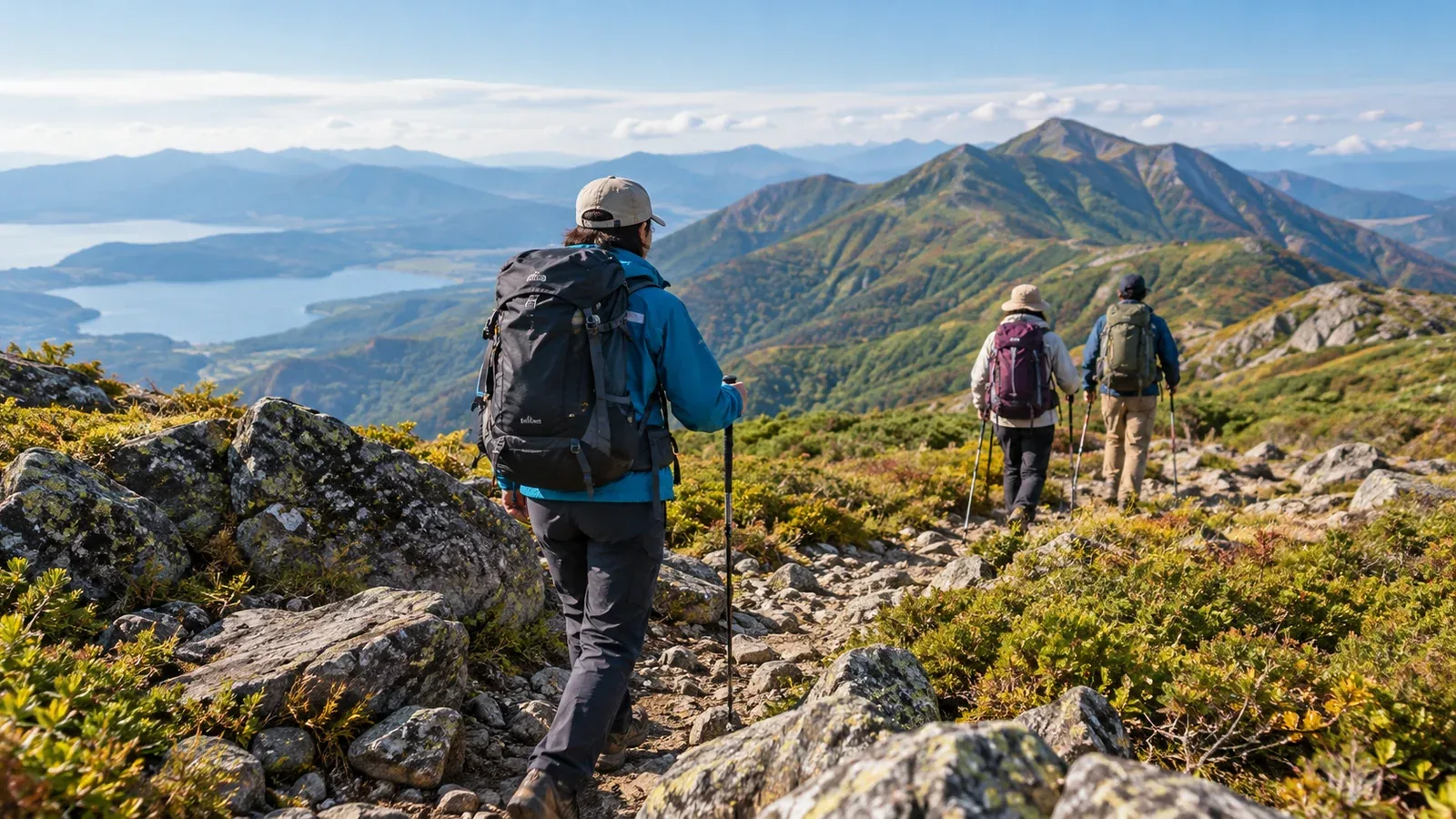
When you decide to take up hiking, one of the first choices is whether to go alone or with someone else. Friends may be hard to pin down, and you may feel too unsure to head out on your own. It's easy to get stuck there.
Both options have benefits and risks. Start by asking which one fits your circumstances. This guide walks through how to get started on your own or with others, and what to consider when deciding.
What to check before deciding how to start
Take stock of where you are before choosing how to start. Difficulty varies widely from mountain to mountain. Two routes described as beginner-friendly can be very different, from a maintained footpath to a route that involves scrambling up and down rock.
Start with three questions.
- Fitness and exercise habits. Do you walk regularly? How do you feel after a few flights of stairs?
- Navigation. Can you use a paper map and compass if the phone is unavailable?
- Emergency decisions. If you feel unwell, can you stop, choose a safe return or call for help?
If you are unsure, consider going with an experienced companion or guide. Practice on a short, familiar route with clear signs and a simple return.
Getting started on your own
Alone, you can make decisions at your own pace. You can slow down or turn back if you feel unwell or conditions change.
The trade-off is clear. If you fall, feel unwell, or lose your way, it can take longer for someone to find you and get help.
How to choose a first solo route
- Look for a walking time of three hours or less round trip. Choose a shorter trail if you are unsure of your pace.
- Pick a simple route with a way to leave the trail early or return by retracing your steps.
- Choose a paved or well-maintained trail with frequent signs.
- Choose a well-used route and set out with daylight and time to spare. Plan to manage a problem yourself if needed.
Check published walking times and adjust for your own pace and the terrain. Around 1.2–1.5 times the published time is a starting estimate, plus breaks and a buffer.
What to prepare for a first solo hike
On your own, your preparations have to cover what a hiking partner could otherwise help with.
- File a hiking plan. Check what the prefecture accepts for your route, such as a trailhead box or a service like Compass where recognized. Share your plan with a trusted person too.
- Prepare for offline navigation. Download the map and test it offline. Carry a paper map and compass and know how to use them.
- Carry emergency supplies. Bring warm and waterproof layers, a headlamp, food, water, first aid and emergency shelter suited to the route.
- Arrange a check-in. Tell someone when you will check in and when and whom to call if you do not return.
Getting started with others
Companions offer practical help and someone to talk to. If a hiker falls or feels unwell, someone else can help or call for rescue.
In a group, it can be tempting to push too hard to keep up. Say something early, especially when you need to choose footholds carefully on the descent.
What to agree on before leaving
Talk these points through with your companions before you set out.
- Agree on a pace everyone can sustain. Stay together at the pace of the person who needs to go slowest.
- Set a turnaround rule. Choose a time and landmark in advance, and turn back if you are running late.
- Make it easy to speak up. Tell each other early if you are tired, in pain or worried about the route.
Going with an experienced hiker
Hiking with an experienced person is a chance to learn about gear, route choice, and pacing. They can only judge so much about your stamina and how you feel, so speak up when you've reached your limit.
What if you can't find someone to go with?
Many beginners feel uneasy about going alone and have nobody to invite. The following options can help you get started with less risk.
Go with a qualified guide. Check that the qualification covers the terrain, and ask about the route, fee and inclusions.
Join a club or community outing. Ask the leader what makes the trip suitable for beginners, including the pace and how the group will handle an early return.
Practice on a short, well-maintained walk. If you can navigate and have a return plan, a familiar nearby trail can help you gauge your pace and try your equipment.
How to choose the right option for you
These examples can help you decide where to start.
- You are comfortable with your fitness. Consider navigation, terrain and emergency plans too before choosing a solo route.
- You are unsure about map reading. Practice with a companion or a guide.
- You are worried about handling an emergency alone. Choose a trip with companions or a guide.
- You prefer to set your own pace. Look for a group that accommodates it, or choose a short familiar route if you can manage it alone.
- You want someone to teach you. Go with an experienced hiker or a qualified guide.
- You cannot find a companion. Look for an introductory outing or guide, or practice on a simple familiar trail if you have the skills.
Whichever option you choose, give yourself permission to turn back. A successful outing means getting up and back down safely, with or without reaching the summit. That applies whether you're alone or in a group.
What to do next
Assess your fitness and experience honestly and choose a well-maintained trail with a published round-trip time of three hours or less. If you're going with others, agree on pace and when to turn back before you set out. If you're looking for hiking partners, try Nordwand's Base Camp feature to find people nearby or consider hiring a qualified guide.
References
- National Police Agency of Japan, overview of mountain incidents
- Japan Meteorological Agency, mountain weather information
- Geospatial Information Authority of Japan, how to read topographic maps