
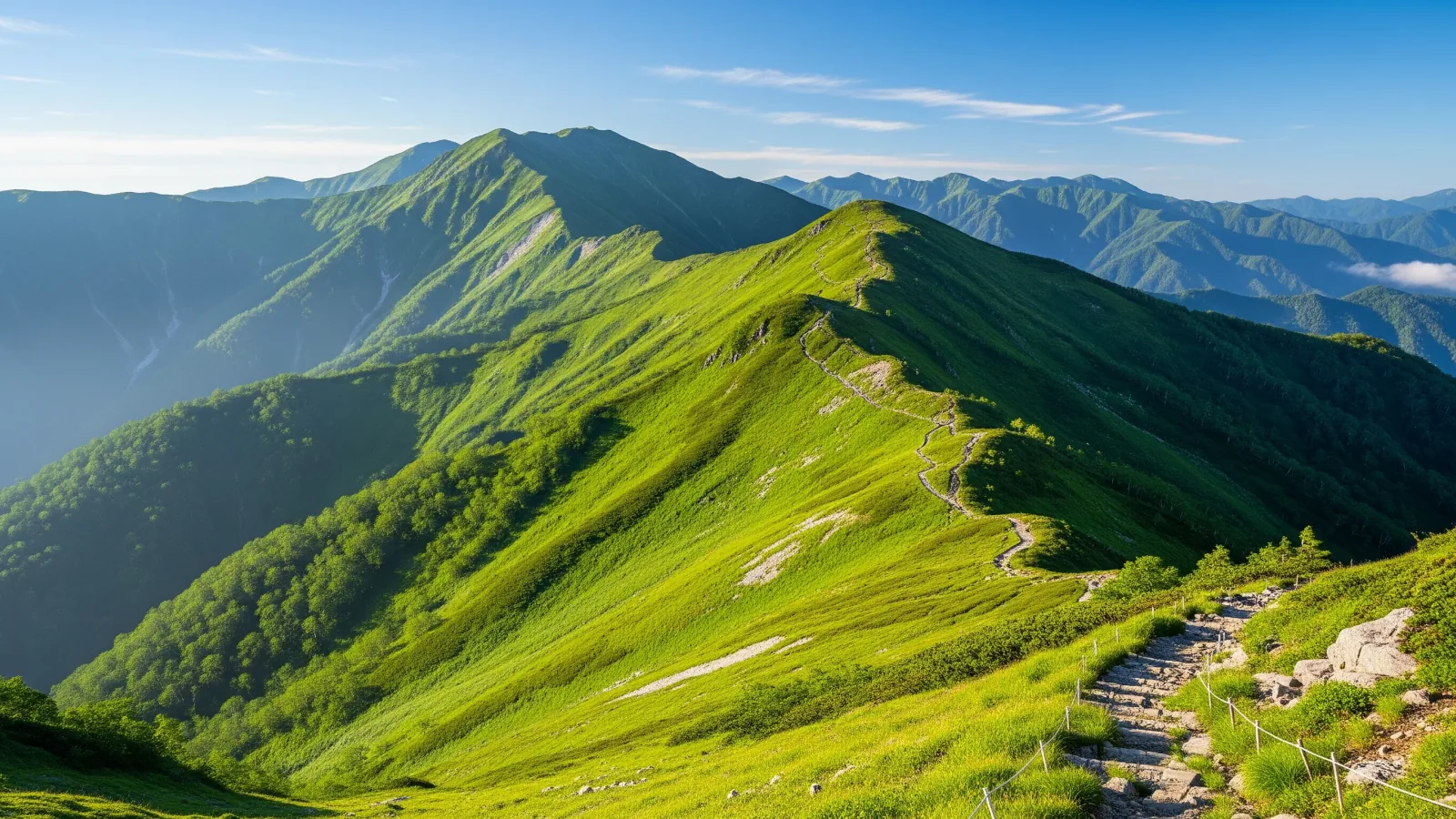
When someone asks, “Want to go to the mountains this weekend?” what do you picture? A leisurely walk through the woods, or hauling yourself up a rocky slope? In Japan, the terms for hiking, trekking and climbing a mountain suggest different kinds of trips. Knowing how they're used helps you pick an outing you'll enjoy and make better choices about preparation and gear. Here's what each means and where you might start.
Hiking for the pleasure of walking
The Japanese word for hiking comes straight from the English. It means walking in nature for its own sake. People often follow maintained paths or nature trails, with no need to reach a summit. A lakeside path, a trail across a plateau, or a track through fields in the foothills can all make for a lovely hike.
It's easy for beginners to assume a hike takes no special preparation. The gear is usually lighter than for a mountain ascent. For a few hours outdoors, bring at least comfortable walking shoes, rain gear and water. Twisting an ankle after heading out in sandals and slipping in the mud is an all-too-common example.
A typical hike lasts roughly two to four hours and has an elevation difference of a few dozen to a few hundred meters. Trail conditions and weather can make a big difference, so check the latest route information beforehand.
Trekking across longer distances
Trekking means a long journey on foot, often through mountain country. The word comes from Afrikaans “trek”, a long, arduous journey, originally used for major migrations by ox wagon in southern Africa. The idea is to cover a substantial distance on foot.
The biggest difference from hiking is the amount of time and distance involved. Some treks fit into a day. Others stretch across several days with nights in huts or tents. Japan's Jōmon Sugi trail on Yakushima and the route from Kamikōchi to Karasawa Cirque are good examples of what people tend to picture as trekking.
Reaching a summit is optional. You might follow a ridge or walk up a valley, with the journey itself as the goal. That takes stamina and planning. The more time you spend out, the more likely you are to encounter a sudden change in weather, so give equipment and food more thought than you would for a shorter hike.
Why the terms overlap in Japan
Hiking and trekking overlap worldwide, and usage varies by region. Japan's mountains are often compact, and a walking path can connect directly to a trekking or summit route. Look up your route's actual difficulty, distance and elevation change. Those details tell you more about what to prepare for than the label.
Climbing a mountain with the summit in mind
The Japanese word “tozan” literally means climbing a mountain, with the summit as the main goal. It can be close to “mountaineering” or “climbing” in English, with the focus on reaching a high point.
A summit route often brings larger elevation changes and more varied terrain. Going up takes cardiovascular fitness and leg strength. Coming down places more strain on knees and ankles. As a rule of thumb, the temperature falls by about 0.6°C for every 100 m of elevation gained, though humidity and weather affect the actual drop. A comfortable temperature at the trailhead can mean needing warm layers near the summit.
It's also recommended to file a hiking plan. Local ordinances make it mandatory in some mountain areas, so check the latest information from the prefecture or area you plan to visit. If a search is needed, a hiking plan gives rescuers important clues. Sudden weather changes and injuries can happen to anyone.
How the three activities compare
Here's a quick guide to how the terms are usually used.
- Hiking. Walking on maintained paths, usually for a shorter time and with no particular need to reach a summit.
- Trekking. Walking a longer distance, often in mountain country, with no requirement to summit. It can last anywhere from several hours to several days.
- Climbing a mountain. Aiming for the summit, usually with considerable elevation change and a corresponding need for fitness and equipment.
In practice, the three activities sit on a continuum. Find out how far the route goes, how much elevation it gains and loses, and what terrain it crosses. An outing described as a hike may demand just as much preparation as a climb.
Summary
Purpose, distance and elevation help distinguish hiking, trekking and climbing. For a first outing, start on a maintained hiking trail and work up to treks or summit routes as you gain experience and fitness. Checking current information and preparing for the conditions are the basis of a safe outing at every level. Experienced hikers may also point out hazards you hadn't considered or things to look forward to along the way. Curious about a particular mountain? Ask someone who knows it.