
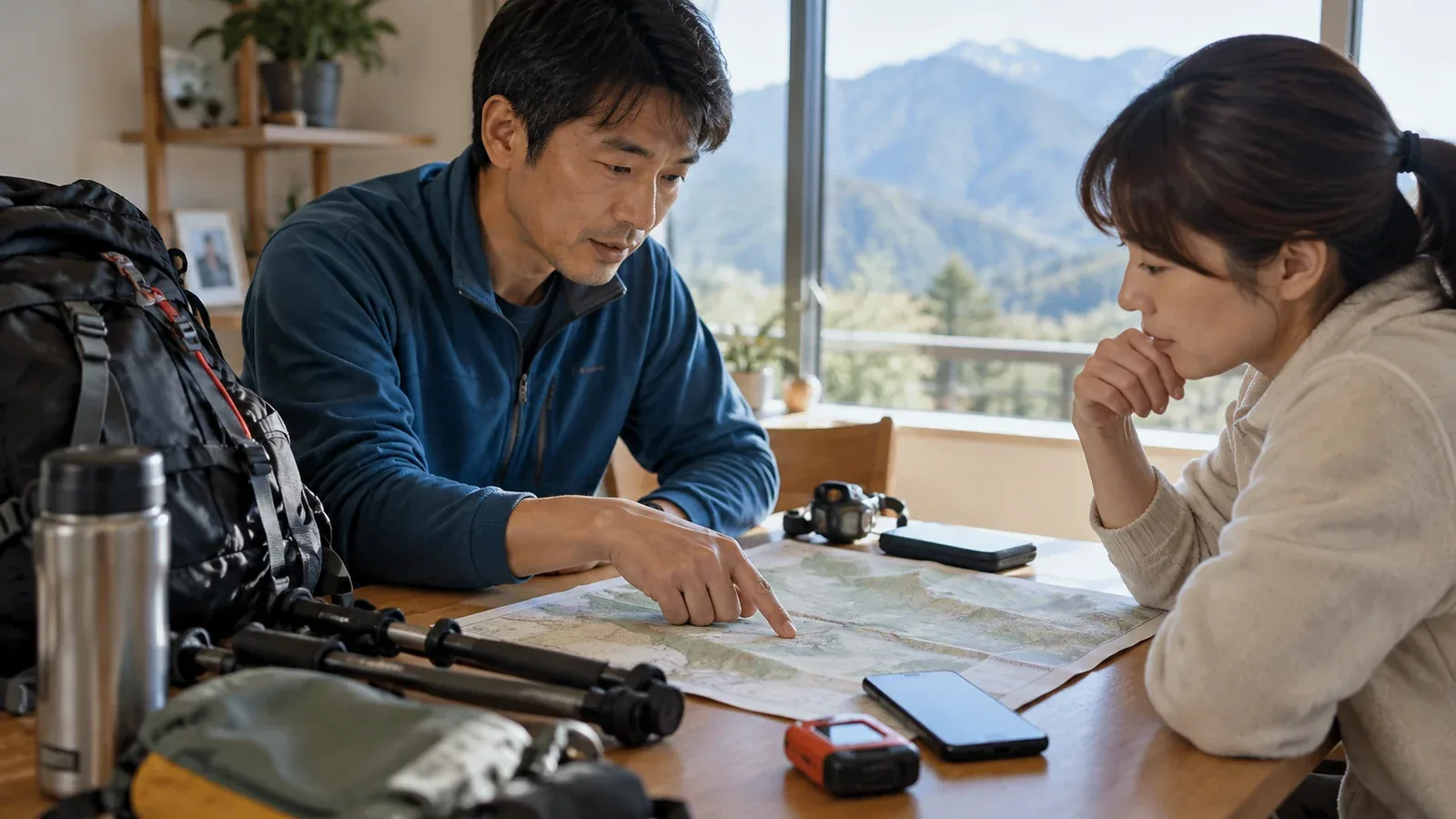
Before leaving for a hike, give someone who is staying behind a written plan. Tell them when you will check in and what you want them to do if they hear nothing. That saves them from having to piece together your route and timing in an emergency.
A hiking plan filed with the relevant authority gives rescuers clues about where to look. Your trusted contact also needs a copy and clear instructions for when to call. Agree on both before you set off.
Put the details on one page
Write down the essentials on one page or in a message they can easily find. Give it directly to your contact and check that they received it.
Include these details.
- Mountain area and route: Trailhead, summit, major junctions, planned return route and any alternatives.
- Dates and check-in times: When you’ll start, leave the trail and next be able to call or send a message. Use local time and name the expected location.
- Transport and parking or station: Include vehicle registration and parking location, or the bus and train routes.
- Party names and contact information: Say if you’re hiking alone.
- Hut or overnight stops: Give the name, date and a phone number if available.
- Communication options: Mobile number and any satellite device or method you plan to use.
- Where you filed your hiking plan: Include the recipient or service and the reference number if there is one.
Keep contact and health details private. Share them with the person who will act on the plan and with emergency services if needed.
Agree on what counts as overdue
Transport delays and stretches without phone reception are common. An overdue plan gives your contact a point at which to act and tells them what to do if there’s reason to suspect trouble sooner.
Agree on these steps before departure and write down the time to escalate.
1. Try to reach the hiker at the agreed check-in time. Call or text. Ask any known companions whether they have heard from the hiker. If you already have reason to suspect injury or danger, call for help immediately.
2. Check any obvious source of information if you can do so quickly. A hut or a companion may be able to confirm a safe delay or a change of route. Keep trying to reach the hiker, but avoid letting these calls delay a report.
3. Contact police promptly if the deadline passes without confirmation. In Japan call 110 for a suspected missing hiker. Call 119 for an immediate medical or rescue emergency. Do not wait until morning or go looking for the person yourself on the mountain.
What to tell police or rescuers
Have the trip note to hand. Start with where the hiker went and why you are concerned. Give whatever details you know.
- Name, age and description
- Mountain area, trailhead and planned route
- Last confirmed contact, time and what was said
- Expected check-in time and how overdue the person is
- Clothing and pack colors
- Where the hiking plan was filed and reference if known
- Phone number and any satellite device
- Relevant conditions, medications or allergies, if known
Who to call: Use 110 in Japan for a suspected missing hiker and 119 for an urgent medical or rescue emergency. If you’re unsure of the exact area, say so. Give your own callback number and follow the dispatcher’s instructions.
If you might need an extra night
Bad weather, trail conditions or illness may make an extra night at a hut the safer option. Include that possibility in the plan so your contact knows where you might go.
Agree on a message that confirms the new plan and next check-in. If you cannot send the message, your contact should follow the original escalation instructions. Ask hut staff whether they can help relay your update.
Check hut contacts and opening dates on the hut’s own site or the official local trail information before leaving.
File the hiking plan and share a copy
The filed plan gives searchers a record. The copy with your contact also states when to take action and what details to relay. Update both where practical if your plan changes.
Check the official rules and accepted filing methods for the area. They may include police websites, an accepted online service or a box at the trailhead. Share the filing location or reference with your contact.
Before your next hike
Write a trip note and talk through the check-in and escalation plan with your contact. Send an update when you are safely off the trail. Nordwand can help you plan routes and find companions as you prepare.
Sources
- Japan Government Public Relations: hiking plans and mountain rescue
- National Police Agency: mountain incident figures
- U.S. National Park Service: sharing a trip plan
- U.S. National Park Service: outdoor emergency planning