
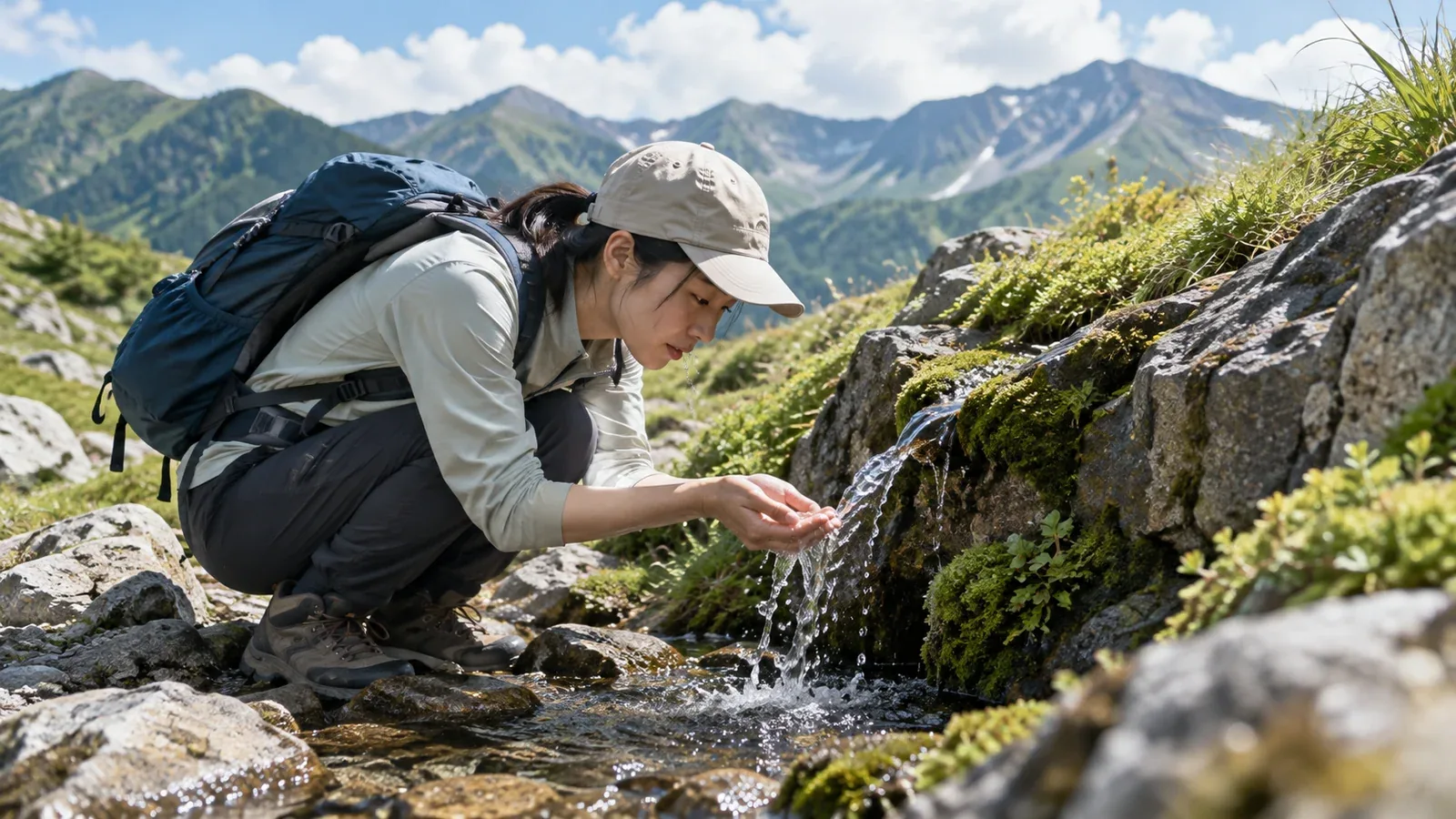
On a summer hike, water flowing out of a crack can feel icy on your sweaty hands. The route that rainwater and snowmelt take through the mountain before returning to the surface affects both the temperature of the spring and what’s in it.
Looking at what happens underground helps explain why springs differ from one range to another. When you need drinking water, check how the source is managed and what’s known about its water quality. Temperature and taste tell you little about whether you can drink it.
Why spring water feels cold
Some rain and snowmelt seeps through soil and cracks in rock to become groundwater. The deeper it goes, the less it feels the seasonal temperature swings at the surface. Water from a spring fed through these deeper pathways can vary less in temperature than the air around it.
Even on a summer afternoon when the ground has warmed up, water that has traveled underground may stay cool. On a cold day the same water may feel relatively warm. The difference between the water temperature and that of the air or your skin shapes how cold it feels.
A spring’s temperature depends on the climate where its water entered the ground, how deep it traveled, and how fast it moved. Shallower pathways respond more readily to seasonal changes and snowmelt. Water that travels deeper can sometimes be warmed by geothermal heat.
What shapes the taste of water
Dissolved substances, smell, and temperature all affect the taste and mouthfeel of water. People differ in what they find pleasant to drink.
As water passes underground, it dissolves substances from the soil and rock. Hardness is mainly a measure of calcium and magnesium. Which substances dissolve, and in what amounts, depends on the type of rock and how long the water stays in contact with it.
Dissolved carbon dioxide can also influence how water tastes. Tokyo’s water utility uses hardness, free carbon dioxide, and odor, among other factors, as benchmarks when evaluating the taste of tap water.
On a hot day, the cool temperature is part of what makes water feel refreshing. Chilling can change how it feels in your mouth while leaving pathogens in the water.
What to check before drinking from a spring
Even clear spring water can contain bacteria, viruses, and parasites you can’t see. A listing in Japan’s Selected Waters program also gives no assurance that the water is safe to drink.
Human and animal waste can carry germs into water. Look for another source in the situations below. Even in the absence of these signs, appearance alone cannot tell you whether the water is drinkable.
- Animal droppings or a dead animal near the spring outlet
- Nearby areas where wastewater drains or livestock have access
- Water that suddenly turns cloudy or smells different than usual
- Surface runoff mixing with the spring water, for example after heavy rain
When filling up at a hut or other facility, check that the water is currently potable and whether it needs to be boiled. A water point shown on the map may be unavailable in some seasons or during dry spells.
If you have to use untreated water, boiling is effective against germs. The U.S. CDC recommends keeping clear water at a rolling boil for one minute, or three minutes above 6,500 feet (about 2,000 meters). If you can’t boil it, use a suitable filter and then disinfect the filtered water as directed by the product. A portable filter alone may not remove viruses. If you suspect chemical contamination, use another source. Boiling or disinfecting won’t make that water safe to drink.
How geology affects spring water
Even on the same mountain, water that flows through different cracks or layers of rock can end up with a different mix of dissolved substances.
For example, water passing through limestone can pick up calcium and become harder. Contact time and mixing with other water also matter, so the rock type alone cannot tell you how hard the water will be.
Near volcanoes or hot springs, some water is affected by heat or gases. A geological map can help you work out what layers the water may have passed through. For drinking advice, check with the municipality or site manager.
Deciding what to do at a water source
Bring water you know is safe to drink, and plan for the possibility that your intended refill point is unavailable.
- Read the signs at the source. Check for a drinking-water sign and any instructions to boil the water or avoid using it for the time being.
- Choose two refill options. Before setting out, check when huts and shops are open and whether they provide or sell water.
- Watch for changes. After heavy rain, or if the water is cloudy or there may be runoff from nearby, check local information and use another source.
- Have a treatment method ready. If you plan to use a natural source, choose a method effective against the germs you might encounter and learn to use the equipment before you leave.
- Change your plan while you still have water. If you can’t count on finding safe water, shorten your route or turn back before your supply runs out.
Planning your next hike
Mark on your map where you’ll need to carry water and where you can refill. Check the latest information from huts or local managers and plan a route you can finish if a water point is out of service.
Sources
- Spring flow and dissolved substances in groundwater (U.S. Geological Survey)
- Hardness, temperature, and other factors in water taste (Tokyo Metropolitan Government Bureau of Waterworks)
- Japan’s selected waters and advice on drinking them (Japan Ministry of the Environment)
- Treating water outdoors (U.S. CDC) and mapping Japan’s rock layers with GeoMapNavi (AIST)
References and sources
- U.S. Geological Survey: Springs and the Water Cycle
- U.S. Geological Survey: Quality of Ground Water
- Tokyo Metropolitan Government Bureau of Waterworks: Water quality targets for taste
- Japan Ministry of the Environment: Japan’s selected waters portal
- U.S. Centers for Disease Control and Prevention: Water Treatment Options When Hiking, Camping, or Traveling
- Geological Survey of Japan, AIST: GeoMapNavi