
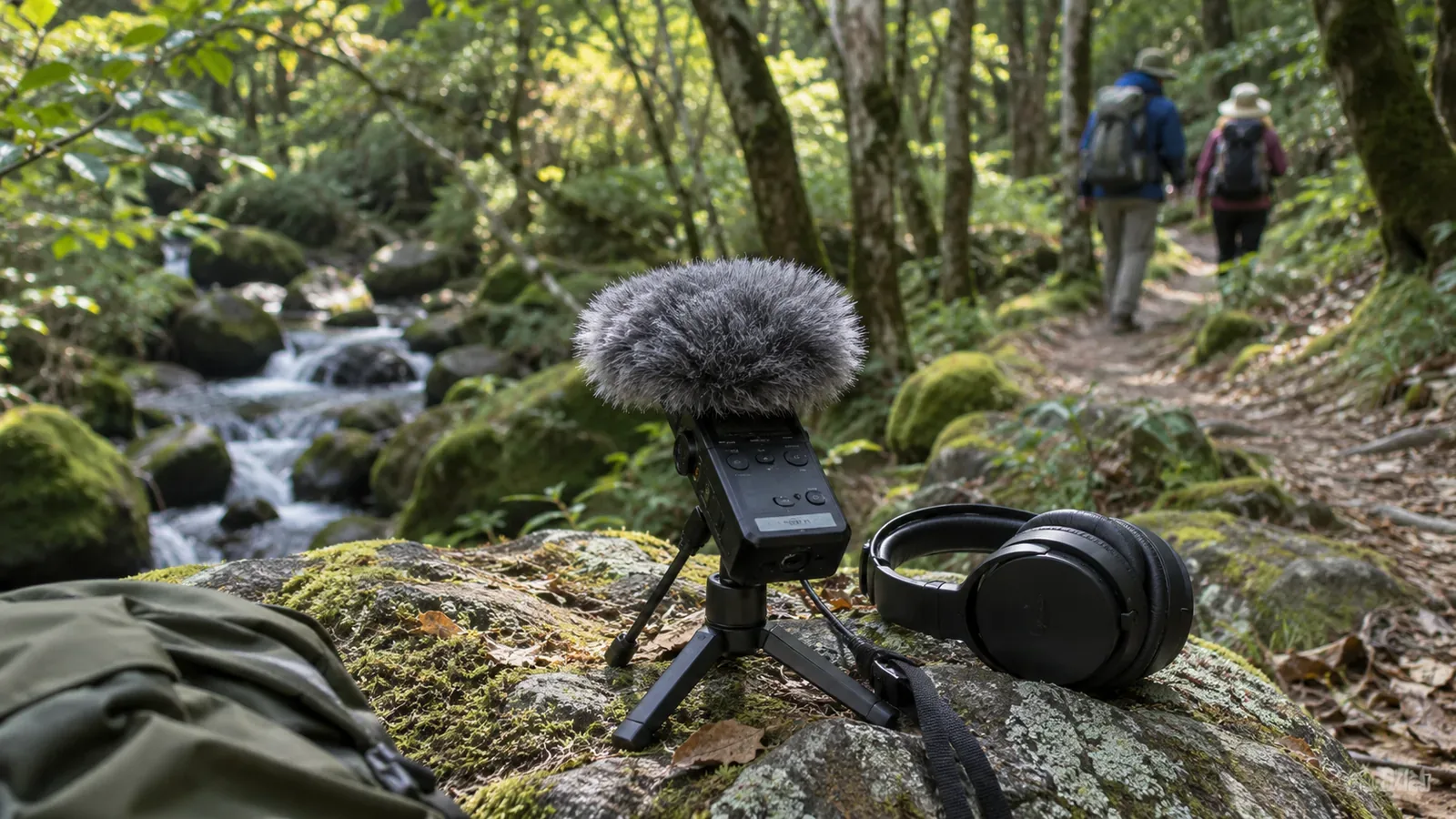
You meant to record birds or a stream, but later hear a conversation between hikers nearby. Outdoor recordings can pick up voices you never noticed at the time. Before sharing the file as nature audio, listen to it all. If you don’t know whether the speakers are comfortable with publication, leave out the conversation. Even if you don’t know their names, they may consider the content private.
Check your surroundings before recording
Find a safe place to stop and look for people nearby. Tell your group that you’d like to record natural sounds and describe the area you’ll record in. Let them know that the microphone may pick up conversation. On narrow paths or at rest stops with other people, wait for a quieter moment or skip that recording.
The recorder can pick up voices you didn’t notice. If someone comes close, you can pause and resume after they pass. Let people go about their visit and stay out of closed areas. Follow signs and keep the trail available to others.
Keep recordings brief so you don’t slow down your group or block the passage. The U.S. National Park Service’s soundwalk activity also recommends checking the route for hazards and paying attention to the group. Keep looking where you step and avoid using the screen while walking. If you notice voices on a recording, note the time or filename to help find it later.
Listen from start to finish before publishing
At home, listen to the whole file for conversations, names, and details such as meeting places. If you only check the part with the clearest birdsong, you may miss quiet voices on either side. Volume and playback conditions can affect what you make out, so take time to check any section you’re unsure about.
If there’s a conversation in the file, avoid publishing it as is. If you can contact the speakers, explain why you want to share it and with whom, then ask what they’re comfortable with. If the people are unknown or you can’t confirm agreement, hold back the file or choose a different recording without the conversation.
If you cut an excerpt, play the whole edited file. Check whether faint bits of the conversation remain or whether surrounding sounds still give away the content. If you aren’t sure the edit works, leave the recording out. Store the original where others can’t access it.
Privacy in practice and what the legal guidance covers
In its FAQ about recording calls with customers, Japan’s Personal Information Protection Commission says that call content is personal information if it identifies a specific person. The answer addresses customer calls. How the law applies to recording or publishing audio from a hike depends on the circumstances.
A separate FAQ also addresses cases where other information can be readily combined with the recording to identify someone. A place or a detail from the conversation may reveal who was talking or who was with them. People may also want a conversation during a break to stay private regardless of whether someone can identify them. Let their wishes guide what you share.
If you record or publish as part of a job or organization, check its policy and any required procedures. A new use may go beyond what you first told people. Before distributing something you recorded for personal listening, check whose voices it contains and confirm any permission again.
Organize recordings for sharing natural sounds
Choosing another recording that you’ve confirmed contains no conversation can make the decision simpler. Several short takes make it easier to skip one with people passing. Listen to each take you might share.
The Macaulay Library advises keeping the recording linked to details such as the date, time, place, and equipment. In your own notes, also record whether you can publish it, whom you asked, and the agreed audience. Keep published versions distinguishable from the originals and record what you used. Limit access to originals that contain conversations and review how you handle them when you no longer need to keep them.
If someone in your group gives you a recording, check what both the recorder and the people whose voices it contains want, and how widely it may be shared. Make a final review part of recording so you can share natural sounds while protecting other people’s conversations.
Check the whole file before publishing
Even a recording of nature can pick up people talking. Listen to the whole file and leave out conversations unless you know the speakers are comfortable with publication.
Pick another file or explain your intended use and ask the people you can contact. While recording, keep the way clear and follow local instructions.
References and sources
- Personal Information Protection Commission of Japan: Personal Information Protection Act FAQ Q1-10
- Personal Information Protection Commission of Japan: Personal Information Protection Act FAQ Q1-11
- Cornell Lab’s Macaulay Library: Manage files and data
- U.S. National Park Service: Soundwalk educational activity